Precision Starts with the Right Pattern
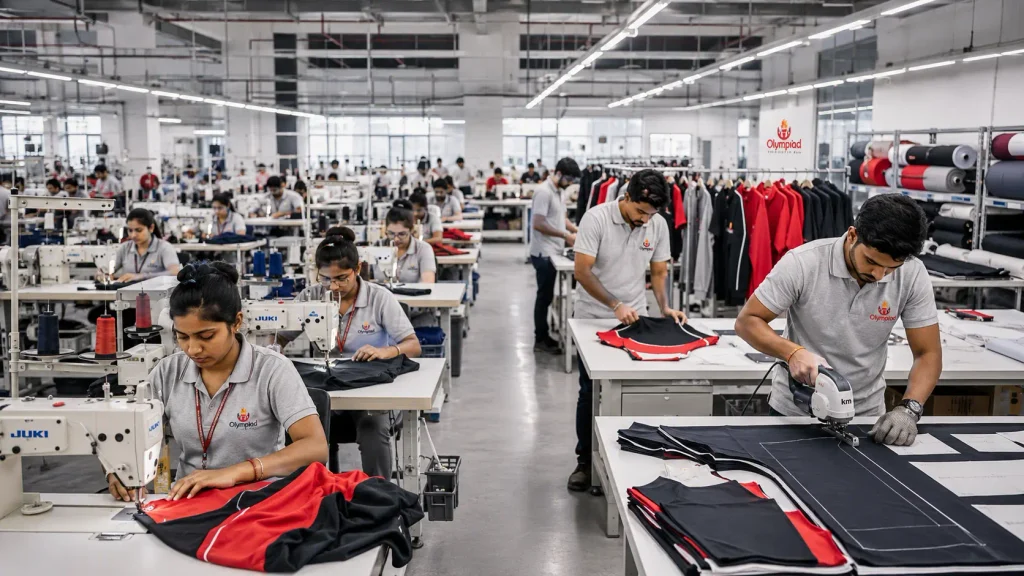
At Olympiad Industries, pattern making and cutting form one of the most important stages of apparel manufacturing. Before a garment can be stitched, printed, embroidered, or finished, its individual components must first be accurately developed and cut according to the approved design.
A well-developed pattern determines how a garment will fit, look, move, and perform, while accurate cutting ensures that every panel follows the required shape and measurement. Even small inaccuracies at this stage can affect sizing, alignment, stitching, and the overall appearance of the finished product.
Our Pattern Making & Cutting process is therefore focused on accuracy, consistency, material efficiency, and production reliability for sportswear, teamwear, activewear, streetwear, casual wear, and kids wear.
Pattern Development
Pattern making is the process of converting a garment design into individual production-ready pieces that can later be cut from fabric and assembled.
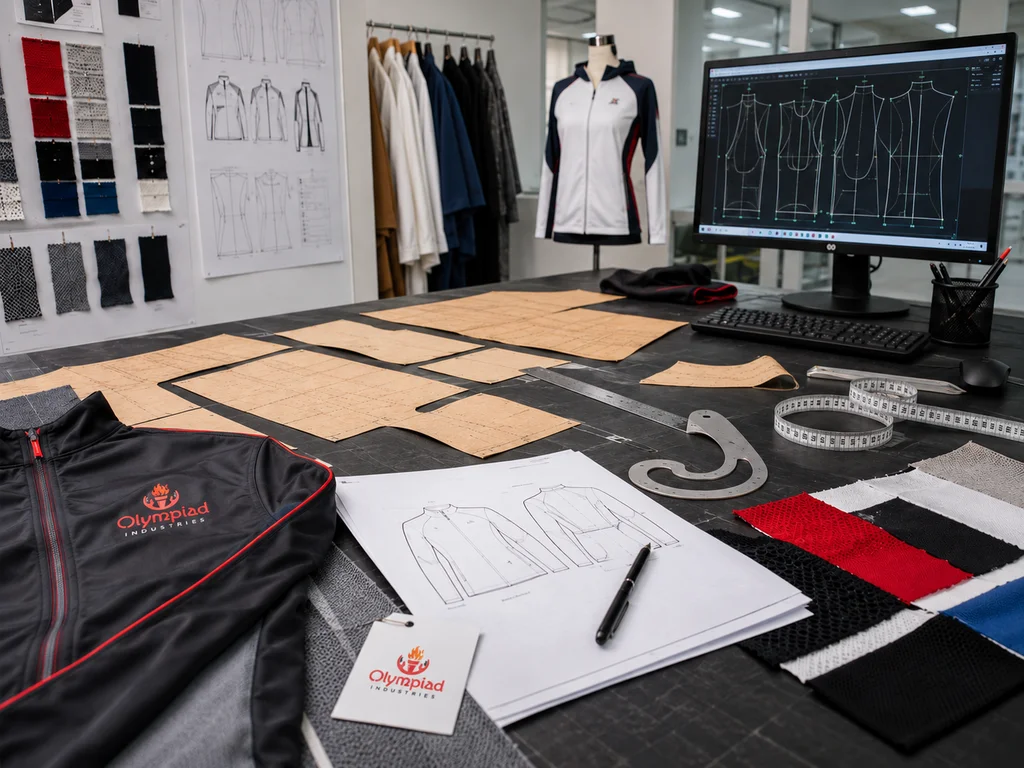
At Olympiad Industries, patterns are developed according to the customer’s:
- Garment design
- Technical specifications
- Size chart
- Measurements
- Fit requirements
- Fabric type
- Construction method
- Style details
- Branding placement
- Product category
Each part of the garment is considered individually, including the front, back, sleeves, collars, cuffs, waistbands, pockets, panels, hoods, side inserts, and other design components.
The objective is to create a pattern that accurately represents the approved design while allowing the garment to be produced consistently in bulk.
From Design to Production Pattern
A customer’s concept may begin as a sketch, reference image, technical drawing, existing garment, or complete tech pack.
Our team reviews the available information and converts it into a structured production pattern.
This process may involve reviewing:
- Overall garment dimensions
- Chest or body width
- Garment length
- Sleeve length
- Shoulder measurements
- Waist and hip measurements
- Inseam and outseam
- Neck opening
- Armhole construction
- Collar dimensions
- Hood dimensions
- Pocket placement
- Panel shapes
- Seam allowances
- Rib and elastic areas
- Branding locations
These details help ensure that the pattern reflects both the visual design and the functional requirements of the finished garment.
Digital Pattern Making
Modern apparel production benefits from accurate digital pattern development.
At Olympiad Industries, pattern preparation is organized to maintain consistency throughout sampling and bulk production. Digital pattern development allows garment components to be prepared with precise dimensions and adjusted efficiently when changes are required.
Digital patterns can help improve:
- Measurement accuracy
- Size consistency
- Pattern modification
- Grading efficiency
- Production repeatability
- Marker planning
- Fabric utilization
- Record keeping
Once an approved pattern has been finalized, it can be maintained as a reference for repeat orders and future production requirements.
Understanding Fit & Garment Construction
Pattern making is not simply about copying measurements. The pattern must also consider how the garment is intended to fit and perform.
A compression garment, oversized hoodie, team jersey, tracksuit, children’s garment, and casual T-shirt all require different pattern approaches.
Depending on the product, the required fit may be:
- Slim fit
- Regular fit
- Relaxed fit
- Oversized fit
- Athletic fit
- Compression fit
- Unisex fit
- Youth or kids fit
The characteristics of the selected fabric also influence pattern development.
Stretch fabrics, rigid woven materials, fleece, mesh, jersey, interlock, and other materials behave differently during wear and construction. Pattern dimensions must therefore work together with the chosen fabric and intended garment function.
Seam Allowances & Construction Details
Production patterns include the allowances required for stitching and garment assembly.
Seam allowances must be planned carefully because they directly affect the final dimensions and construction of the garment.
Depending on the style, the pattern may also include information related to:
- Joining seams
- Fold lines
- Hem allowances
- Zipper positions
- Pocket openings
- Collar attachment
- Cuff attachment
- Waistband construction
- Elastic placement
- Drawcord openings
- Ventilation panels
- Decorative panels
- Branding areas
Accurate construction markings help stitching operators assemble the garment according to the intended design.
Pattern Grading
Once the base-size pattern is approved, it can be developed into the additional sizes required for production.
This process is known as pattern grading.
For example, an approved medium-size garment may need to be graded into:
XS, S, M, L, XL, XXL, and additional requested sizes.
Grading is not simply a matter of increasing every measurement equally. Different garment areas require controlled adjustments to maintain the correct proportions and fit across the complete size range.
Depending on the product, grading may affect:
- Chest width
- Garment length
- Shoulder width
- Sleeve length
- Armhole
- Neck opening
- Waist
- Hip
- Rise
- Inseam
- Thigh width
- Leg opening
- Collar and cuff dimensions
Careful grading helps ensure that each size maintains the intended appearance and fit of the original approved sample.
Size Chart Verification
Before bulk cutting begins, pattern measurements are compared with the approved customer size chart.
Important measurement points are reviewed to help ensure the pattern corresponds with the required specifications.
For different garments, this may include checking:
- Chest
- Body length
- Shoulder
- Sleeve
- Waist
- Hip
- Inseam
- Outseam
- Thigh
- Bottom opening
- Neck width
- Collar height
- Hood dimensions
- Pocket dimensions
Measurement verification at the pattern stage helps reduce sizing problems later in production.
Sample Pattern Development
For custom products, pattern making is closely connected with the sampling process.
A development pattern is used to create the first garment sample. Once the sample is produced, the customer and production team can review its:
- Fit
- Measurements
- Shape
- Proportions
- Comfort
- Construction
- Design details
- Fabric behavior
- Branding placement
If modifications are required, the pattern can be adjusted before bulk production.
This process allows improvements to be made at the development stage rather than after large quantities have already been produced.
Cutting Process
Preparing the Fabric for Cutting
After the patterns have been approved, the next major stage is fabric cutting.
Before cutting begins, the required fabric is prepared according to the production order. The fabric type, color, quantity, and other specifications are checked to ensure the correct material is being used.
Depending on the fabric and product requirements, preparation may include checking:
- Fabric rolls
- Color or shade
- Width
- Surface condition
- Direction
- Stretch
- Pattern or print orientation
- Required quantity
Proper preparation supports accurate cutting and helps prevent material-related errors.
Fabric Relaxation
Certain fabrics can hold tension after being rolled, transported, or stored.
Where required, fabric may be allowed to relax before cutting so that it can return to a more stable condition.
This is especially important for materials where stretch, recovery, or dimensional stability may affect the accuracy of the cut components.
Proper fabric preparation can contribute to more consistent garment measurements after sewing.
Fabric Spreading
The fabric is then arranged for cutting in a controlled and organized manner.
During spreading, attention is given to:
- Fabric alignment
- Layer consistency
- Smoothness
- Fabric direction
- Edge alignment
- Shade consistency
- Stretch direction
- Surface defects
- Required number of layers
Fabric must remain smooth and properly aligned to prevent distortion between layers.
Accurate spreading is particularly important in bulk production because one cutting operation may produce components for multiple garments.
Marker Planning
Before fabric is cut, garment pattern pieces must be arranged efficiently.
This arrangement is often referred to as a marker.
Marker planning helps determine how pattern pieces will be positioned across the available fabric width.
The objective is to achieve:
- Correct pattern orientation
- Accurate garment components
- Efficient fabric utilization
- Reduced unnecessary waste
- Proper size distribution
- Consistent cutting
An efficient marker allows the maximum practical use of the available fabric while still respecting garment construction requirements.
Fabric Direction & Grain
Pattern placement must also consider the direction of the fabric.
Different fabrics may have specific requirements related to:
- Grain direction
- Stretch direction
- Surface texture
- Nap
- Print direction
- Stripe alignment
- Pattern orientation
Incorrect placement can cause different parts of the garment to behave or appear differently.
For this reason, fabric direction is carefully considered before cutting begins.
Precision Cutting
After the fabric and marker are prepared, the garment components are cut according to the approved patterns.
Accuracy is essential because the cut panels establish the physical dimensions of the garment before stitching.
The cutting team focuses on:
- Clean cutting lines
- Accurate shapes
- Consistent panel dimensions
- Correct size identification
- Proper alignment
- Smooth curves
- Correct notches and markings
- Minimal fabric distortion
Suitable cutting methods and equipment are selected according to the fabric, garment type, order quantity, and production requirements.
Cutting Different Garment Components
A single garment may contain many separate pattern pieces.
Depending on the product, cutting may include components such as:
T-Shirts & Tops
- Front body
- Back body
- Sleeves
- Neck rib
- Side panels
- Shoulder panels
Hoodies & Sweatshirts
- Front panels
- Back panel
- Sleeves
- Hood sections
- Kangaroo pocket
- Cuffs
- Waistband
Tracksuits
- Jacket front
- Jacket back
- Sleeves
- Collar
- Trouser front
- Trouser back
- Waistband
- Pocket components
- Side panels
Sports Jerseys
- Front panel
- Back panel
- Sleeves
- Collar components
- Shoulder inserts
- Side panels
- Mesh ventilation panels
Shorts & Trousers
- Front leg
- Back leg
- Waistband
- Pocket bags
- Side panels
- Gussets
- Additional performance inserts
Every component must correspond correctly with the approved pattern and garment size.
Notches & Production Markings
Patterns may include small construction references that help the stitching team correctly assemble the garment.
These can include:
- Alignment notches
- Center points
- Pocket positions
- Panel joining points
- Sleeve placement references
- Collar positioning
- Fold lines
- Branding placement references
Clear production markings help reduce assembly errors and improve consistency during stitching.
Panel Identification & Bundling
After cutting, garment pieces must remain properly organized.
Cut components may be grouped according to:
- Style
- Size
- Color
- Order
- Garment quantity
- Production batch
Proper bundling helps prevent different sizes, colors, or components from being mixed during the stitching process.
Each production bundle can then move efficiently to the next stage.
Cutting Checks
Before cut panels are released for stitching, they may be reviewed for accuracy.
Checks can include:
- Correct pattern shape
- Proper measurements
- Size accuracy
- Matching component quantities
- Clean cutting edges
- Fabric defects
- Correct color or shade
- Correct panel orientation
- Complete garment sets
Identifying issues at this stage helps prevent incorrect components from reaching sewing production.
Fabric Efficiency & Waste Reduction
Fabric is one of the most important cost components in apparel manufacturing.
Efficient marker planning and cutting therefore play an important role in controlling material usage.
At Olympiad Industries, careful pattern placement helps improve fabric utilization while maintaining the correct garment specifications.
Efficient cutting can help:
- Reduce unnecessary fabric waste
- Improve production efficiency
- Maintain consistent costing
- Use available fabric more effectively
- Support responsible material management
The priority, however, remains product accuracy and quality. Material efficiency should never compromise the shape, fit, or construction of the garment.
Pattern & Cutting for Custom Sportswear
Sportswear often includes more complex panel construction than basic apparel.
A custom sports garment may contain:
- Contrast side panels
- Shoulder inserts
- Ventilation sections
- Mesh panels
- Curved seams
- Performance gussets
- Custom collars
- Sublimated sections
- Number and logo placement areas
These design features must be considered during pattern development so that each component joins correctly during production.
For teamwear, accurate panel dimensions are also important for maintaining consistent positioning of logos, names, numbers, sponsor branding, and graphics.
Pattern & Cutting for Activewear
Activewear often uses stretch materials and close-fitting constructions.
Patterns may therefore need to consider:
- Fabric stretch
- Recovery
- Compression
- Movement
- Ergonomic panel placement
- Seam positioning
- Comfort during exercise
Products such as leggings, compression tops, sports bras, training shorts, and fitted gym wear require patterns that work with the natural movement of the body.
Pattern & Cutting for Streetwear
Streetwear designs often focus on silhouette and structure.
Depending on the product, patterns may be developed for:
- Oversized T-shirts
- Heavyweight hoodies
- Relaxed joggers
- Varsity jackets
- Cargo trousers
- Casual sets
- Layered garments
Details such as drop shoulders, oversized sleeves, wide bodies, custom pockets, and unique panel shapes are carefully translated into production patterns.
Pattern & Cutting for Kids Wear
Kids wear requires accurate size development and balanced proportions.
Pattern development takes into account the dimensions required for different age or size groups while maintaining comfort and ease of movement.
Fabric and construction requirements are also considered to ensure the garment remains practical and suitable for its intended use.
Customization & Branding Considerations
Branding often begins before the embellishment stage.
During pattern making and cutting, the team must consider areas where the garment will later receive:
- Embroidery
- Screen printing
- Sublimation
- Heat transfer
- Patches
- Labels
- Names
- Numbers
- Sponsor logos
Correct panel dimensions and placement help ensure sufficient space for branding and support consistent positioning across all sizes.
Sublimation & Pattern Alignment
For fully sublimated sportswear, pattern accuracy is particularly important.
Printed graphics may need to align with the actual garment panels before stitching.
The relationship between the design artwork and the cutting pattern must therefore be carefully managed so that graphics, colors, numbers, and design elements appear in the intended position on the finished garment.
Pattern Modification & Product Development
Custom apparel development often involves revisions.
Customers may request changes such as:
- Longer or shorter garment length
- Wider or slimmer fit
- Different sleeves
- Modified collar
- Larger hood
- New pockets
- Different panel shapes
- Additional ventilation
- Revised waistband
- Adjusted sizing
The pattern can be modified according to the approved revision before production proceeds.
This flexibility allows Olympiad Industries to manufacture garments according to the customer’s specific product concept rather than relying only on standard shapes.
Repeat Orders & Pattern Consistency
Once a pattern has been developed, sampled, revised, and approved, it becomes an important production reference.
Maintaining the approved pattern helps provide greater consistency for repeat orders.
When customers reorder the same style, the existing approved specifications can be referenced, subject to any requested changes in fabric, sizing, design, or construction.
This helps brands maintain more consistent products across different production runs.
Quality Control in Pattern Making & Cutting
Quality control begins before stitching.
Accurate pattern development and cutting help reduce many problems that could otherwise appear later in production.
Our team focuses on:
- Correct measurements
- Accurate pattern shapes
- Proper grading
- Fabric orientation
- Correct marker placement
- Clean cutting
- Complete component quantities
- Size identification
- Shade consistency
- Material condition
By identifying issues early, production can proceed more smoothly and efficiently.
From Pattern to Production
Pattern making and cutting connect product development with garment manufacturing.
Our typical process follows:
Design & Specification Review → Pattern Development → Sample Pattern → Sample Production → Fit & Measurement Review → Pattern Revision → Approval → Size Grading → Marker Planning → Fabric Spreading → Cutting → Panel Inspection → Bundling → Stitching
Each stage supports the next, allowing the garment to move from an idea into structured production.
Why Pattern Making & Cutting Matter
The quality of a garment depends heavily on what happens before the first major seam is stitched.
Professional pattern making and precise cutting help provide:
- Better garment fit
- Accurate sizing
- Consistent production
- Cleaner construction
- Proper panel alignment
- Improved stitching efficiency
- Better branding placement
- Reduced material waste
- More reliable repeat orders
- Professional finished appearance
A strong pattern provides the blueprint, while accurate cutting turns that blueprint into production-ready components.
Precision in Every Pattern. Accuracy in Every Cut.
At Olympiad Industries, pattern making and cutting are treated as essential parts of quality apparel manufacturing. By combining accurate product development, careful measurement, organized grading, efficient marker planning, precise cutting, and detailed panel checks, we create a reliable foundation for every garment that moves into production.
Whether you are developing sportswear, team uniforms, activewear, streetwear, casual apparel, or kids wear, our team can work from your design, tech pack, measurements, reference garment, or product concept to prepare it for professional manufacturing.
Have a custom apparel design ready for development? Contact Olympiad Industries to discuss your pattern, sampling, and production requirements.