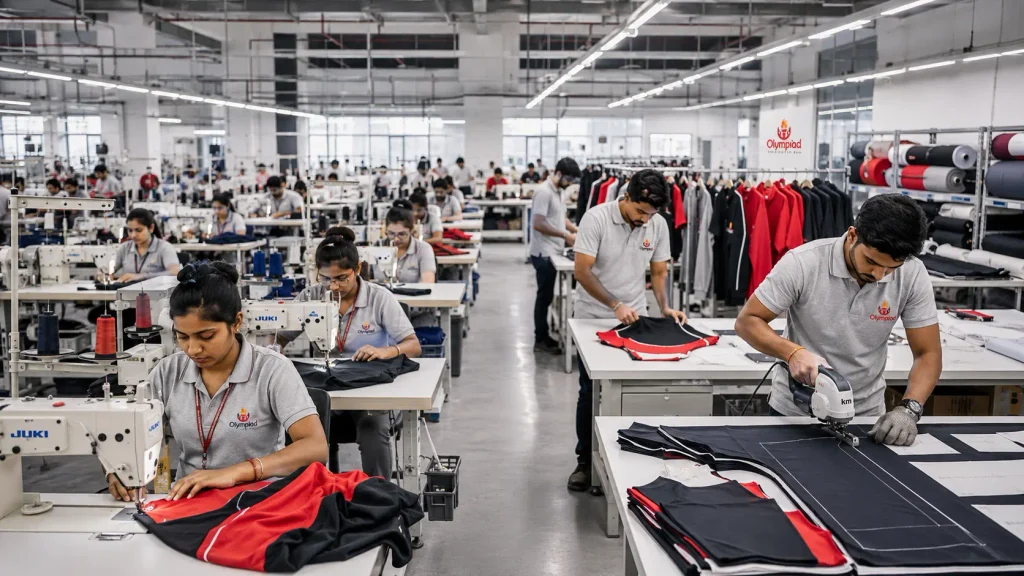
Explore fabrics, trims, labels, threads and performance materials used by Olympiad Industries for custom sportswear, activewear, casualwear & streetwear, Kidswear and all kinds of private-label apparel.
Raw Materials Quality Starts Here
Every custom garment begins with the right material foundation. At Olympiad Industries, fabrics, threads, trims, labels, zippers, elastics, drawcords and other components are reviewed according to the product design, intended use, customization method and buyer requirements before production begins.
What We Review Before Production
The Right Material Supports the Entire Garment
Material choice affects comfort, appearance, movement, durability, decoration, fit and overall product positioning. For that reason, material selection is treated as an early product-development decision rather than a last-minute production step.
Match the Fabric to the Product
Fabric is one of the most important raw materials in apparel manufacturing. Different garments require different constructions, weights, stretch levels, finishes and performance characteristics. Material selection is therefore reviewed against the intended use of the product rather than using one fabric for every category.
Common Materials Across Our Product Range
The examples below show common fabric directions. Exact construction, composition and weight can be adjusted according to the individual project.
Polyester
Widely used for sportswear and teamwear because of its durability, light weight, quick drying and suitability for sublimation.
Polyester Spandex
Provides additional stretch and flexibility for activewear, training products, leggings, compression garments and fitness apparel.
Cotton
Suitable for soft, breathable everyday products such as T-shirts, casualwear, selected streetwear and kidswear.
Cotton Polyester Blends
Combine everyday comfort with added shape retention and durability for hoodies, sweatshirts, T-shirts and casual apparel.
Fleece
Commonly selected for hoodies, sweatshirts, joggers, tracksuits and cooler-weather products in different weights and finishes.
Interlock
A smooth and durable knit option suitable for sportswear, training wear, tracksuits and selected casual garments.
Mesh
Used where ventilation is important, either as a primary sports fabric or as breathable panels in jerseys, shorts and training wear.
Jersey Knit
Lightweight and flexible for T-shirts, training tops, casualwear and selected performance garments.
Nylon & Performance Blends
Suitable for selected activewear, jackets, outerwear and products requiring strength, smooth technical surfaces or flexible construction.
Materials for Movement, Training and Competition
Performance apparel requires more than visual appeal. The fabric and supporting components should work with the intended activity, garment construction and fit. Depending on the project, material review may focus on the following characteristics.
Beyond Fabric: Every Component Matters
Trims and supporting materials influence function, fit, strength and presentation. Their selection should complement both the fabric and the garment design.
Threads
Selected for strength, color consistency, seam compatibility and the required sewing or embroidery application.
Zippers
Front, pocket, concealed and other zipper options are reviewed for size, tape, slider, color, function and garment compatibility.
Buttons, Snaps & Fasteners
Chosen according to product design, attachment method, size, finish, durability and visual requirements.
Elastic & Waistbands
Elastic width, recovery, strength and comfort are reviewed for shorts, joggers, activewear, tracksuits and kidswear.
Drawcords
Different structures, colors and finishing options can be selected to complement hoodies, trousers, shorts and jackets.
Ribbing, Cuffs & Collars
Used where stretch, recovery, shape retention and coordinated garment finishing are required.
Build the Product Around Your Brand Identity
Private-label apparel requires more than a logo on the garment. Labels, tags, packaging details and decoration materials should work together to create a consistent presentation from the inside label to the final packed product.
Check Before the Material Moves Forward
Reviewing materials before cutting helps identify visible inconsistencies early and supports a more controlled manufacturing process.
Color Coordination
Fabric, thread, ribbing, trims, zippers and branding materials are reviewed against the approved color direction.
Fabric Review
Visible surface condition, width, shade consistency, weight and other relevant characteristics may be checked according to the project.
Trim & Accessory Review
Zippers, elastic, labels, threads, drawcords and other components are reviewed for function, appearance and order suitability.
Different Products Need Different Material Priorities
Olympiad Industries does not use one material specification for every garment. Selection is adapted to the product category and intended use.
Sportswear & Teamwear
Breathability, moisture management, durability, lightweight performance, movement and customization compatibility.
Activewear
Stretch, recovery, comfort, flexibility, smooth hand feel, body movement and performance-oriented construction.
Streetwear & Casualwear
Texture, weight, structure, softness, drape, comfort and visual identity for everyday and fashion-led products.
Kidswear
Comfort, softness, practical durability, flexibility, ease of wear and suitable construction for junior products.
Material Specifications Built Around the Project
For private-label and made-to-order programs, material specifications can be reviewed around the actual product and market direction rather than forcing a standard ready-made specification onto every order.
Review the Material in the Actual Garment
For customized products, sampling gives buyers an opportunity to evaluate how the selected material, construction and branding work together before bulk production.
Use Materials Efficiently and Purposefully
Efficient pattern planning and controlled cutting can help reduce unnecessary fabric waste while supporting consistent garment construction. Material choice should also serve a clear product purpose rather than adding components that do not improve function, appearance or brand value.
From Raw Material to Finished Garment
Raw materials are the first controlled step in a connected production sequence. Once approved, they move forward into pattern development, cutting and the remaining manufacturing stages.
Develop Your Next Apparel Product With Olympiad Industries
Share your product reference, fabric requirement, tech pack, artwork or general product direction with our team. We can review the material needs together with the design, fit, branding and production requirements of your project.