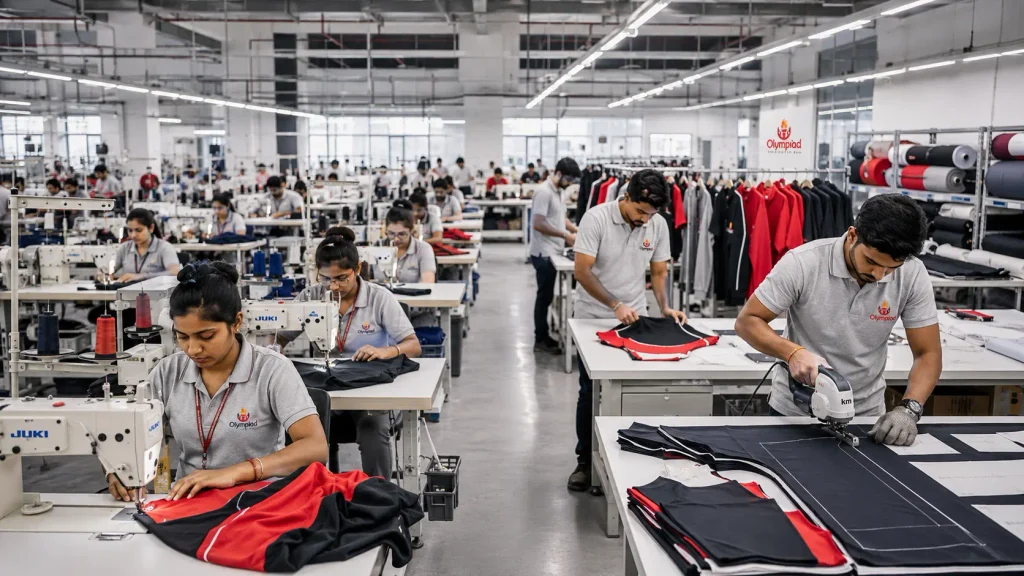
Explore Olympiad Industries pattern making, grading, marker planning and precision cutting for custom sportswear, activewear casual wear, street wear, kids wear and private-label apparel.
Pattern Making & Cutting Precision Starts Here
Pattern making and cutting transform approved ideas into production-ready garment pieces. At Olympiad Industries, this stage focuses on fit, proportion, seam construction, grading, fabric behavior, cutting accuracy and repeatable production consistency.
What This Department Controls
Accurate Patterns Create Consistent Garments
Pattern accuracy affects the way a garment fits, moves, joins at the seams and repeats across different sizes. A strong pattern provides the production team with a clear, controlled reference before fabric is cut.
Turn the Design Into a Production Blueprint
Pattern development converts the approved garment concept into individual pieces that can be cut and assembled. Each panel is planned according to the product style, measurements, fit, fabric characteristics and construction method.
Structure the Pattern for Repeatable Production
Digital pattern development helps organize measurements, panel relationships, grading and future adjustments. It also supports cleaner repeat orders when an approved pattern needs to be reproduced or modified for a new version.
Plan How the Garment Will Sit, Move and Join Together
Pattern development is not only about the visible outline of a garment. Construction details must also be planned so the sewing team can assemble the product accurately.
Seam Allowances
Allowances are added according to the seam type, fabric and construction requirements.
Panel Alignment
Connected panels are developed to join correctly without unnecessary pulling or distortion.
Pocket Placement
Pocket shape, position, opening and attachment area are planned into the production pattern.
Zipper & Opening Areas
Front openings, pocket zippers, plackets and other functional areas are included in the pattern structure.
Movement Allowance
Sportswear and activewear patterns consider body movement, stretch and intended garment fit.
Design Lines
Contrast panels, inserts and decorative seams are positioned according to the approved style.
Scale the Approved Fit Across the Size Range
Once the base size is approved, grading develops the additional sizes required for the order. The goal is controlled size progression while maintaining the intended shape and proportions.
Check the Pattern Against the Required Measurements
Pattern measurements are reviewed against the approved size direction before moving forward. This helps keep the pattern, sample and bulk production aligned.
Test the Pattern Before Bulk Cutting
A sample allows the pattern to be reviewed in the actual garment. Fit, movement, seam alignment, panel shape and construction can then be evaluated before the pattern is used for bulk production.
Prepare the Fabric Before the First Panel Is Cut
Cutting quality depends on how the fabric is prepared, spread and positioned before the marker is applied. Different fabrics may require different handling according to their stretch, structure, surface and product use.
Fabric Relaxation
Selected fabrics may be allowed to settle before cutting to reduce unwanted tension or dimensional change.
Fabric Spreading
Layers are spread in a controlled direction and kept as smooth and aligned as practical for the material.
Shade Control
Where relevant, fabric lots and visible shade consistency are considered before garment panels are mixed.
Grain Direction
Pattern pieces are positioned according to grain, stretch direction and product construction requirements.
Print / Nap Direction
Directional prints, surface texture or one-way fabric appearance are considered during layout planning.
Layer Alignment
Fabric layers are prepared to support consistent panel dimensions across the cutting stack.
Arrange Pattern Pieces for Controlled Fabric Use
Marker planning places the required pattern pieces within the available fabric width while respecting grain direction, size requirements, fabric behavior and production priorities.
Cut Every Panel to the Approved Pattern
Cutting converts the approved pattern layout into individual fabric components that are ready for bundling and stitching. Accuracy at this stage supports cleaner assembly later.
Body Panels
Front, back and side panels are cut according to the approved pattern and marker.
Sleeves & Collars
Sleeves, cuffs, collars and neckline components are cut separately for controlled assembly.
Pockets & Small Parts
Pocket pieces, facings, plackets, bindings and other smaller components are prepared according to construction requirements.
Contrast Panels
Design panels and color-block components are separated and organized according to the approved garment layout.
Notches & Markings
Required alignment marks help the stitching team match panels and key construction points.
Panel Bundling
Cut components are grouped by style, color, size or production bundle before moving to the next stage.
Different Garments Need Different Pattern Priorities
Pattern development is adapted to the structure, fit and movement requirements of the product.
Sportswear & Teamwear
Movement, athletic fit, panel placement, numbers, team graphics and competition-oriented construction.
Activewear
Stretch direction, body contouring, seam placement, compression zones, mobility and smooth fit.
Streetwear & Casualwear
Silhouette, drape, oversized proportions, structured panels, pocket placement and style-led fit.
Kidswear
Comfort, ease, practical movement, age-appropriate proportions and repeatable size development.
Plan Branding Positions Before Production
Logos, numbers, sponsor marks, artwork and sublimated panel graphics can affect pattern and cutting decisions. Their placement is considered before production so visible artwork aligns correctly with seams, panels and garment proportions.
Keep Approved Product Specifications Organized
Once a pattern is approved, it can serve as a reference for repeat production or future adjustments. Revisions are reviewed against the previous approved specification so changes remain controlled.
Review Before Panels Move to Stitching
Basic production checks help confirm that the cut components correspond to the approved pattern and are organized for the next manufacturing stage.
Pattern Reference
Cut pieces are compared against the approved style, size and production requirement.
Panel Count
Required garment components are organized so missing pieces can be identified before stitching.
Cut Edge Review
Visible cutting consistency and panel shape are reviewed before bundling.
Size Identification
Panels are separated and marked according to the relevant size or production bundle.
Shade / Color Separation
Where relevant, visible shade differences are managed so garment panels remain coordinated.
Bundle Readiness
Cut components are prepared in an organized format for movement into the stitching department.
From Material Approval to Sewing-Ready Panels
Pattern Making & Cutting connects the raw-material stage to stitching by turning approved fabric and product specifications into organized garment components.
Develop Your Next Custom Garment With Olympiad Industries
Share your reference product, size chart, tech pack, measurements or design concept. Our team can review the pattern, fit, grading, fabric and production requirements as part of the custom-development process.