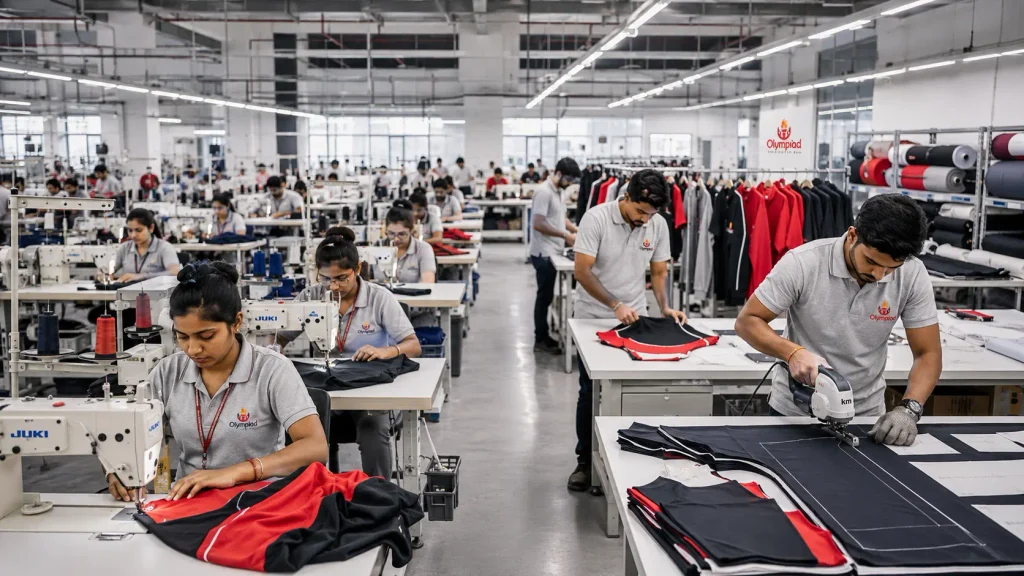
Explore Olympiad Industries stitching process, seam construction, machine selection and garment assembly for custom sportswear, activewear, casual wear and private-label apparel.
Stitching Precision in Every Seam
Stitching brings the cut garment components together into a complete product. At Olympiad Industries, the sewing process follows the approved pattern, construction method, seam type and product specification to support fit, strength, appearance and repeatable quality.
What We Control During Stitching
Good Stitching Supports Fit, Strength and Finish
Sewing quality is not only about joining fabric pieces. Seam construction, stitch density, machine settings, thread selection and operator control all influence the finished garment.
Follow the Approved Construction Direction
The stitching team works from cut bundles prepared according to the approved pattern. Panel shape, seam allowances, notches and production markings guide the assembly sequence so the final garment stays aligned with the approved product specification.
Use the Machine That Matches the Construction
Different operations require different machine types. The sewing setup is selected according to the fabric, seam function and finishing requirement of the garment.
Single-Needle Lockstitch
Used for many straight-seam, topstitch and general garment-construction operations.
Overlock
Common for joining and finishing knit fabric edges while helping control fraying.
Flatlock
Suitable for selected activewear and performance seams where flatter construction is preferred.
Coverstitch
Used for hems, stretch garments and selected finishing operations on knit products.
Bar Tack
Reinforces stress points such as pocket openings, belt loops and selected high-load areas.
Specialized Attachments
Folders, guides and specialty machines may support binding, elastic, waistband and other repeat operations.
Match the Seam to the Fabric and Product
The selected stitch should support the garment’s function. Stretch garments, heavy outerwear, lightweight jerseys and casual apparel can require different seam constructions.
Small Components Can Affect the Entire Seam
Thread type, thread color, needle choice and machine settings are reviewed according to the fabric and sewing operation so they support both function and appearance.
Build the Garment in a Controlled Sequence
Sewing operations are organized so the cut components move through a logical assembly sequence. The exact order depends on the garment construction.
Body Panels
Front, back and side panels are joined according to the approved seam placement.
Shoulders & Sleeves
Shoulder seams, sleeves and armholes are assembled with attention to alignment and ease.
Side Seams
Side seams connect the garment body while maintaining the intended fit and silhouette.
Collars & Necklines
Collars, ribbing, bindings and neck finishes are attached according to the approved style.
Waistbands & Cuffs
Elastic, ribbed or fabric waistbands and cuffs are attached with controlled stretch and alignment.
Hems & Final Seams
Lower hems, sleeve hems and remaining construction seams complete the main garment assembly.
Attach Functional and Visual Components Carefully
Pockets, zippers, labels, drawcord channels, plackets and other components often require additional positioning and reinforcement. Their placement is coordinated with the approved design.
Different Garments Need Different Construction Priorities
Stitching methods are adapted to the product structure, fabric, fit and intended use.
Sportswear & Teamwear
Lightweight construction, movement, strong team identity, panel accuracy and durable competition-oriented seams.
Activewear
Stretch-compatible seams, mobility, smooth construction, body contouring and reduced seam bulk where suitable.
Streetwear & Casualwear
Silhouette control, pockets, structured seams, visible topstitching, rib details and fashion-led finishing.
Kidswear
Comfort, practical construction, mobility, secure attachments and consistent finishing for junior products.
Keep Sewing Aligned With Decoration and Labels
Embroidery, printing, sublimated panels, labels and sponsor branding can affect garment assembly. Sewing operations are coordinated so branding positions remain aligned with seams, panels and the approved design.
Review Construction Before the Garment Moves Forward
In-line checks help identify visible sewing or assembly issues during production rather than waiting until the final stage.
Seam Alignment
Panels and construction lines are reviewed for visible alignment against the approved garment.
Skipped / Broken Stitches
Visible stitch interruptions or loose construction areas can be identified during the sewing process.
Thread Tension
Seam appearance is reviewed for obvious tension imbalance, puckering or looseness.
Measurement Direction
Key garment measurements may be checked during production according to the product requirement.
Attachment Security
Pockets, zippers, labels, cuffs and other components are reviewed for proper attachment.
Bundle Consistency
Styles, colors and sizes are kept organized as garments progress through the sewing line.
Use Approved Construction as the Reference
Approved patterns, samples and sewing methods can support more consistent repeat orders and future product versions when the same construction direction is required.
From Cut Panels to a Constructed Garment
Stitching connects the cutting stage with embellishment, finishing and quality control by turning organized fabric components into a complete garment.
Build Your Next Custom Garment With Olympiad Industries
Share your reference garment, tech pack, fabric, size chart or construction requirements. Our team can review the stitching method together with the pattern, fit, branding and overall production needs of your project.