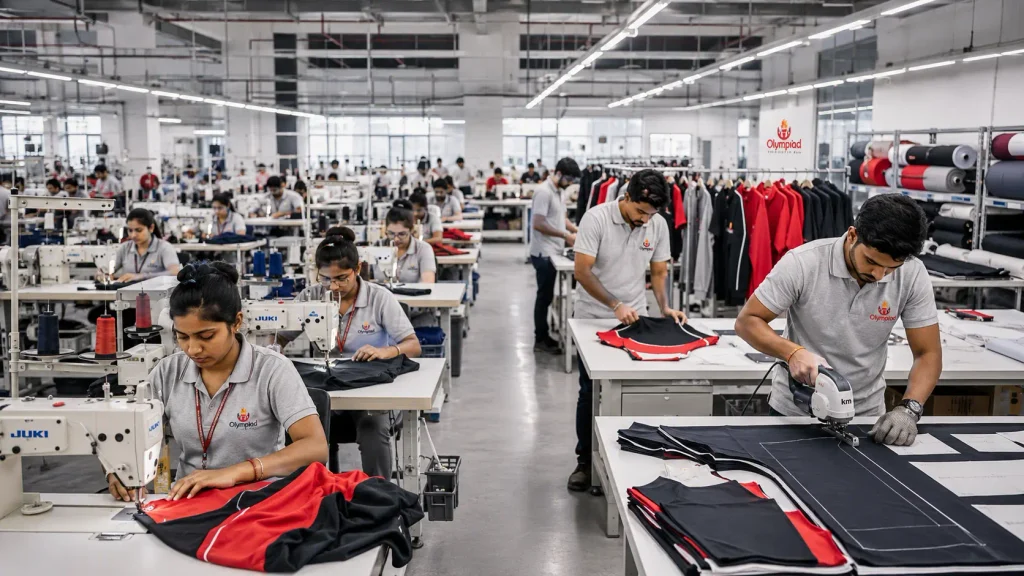

Choosing the right activewear manufacturer is one of the most important decisions a clothing brand can make. The manufacturer influences not only production cost but also product quality, fit consistency, fabric performance, lead times, private labeling, packaging, repeat-order reliability, and ultimately the reputation of the brand.
Activewear is especially demanding because garments are expected to perform during movement. Leggings need sufficient stretch, recovery, and opacity. Sports bras require the correct balance between support and comfort. Training tops should manage heat and moisture, while compression products need accurate fit and strong fabric recovery.
A manufacturer that performs well with basic casualwear may not necessarily have the same technical knowledge required for activewear. Brands therefore need to evaluate suppliers on more than price alone.
This guide explains how to choose an activewear manufacturer step by step, including how to compare fabrics, samples, MOQ, fit development, quality control, branding, lead times, communication, production capacity, and long-term reliability.
Why Choosing the Right Activewear Manufacturer Matters
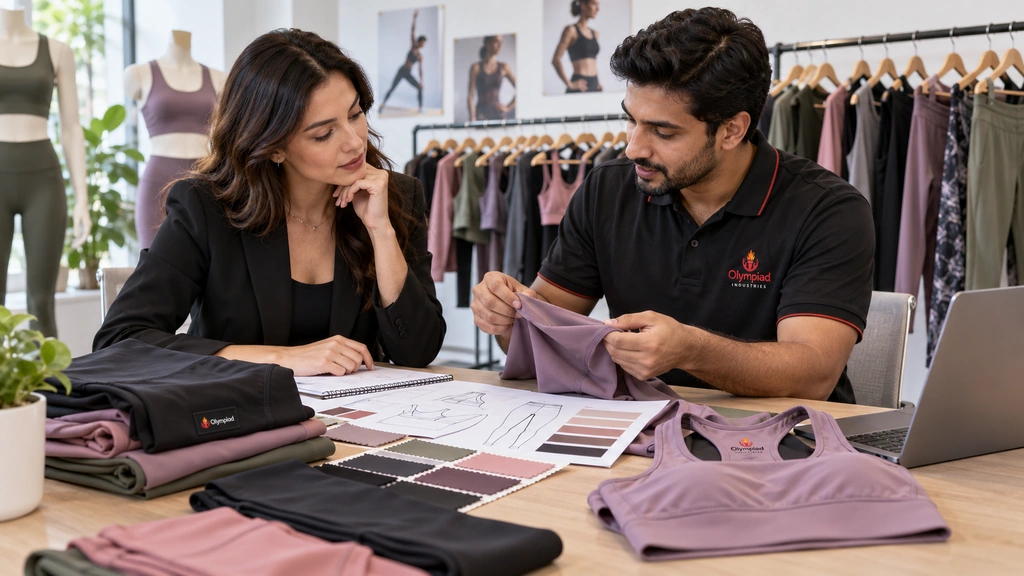
The quality of an activewear collection depends heavily on the manufacturer’s ability to turn product specifications into consistent finished garments.
Even a strong design can fail if the factory uses the wrong fabric, inconsistent measurements, weak seams, or unsuitable branding methods. Problems that seem small during production can become major customer-service issues once hundreds of garments reach the market.
Common manufacturing problems may include:
- Leggings becoming transparent under stretch
- Waistbands rolling down
- Sports bras providing inconsistent support
- Incorrect sizing
- Weak stitching
- Pilling
- Color variation
- Logos peeling after washing
- Delayed production
Choosing the right manufacturer helps reduce these risks before bulk production begins.
A suitable factory should understand the intended activity, target customer, fit, fabric, and quality expectations of the product.
The goal is not simply to find someone capable of stitching clothing. The goal is to find a manufacturing partner capable of repeatedly producing the product to the required standard.
What Does an Activewear Manufacturer Do?
An activewear manufacturer turns a product concept into finished performance apparel.
Depending on the manufacturer’s capabilities, services may include:
- Fabric sourcing
- Pattern making
- Sampling
- Cutting
- Stitching
- Printing
- Embroidery
- Private labeling
- Quality control
- Packaging
- Export preparation
Some manufacturers work from detailed tech packs, while others can begin with reference images, sketches, measurements, or an existing garment.
A strong activewear manufacturer should understand how material and construction affect performance.
For example, changing from one polyester-spandex fabric to another can change:
- Stretch
- Recovery
- Compression
- Opacity
- Fit
even if the garment pattern remains the same.
This is why technical understanding matters.
Manufacturer vs Supplier vs Wholesaler: What Is the Difference?
These terms are often used interchangeably, but they can represent very different business models.
A manufacturer typically produces garments directly or manages the production process. A supplier may source products from factories without manufacturing them directly. A wholesaler normally sells existing finished products in bulk.
Manufacturer
A manufacturer may provide:
- Custom development
- Patterns
- Samples
- Fabric sourcing
- Bulk production
- Private labels
This is generally the best option for brands wanting a distinctive product.
Supplier
A supplier may coordinate sourcing across several factories.
This can provide access to a broad product range but may reduce visibility into the actual manufacturing process.
Wholesaler
A wholesaler usually offers ready-made garments.
This can be useful for:
- Fast market testing
- Lower development requirements
- Simple resale
However, customization is often more limited.
Brands should understand which business model they are dealing with before discussing production.
Also read: Best Fabrics for Activewear: Nylon, Polyester & Spandex
Decide What Type of Activewear You Want to Manufacture
Before approaching factories, define your product category clearly.
Different products require different manufacturing experience.
A factory that produces excellent gym T-shirts may not necessarily specialize in high-compression leggings or supportive sports bras.
Leggings
Leggings require careful attention to:
- Stretch
- Recovery
- Opacity
- Waistband stability
- Seam comfort
Ask whether the manufacturer has experience producing:
- High-rise leggings
- Pocket leggings
- Compression leggings
- Yoga leggings
Sports Bras
Sports bras require more technical fit development.
Important areas include:
- Strap construction
- Band support
- Coverage
- Padding
- Compression
Ask whether the manufacturer works with different support levels.
Gym T-Shirts
Training shirts may prioritize:
- Lightweight fabrics
- Breathability
- Moisture management
- Stretch
Manufacturers should understand performance knits rather than only standard cotton T-shirts.
Training Shorts
Training shorts may include:
- Pockets
- Drawcords
- Inner lining
- Stretch panels
- Zippers
Construction needs vary considerably depending on the sport or activity.
Compression Wear
Compression products require:
- Strong recovery
- Accurate sizing
- Controlled stretch
- Durable seams
The factory should understand negative ease and fitted garment development.
Fitness Sets
Matching sets require consistency in:
- Fabric
- Color
- Branding
- Fit
Shade differences between tops and bottoms can make the collection look inconsistent.
Tracksuits
Tracksuits require expertise with:
- Zippers
- Rib
- Pockets
- Interlock or tricot
- Embroidery or transfers
These garments are more structured than fitted activewear.
Also read: Custom Leggings Manufacturing Guide for Brands & Teams
Define Your Product Requirements Before Contacting Manufacturers
Brands receive better quotations and more accurate samples when their requirements are clear.
Before contacting a manufacturer, prepare as much information as possible.
Useful details include:
- Product type
- Quantity
- Size range
- Target fit
- Fabric preference
- GSM
- Colors
- Logo placement
- Branding
- Packaging
- Target price
- Delivery destination
If you do not yet have a full tech pack, reference images can still help communicate your concept.
However, avoid sending only a photo and asking for “exactly this.”
A better approach is to explain which elements matter most, such as:
- Waist height
- Fabric feel
- Compression
- Pocket position
- Sleeve fit
This reduces misunderstanding.
Also read: How to Start an Activewear Brand: Complete Step-by-Step Guide
Decide Between Custom, Private Label and White Label Manufacturing
The manufacturing model should match the level of control you need.
Custom Manufacturing
Custom manufacturing allows the strongest product differentiation.
It can include:
- Custom pattern
- Measurements
- Fabrics
- Panels
- Pockets
- Stitching
- Branding
This requires more development but gives the brand greater control.
Private Label Manufacturing
Private-label production allows products to be sold under your own brand.
Depending on the factory, it may also include:
- Custom colors
- Modified fit
- Custom labels
- Packaging
- Logo application
This can be an effective middle ground.
White Label Manufacturing
White-label products are generally already developed.
Advantages include:
- Faster launch
- Lower development complexity
- Easier initial ordering
However, the product may be available to other businesses as well.
Also read: Private Label Activewear Manufacturing: Complete Brands Guide
Look for Relevant Activewear Manufacturing Experience
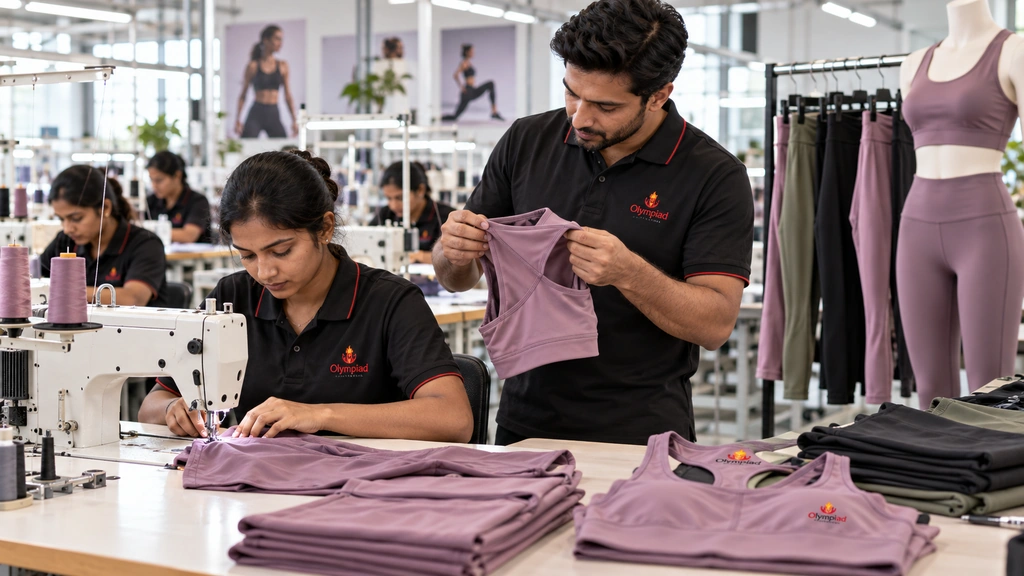
Relevant experience is more important than general apparel experience.
A factory producing basic T-shirts may not understand the technical requirements of fitted leggings, sports bras, or compression wear.
Ask to see examples of products similar to your intended collection.
If your main product is leggings, look for evidence of:
- Waistband construction
- Flat seams
- Pocket integration
- Stretch fabrics
- Squat-proof development
If you are developing sports bras, ask about:
- Support structures
- Straps
- Lining
- Padding
A manufacturer does not need to produce your exact design already, but it should demonstrate competence in the same category.
Check Whether the Manufacturer Produces In-House or Outsources
Understanding where production takes place helps you evaluate quality control and communication.
Some manufacturers manage:
- Cutting
- Stitching
- Printing
- Embroidery
- Packing
within their own facility.
Others outsource certain operations.
Outsourcing is not automatically a problem. Many professional manufacturers use specialized external partners.
The important issue is control.
Ask:
- Which processes are done in-house?
- Which are outsourced?
- Who performs final quality control?
- How are outsourced processes monitored?
A clear production chain reduces uncertainty.
Evaluate the Manufacturer’s Product Quality
Do not judge quality from website photos alone.
Request physical samples when possible.
You should evaluate several areas separately.
Fabric Quality
Check:
- Softness
- Stretch
- Recovery
- Thickness
- Surface quality
- Opacity
A good fabric should suit the product rather than simply feel expensive.
Stitching Quality
Look for:
- Even seams
- No skipped stitches
- No loose threads
- Clean seam intersections
- Adequate stretch
Activewear seams should move with the fabric.
Fit and Sizing
Wear or measure the sample.
Check whether the garment:
- Matches the size chart
- Feels balanced
- Moves comfortably
- Maintains coverage
Finishing Quality
Inspect:
- Hems
- Thread trimming
- Zippers
- Labels
- Pressing
- Packaging
Strong finishing improves perceived product value.
Branding Quality
Check:
- Logo position
- Print sharpness
- Transfer adhesion
- Embroidery quality
- Label placement
Branding should look consistent across all pieces.
Evaluate Activewear Fabric Options
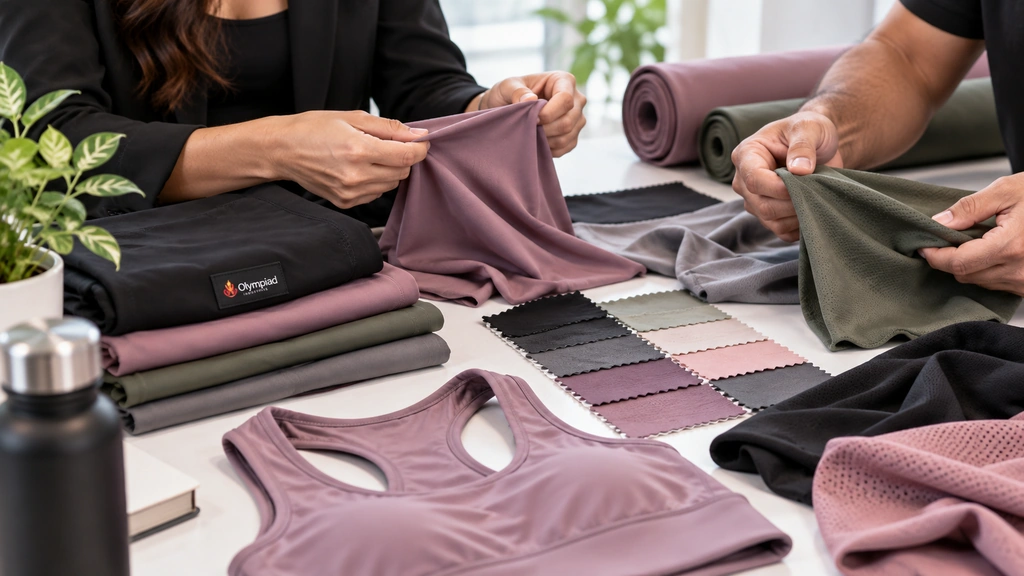
Fabric is one of the strongest indicators of whether a manufacturer truly understands activewear.
Ask the factory to explain the differences between available materials.
Nylon-Spandex
Suitable for many premium fitted products.
It can offer:
- Soft feel
- Stretch
- Recovery
- Comfortable compression
Common applications include:
- Leggings
- Sports bras
- Biker shorts
Polyester-Spandex
A versatile activewear material.
It can offer:
- Durability
- Stretch
- Moisture management
- Printing compatibility
It is widely used across gym and training wear.
Performance Polyester
Lightweight polyester fabrics are often used for:
- Running tops
- Training shirts
- Team training apparel
Breathability and surface feel can vary significantly.
Mesh Fabrics
Mesh may be used in:
- Underarms
- Side panels
- Back panels
- Sports bras
It can improve ventilation.
Ribbed and Brushed Fabrics
Rib fabrics provide texture.
Brushed fabrics provide softness.
Both should be tested for:
- Recovery
- Pilling
- Opacity
- Durability
Ask About Fabric GSM
GSM means grams per square meter and indicates fabric weight.
A manufacturer should be able to explain why a particular GSM suits a product.
For example:
- Running shirts generally need lighter materials
- Leggings may require more structure
- Compression garments may use denser fabrics
However, GSM alone does not determine quality.
A lower-weight dense knit can sometimes provide better coverage than a heavier loose knit.
Ask the manufacturer to provide both:
- GSM
- Composition
and then evaluate the physical fabric.
Check Stretch and Recovery Performance
Stretch allows the garment to move, while recovery helps it return toward its original shape.
Poor recovery can create:
- Baggy knees
- Loose waistbands
- Sagging
- Weak compression
Ask whether the manufacturer evaluates fabric recovery.
You can also test it manually.
Stretch the fabric several times and check whether it returns close to its original dimensions.
For leggings and compression wear, recovery should be treated as a major quality factor.
Check Squat-Proof and Opacity Performance
Opacity is particularly important for leggings and fitted shorts.
A material may look fully opaque when relaxed but become transparent during movement.
Ask whether the manufacturer:
- Tests leggings under stretch
- Evaluates lighter colors separately
- Adjusts patterns when fabric stretches excessively
A finished sample should be tested through:
- Squats
- Lunges
- Bending
Opacity should be evaluated under realistic lighting.
Evaluate Moisture-Wicking and Breathability
Performance claims should be connected to actual fabric behavior.
Ask whether moisture management comes from:
- Fiber construction
- Knit structure
- Finishing
If breathability is important, evaluate whether the product uses:
- Lightweight knit
- Mesh
- Ventilation zones
Do not assume all polyester fabrics are equally breathable or moisture-wicking.
The manufacturer should be able to explain why the selected material fits the intended activity.
Ask About Fabric Swatches Before Sampling
Fabric swatches allow you to compare materials before spending money on complete samples.
Request several options when possible.
Evaluate:
- Stretch
- Recovery
- Surface feel
- GSM
- Opacity
- Color
Physical swatches are especially useful when comparing fabrics that look similar online.
A good manufacturer should be able to explain:
- Composition
- GSM
- Available colors
- MOQ
- Recommended applications
Check Pattern-Making Capabilities
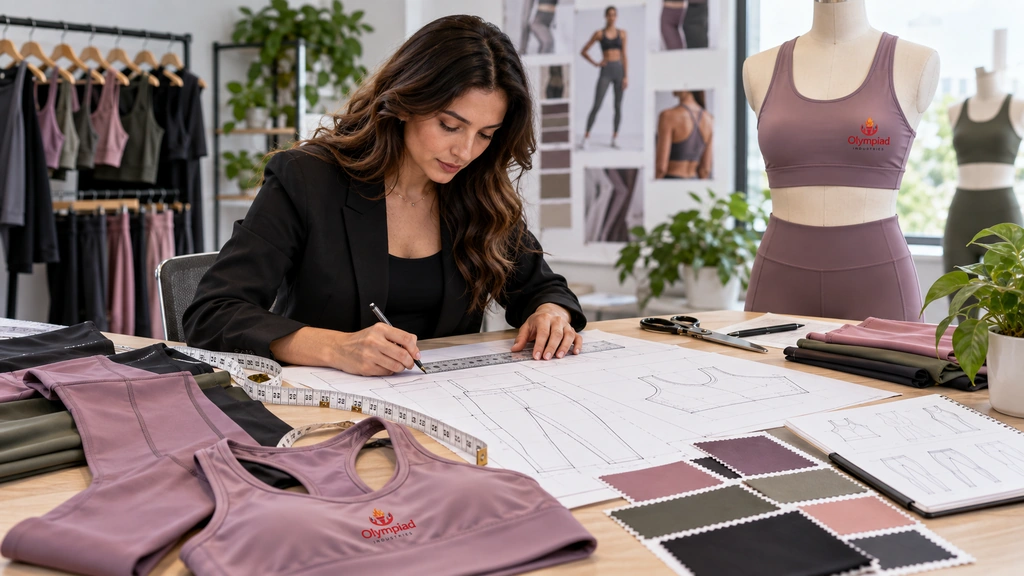
Pattern making is one of the most important parts of custom activewear.
A strong factory should be able to develop or adjust patterns according to:
- Measurements
- Fabric stretch
- Compression
- Product design
Poor patterns can create:
- Incorrect rise
- Loose waist
- Tight thighs
- Poor shoulder fit
- Unbalanced garments
Ask whether patterns are:
- Developed internally
- Digitized
- Graded across sizes
The answer can help you understand how consistently the factory works.
Why Custom Size Charts Matter
A brand’s size chart should reflect its intended customer rather than simply copying another company’s measurements.
Custom sizing helps create a consistent fit identity.
The manufacturer should be able to grade a base pattern across sizes while maintaining proportion.
Important measurements can include:
- Chest
- Waist
- Hip
- Rise
- Inseam
- Body length
- Sleeve length
For stretch garments, fabric behavior must be considered alongside measurements.
Evaluate Men’s and Women’s Activewear Fit Development
Men’s and women’s products should not necessarily use the same pattern logic.
Differences can include:
- Hip shape
- Rise
- Shoulder width
- Chest proportions
- Waist
- Thigh
If your collection serves both markets, ask whether the manufacturer develops separate base patterns.
For fitted activewear, this can significantly improve comfort and appearance.
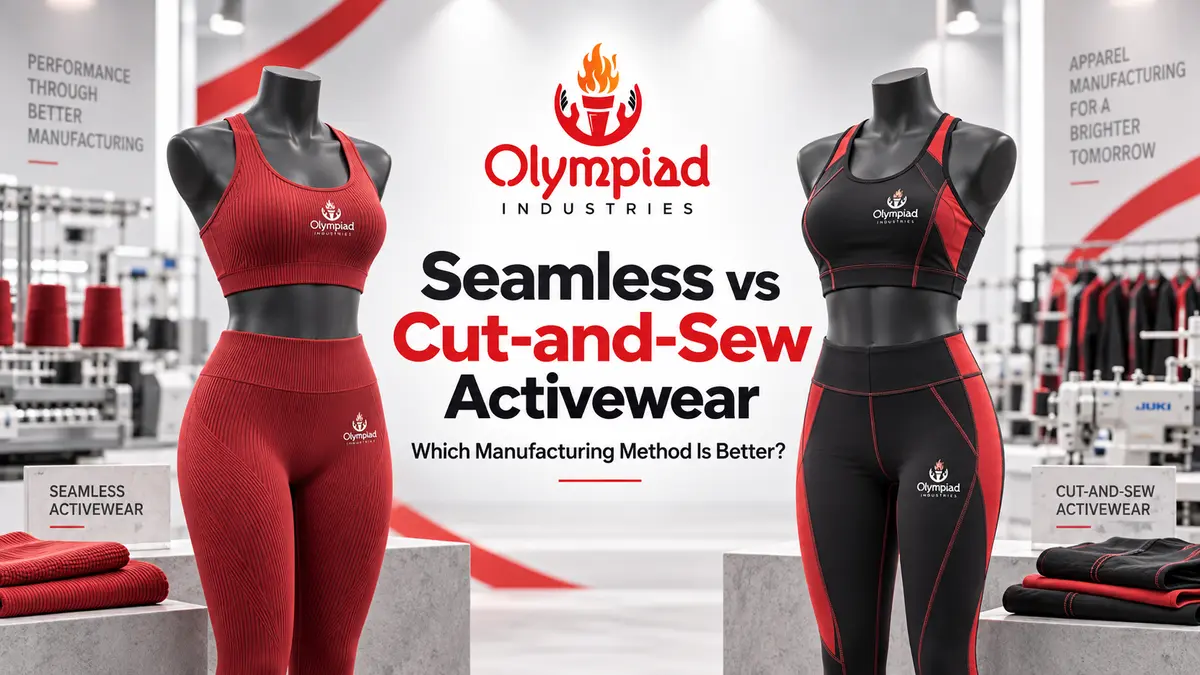
Ask About Seamless and Cut-and-Sew Capabilities
Some manufacturers specialize in one method.
Others can support both.
Ask whether the factory offers:
- Seamless knitting
- Cut-and-sew
- Both methods
This matters because different products may benefit from different approaches.
Seamless can be useful for:
- Sculpting leggings
- Ribbed sets
- Sports bras
Cut-and-sew offers greater flexibility for:
- Pockets
- Panels
- Multiple fabrics
- Custom seam lines
A good manufacturer should recommend the method based on the product, not simply sell whichever system it happens to use.
Also read: Seamless vs Cut-and-Sew Activewear: Complete Guide
Request a Physical Product Sample
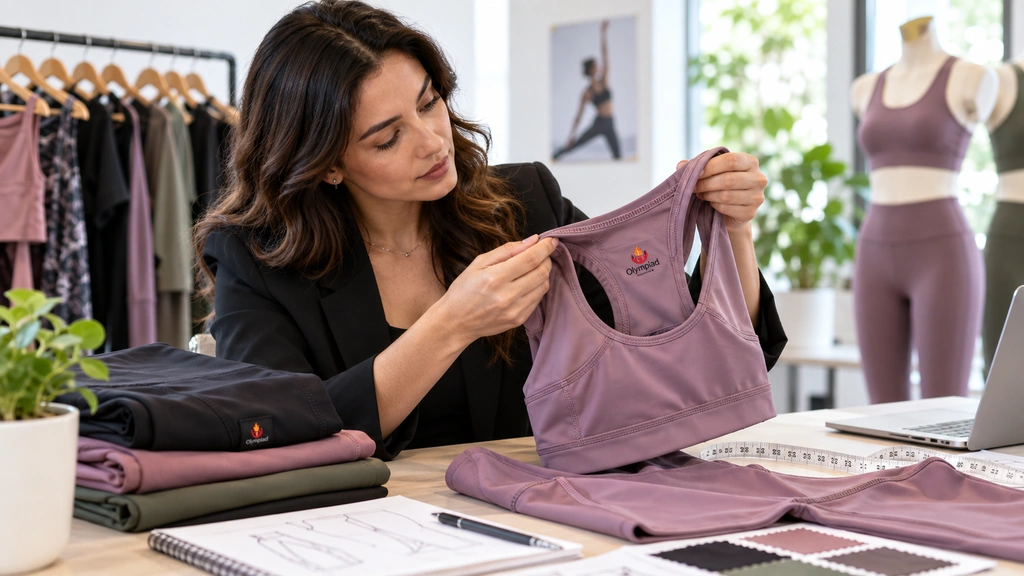
A physical sample is one of the most important tools for evaluating a manufacturer.
Do not approve bulk production based only on digital mockups.
A sample allows you to test:
- Fabric
- Fit
- Construction
- Branding
- Comfort
It also helps evaluate communication.
A professional manufacturer should be able to receive feedback and make revisions accurately.
What to Check on an Activewear Sample
Review samples systematically rather than relying on first impressions.
Measurements
Compare the garment with the approved specification.
Fit
Wear the product or fit it on the intended body type.
Check:
- Waist
- Chest
- Hip
- Length
- Compression
Stretch
Test movement in several directions.
Recovery
Check whether the garment returns to shape after wear.
Opacity
Perform realistic movement tests.
Seams
Inspect for:
- Comfort
- Stretch
- Strength
- Clean finishing
Branding
Check logo:
- Size
- Position
- Color
- Durability
Wash Performance
Wash the sample according to the intended care instructions.
Then inspect:
- Shrinkage
- Color
- Pilling
- Shape
- Logo durability
Understand the Manufacturer’s MOQ
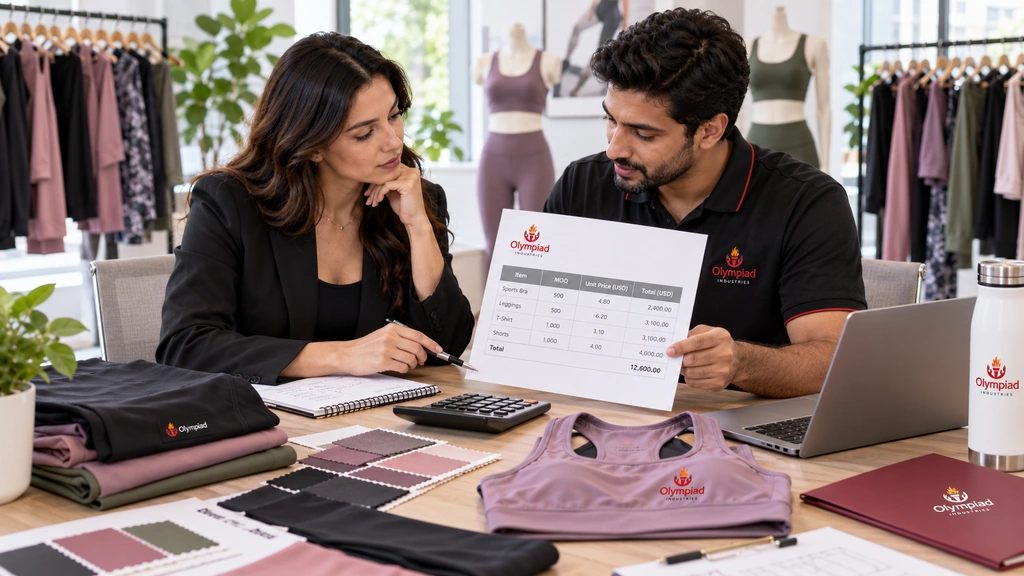
MOQ means Minimum Order Quantity.
Manufacturers may structure MOQ differently.
It can apply:
- Per style
- Per color
- Per fabric
- Per design
Ask for a clear explanation.
For example, a manufacturer may allow:
- 100 pieces total
but require:
- 50 pieces per color
This can dramatically affect inventory planning.
MOQ Per Style vs Per Color
Brands sometimes misunderstand this distinction.
If the MOQ is per style, you may be able to mix sizes or colors.
If it is per color, each color may need to meet its own minimum.
Before ordering, confirm:
- Can sizes be mixed?
- Can colors be mixed?
- Does each product require a separate minimum?
This helps prevent unexpected commitments.
How Fabric Choice Can Affect MOQ
Fabric mills often have their own minimums.
Using stock fabric can support smaller orders.
Custom fabric can require:
- Dedicated knitting
- Dyeing
- Finishing
This can increase the minimum.
For startups, using available fabrics and colors can reduce production risk.
Custom materials can be introduced later when sales volume becomes stronger.
Compare Activewear Manufacturing Prices Correctly
Price comparisons are only useful when the product specifications are the same.
One manufacturer may quote lower because it uses:
- Lighter fabric
- Lower-quality trims
- Simpler stitching
- Standard packaging
Another may include premium materials.
When comparing quotations, make sure each supplier is pricing the same:
- Fabric
- GSM
- Quantity
- Branding
- Packaging
- Construction
Otherwise, the comparison can be misleading.
What Should Be Included in a Manufacturing Quotation?
A professional quotation should clearly explain what is included.
It may contain:
- Product cost
- Quantity
- Fabric
- Branding
- Labels
- Packaging
- Sampling
- Shipping
Some quotations may include shipping while others do not.
Ask whether the price is:
- Factory price
- Delivered price
- Including packaging
- Excluding duties
Clear quotations reduce misunderstandings later.
Why the Cheapest Activewear Manufacturer May Not Be the Best Choice
The lowest unit price can become expensive if it results in:
- Poor quality
- High return rates
- Delays
- Inconsistent sizing
- Rejected products
A strong manufacturer can help reduce hidden costs.
Brands should consider overall value, including:
- Product quality
- Communication
- Reliability
- Repeat consistency
- Quality control
The goal should be to find a competitive manufacturer, not simply the cheapest.
Check Private Label and Branding Capabilities
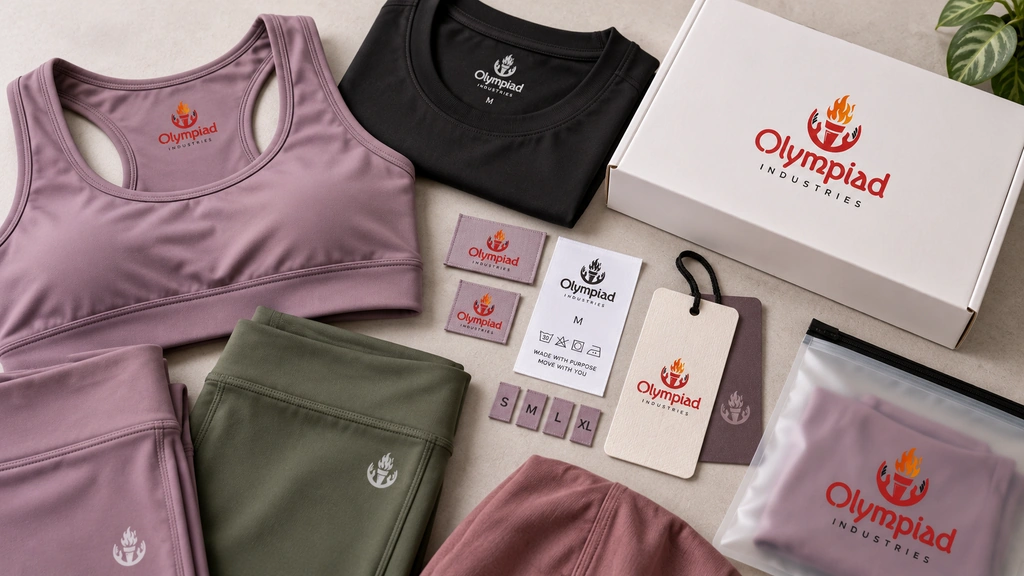
Private-label details help create a complete retail-ready product.
Ask which options are available.
Woven Labels
Useful for premium brand identity.
They should be comfortable and positioned appropriately.
Printed Labels
Printed labels can reduce bulk on activewear.
Care Labels
Care labels may include:
- Composition
- Washing instructions
- Size
- Other required information
Size Labels
These should be clear and consistent.
Hang Tags
Hang tags can include:
- Logo
- Product name
- Barcode
- Website
Custom Packaging
Options may include:
- Branded bags
- Zip bags
- Boxes
- Stickers
- Tissue
The factory should explain MOQ and cost for each branding component.
Check Printing and Decoration Capabilities
Different products require different decoration methods.
Sublimation
Best suited to compatible polyester fabrics.
Useful for:
- All-over prints
- Complex graphics
- Patterns
Heat Transfer
Common for:
- Logos
- Small graphics
- Activewear branding
Transfers should stretch without cracking.
Screen Printing
Useful for:
- Gym T-shirts
- Casual performance wear
Large prints should be evaluated for flexibility.
Embroidery
Often better suited to:
- Tracksuits
- Jackets
- Hoodies
than highly elastic leggings.
The manufacturer should recommend decoration according to the fabric.
Review the Manufacturer’s Quality-Control Process
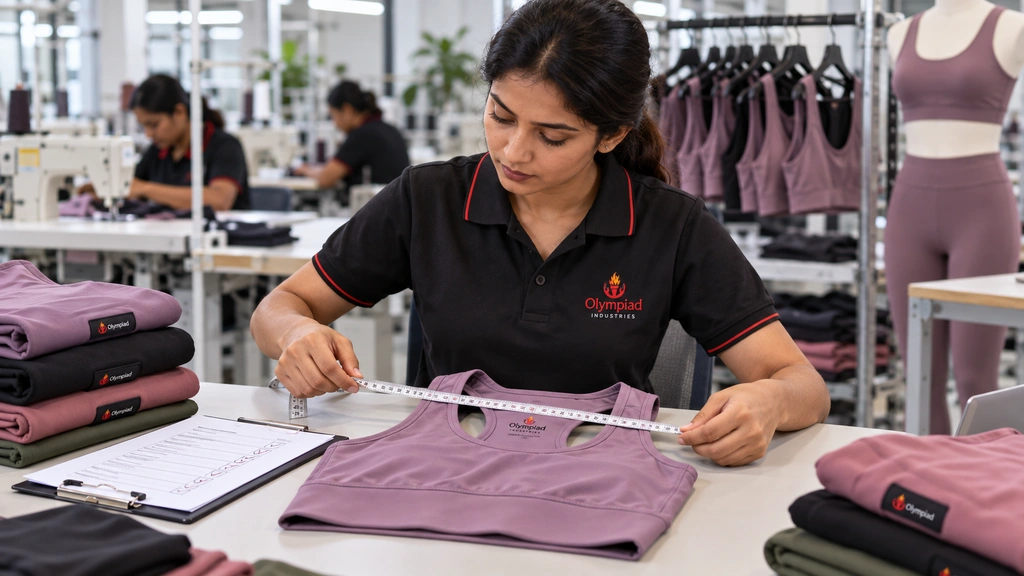
Quality control should happen throughout production rather than only at the end.
Ask how the factory handles different stages.
Raw Material Inspection
Fabric should be checked for:
- Defects
- Shade
- GSM
- Surface quality
Measurement Inspection
Finished garments should be compared with specifications.
Stitching Inspection
Inspect:
- Seams
- Thread
- Puckering
- Stitch consistency
Logo Inspection
Check:
- Position
- Color
- Adhesion
- Clarity
Final Inspection
Final inspection should include:
- Size
- Quantity
- Packaging
- Labels
- Appearance
A structured QC process is a positive sign.
Ask About Activewear Testing Procedures
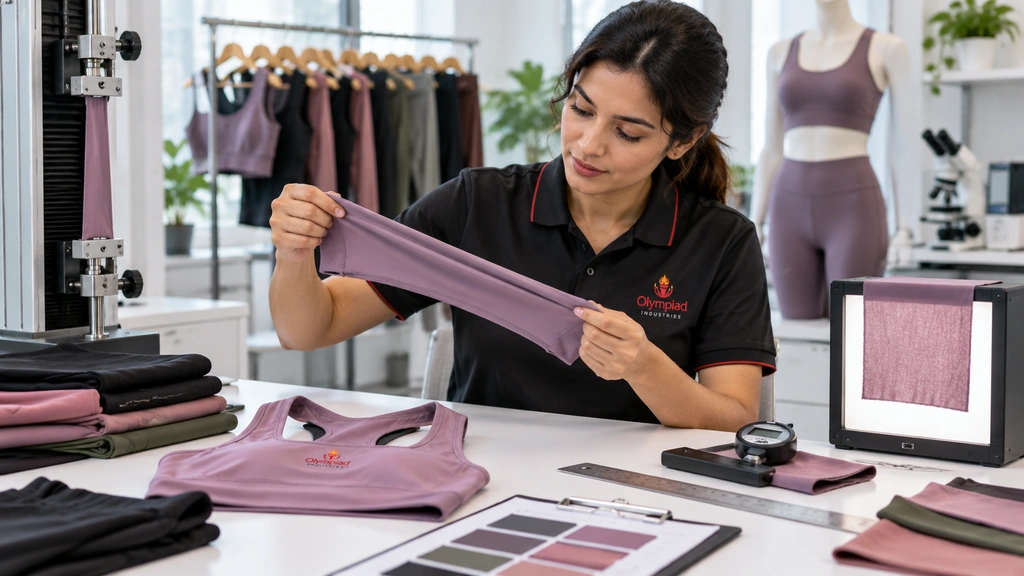
Performance testing is particularly important for activewear.
Stretch Testing
Confirms whether the material moves correctly.
Recovery Testing
Checks whether fabric returns to shape.
Opacity Testing
Important for leggings and fitted bottoms.
Wash Testing
Can reveal:
- Shrinkage
- Pilling
- Logo damage
- Color change
Pilling Testing
Important for soft or brushed fabrics.
Color Fastness Testing
Useful for dark colors and matching sets.
Not every project requires the same testing level, but the manufacturer should understand these issues.
Check Production Capacity
Production capacity matters if your brand plans to grow.
Ask the manufacturer:
- How many garments can be produced monthly?
- Can capacity increase for repeat orders?
- Are seasonal peaks a problem?
- How many production lines are available?
A manufacturer may be ideal for small batches but unable to support rapid growth.
Another may be designed for large orders but less flexible with startups.
Choose according to your expected scale.
Ask About Sampling Lead Time
Sampling time should be discussed separately from bulk production time.
Sample development may include:
- Fabric sourcing
- Pattern making
- Cutting
- Stitching
- Branding
Ask how long:
- First sample
- Revisions
- Final approval
usually take.
Complex products may require several rounds.
Allow enough time in your launch schedule.
Ask About Bulk Production Lead Time
Bulk production time begins after final approval.
It may depend on:
- Fabric availability
- Quantity
- Printing
- Labels
- Packaging
Ask whether the quoted lead time begins:
- After deposit
- After fabric arrives
- After final sample approval
These differences matter.
Build a buffer into your launch plan instead of depending on the shortest possible timeline.
Understand How Repeat Orders Are Managed
Repeat orders should be easier than first production.
Ask whether the manufacturer keeps records of:
- Patterns
- Fabric
- Colors
- Artwork
- Measurements
- Labels
Accurate production records help maintain consistency.
If every repeat order must be developed from scratch, this can create unnecessary delays.
Check Whether the Manufacturer Can Maintain Fabric and Color Consistency
Repeat consistency is important for growing brands.
Ask whether the manufacturer can source the same fabric again.
For custom colors, ask how shade differences between batches are managed.
Color variation can be especially visible in matching sets.
A strong manufacturer should understand:
- Batch variation
- Color approval
- Fabric references
Evaluate Communication Before Placing an Order
Communication quality is a strong indicator of how production may be handled.
Look for:
- Clear answers
- Timely replies
- Accurate specifications
- Willingness to clarify details
Red flags include:
- Vague answers
- Constantly changing prices
- Ignoring technical questions
- Promising everything without explanation
Good communication does not mean replying instantly at all hours. It means providing clear, reliable information.
Why Clear Product Specifications Matter
Many manufacturing disputes begin with unclear expectations.
A clear specification should describe:
- Fabric
- Color
- Fit
- Size
- Branding
- Packaging
Written confirmation is valuable.
Photos, measurements, artwork, and samples should all support the same approved specification.
The more specific the product requirements, the easier it becomes to judge whether the finished product is correct.
Tech Packs, Reference Images and Existing Samples
Different brands begin at different development stages.
A tech pack is the most structured format.
It can include:
- Drawings
- Measurements
- Fabric
- Stitching
- Branding
However, startups may not always have one.
Manufacturers can sometimes begin from:
- Reference photos
- Existing garments
- Sketches
- Measurement charts
If you use reference images, explain what you want to copy conceptually and what you want changed.
Avoid relying on photos alone for fit.
Check Whether the Manufacturer Supports Startups
Startup brands often need more guidance than established companies.
A startup-friendly manufacturer may help with:
- Fabric selection
- Sampling
- MOQ
- Labels
- Packaging
Ask whether the factory is comfortable working with smaller initial orders.
However, startups should still approach professionally.
Provide clear requirements and realistic expectations.
Choosing a Manufacturer for Small Orders
Small-order brands should prioritize flexibility.
Useful characteristics include:
- Stock fabrics
- Available colors
- Lower MOQ
- Flexible size mixing
- Simple packaging options
Avoid unnecessary custom development during the first order if it creates large fabric minimums.
A focused collection can reduce inventory risk.
Choosing a Manufacturer for Large Bulk Orders
Large buyers should focus more heavily on:
- Capacity
- Consistency
- Quality systems
- Production planning
- Delivery reliability
Ask whether the factory can handle:
- Multiple styles
- Multiple colors
- Large size ranges
Large orders should also have stronger inspection procedures.
Ask About International Shipping
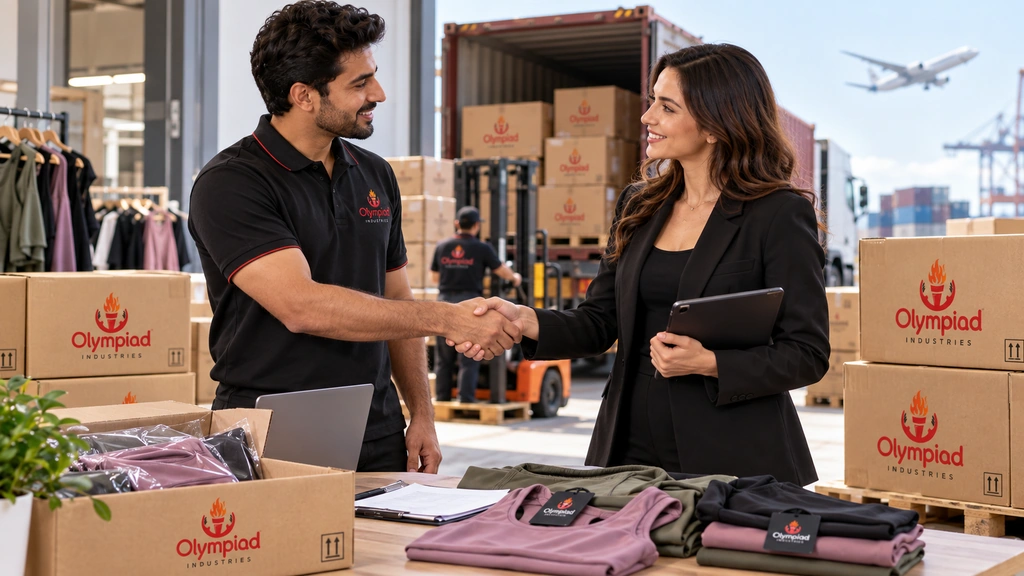
For international buyers, manufacturing is only part of the process.
Ask whether the manufacturer can arrange:
- Courier
- Air freight
- Sea freight
Confirm whether shipping cost is:
- Included
- Separate
- Estimated
Also discuss:
- Carton packing
- Export documents
- Tracking
The best shipping method depends on quantity and urgency.
Understand Shipping Terms and Responsibilities
Before payment, confirm who is responsible for:
- Freight
- Import duties
- Customs clearance
- Local delivery
Shipping terms should be explained clearly.
A low factory price can look attractive but become less competitive after freight and import costs are added.
Brands should calculate landed cost rather than factory price alone.
Verify the Manufacturer’s Business Credentials
Before placing a significant order, verify that the supplier is a real business.
Depending on the country, useful checks may include:
- Company registration
- Tax registration
- Business address
- Website
- Factory information
- Bank account name
Payments should ideally go to the verified business or approved company account.
Avoid relying only on social media profiles.
How to Evaluate Factory Photos and Production Videos
Factory images can provide useful context, but they should be reviewed carefully.
Look for evidence of:
- Cutting tables
- Sewing machines
- Production staff
- Fabric storage
- Quality control
- Packing areas
Ask for recent videos if required.
However, photos alone should not replace physical sampling and business verification.
The strongest evidence is a combination of:
- Factory information
- Samples
- Communication
- Documentation
Should You Visit the Factory Before Ordering?
A factory visit can be valuable for large or long-term orders.
It allows buyers to see:
- Production environment
- Machinery
- Quality processes
- Capacity
- Staff
However, it is not always necessary for startups or smaller international buyers.
A strong remote evaluation can include:
- Video calls
- Sample orders
- Factory videos
- Business documents
A visit becomes more valuable as order size and long-term commitment increase.
Red Flags When Choosing an Activewear Manufacturer
Certain warning signs deserve attention.
These can include:
- Refusing samples
- No clear business information
- Extremely low prices without explanation
- Inconsistent answers
- Promising unrealistic delivery times
- No understanding of activewear fabrics
- No quality-control process
- Frequent specification changes
- Pressure for immediate large payment
One red flag does not always prove a supplier is unreliable, but several together should make the buyer cautious.
Common Mistakes Brands Make When Selecting a Manufacturer
A common mistake is choosing a factory based only on unit price.
Another is placing a bulk order before fully approving the sample.
Other mistakes include:
- Not testing fabric
- Ignoring MOQ structure
- Not confirming packaging
- Approving logos digitally only
- Skipping wash tests
- Failing to confirm shipping cost
- Working without written specifications
Good sourcing decisions reduce problems before production begins.
Important Questions to Ask an Activewear Manufacturer
Before placing an order, ask questions that reveal both technical capability and business reliability.
Important questions include:
- Which activewear products do you specialize in?
- Do you manufacture in-house?
- Which fabrics do you offer?
- Can you provide fabric swatches?
- What GSM options are available?
- Can you develop custom patterns?
- Do you provide physical samples?
- What is your MOQ?
- Can sizes and colors be mixed?
- Which branding methods do you offer?
- Can you provide private labels?
- What quality-control checks do you perform?
- How long does sampling take?
- How long does bulk production take?
- How are repeat orders managed?
- Can you arrange international shipping?
- What packaging options are available?
- How are payments structured?
- Can you maintain fabric consistency?
- What happens if products fail inspection?
Clear answers provide valuable insight into how the manufacturer operates.
Activewear Manufacturer Evaluation Checklist
A structured checklist makes it easier to compare several factories.
Evaluate each manufacturer across:
- Product experience
- Fabric quality
- Pattern capability
- Sampling
- MOQ
- Price
- Private labeling
- Quality control
- Lead time
- Communication
- Shipping
- Business verification
Do not make the final decision based on one category.
A manufacturer with slightly higher pricing but stronger sampling, quality control, and communication may provide better overall value.
How Olympiad Industries Works With Activewear Brands
Olympiad Industries works with activewear brands, startups, fitness businesses, retailers, distributors, and other B2B buyers requiring custom and private-label apparel development.
Projects can begin from different levels of development, including:
- Tech packs
- Reference images
- Existing garments
- Sketches
- Measurement charts
- Buyer specifications
The production approach can then be developed according to the product, fabric, fit, quantity, branding, and intended market.
Product Review
The first stage is understanding:
- Product type
- Target fit
- Intended activity
- Fabric
- Quantity
- Branding
This helps define the manufacturing requirements.
Fabric Selection
Potential materials can be reviewed according to:
- Composition
- GSM
- Stretch
- Recovery
- Opacity
- Breathability
- Surface feel
Different garments may require different materials.
Pattern Making
Patterns can be developed according to:
- Measurements
- Product design
- Fabric stretch
- Fit requirements
Sampling
Physical samples allow buyers to evaluate:
- Fit
- Fabric
- Stretch
- Opacity
- Branding
- Construction
Changes can be documented before bulk production.
Embellishment and Branding
Depending on the product, branding options may include:
- Sublimation
- Heat transfer
- Screen printing
- Embroidery
Private-label services can include:
- Main labels
- Care labels
- Size labels
- Hang tags
- Packaging
Quality Control
Finished garments can be reviewed for:
- Measurements
- Stitching
- Fabric
- Branding
- Labels
- Finishing
Product-specific performance requirements can also be considered.
Packing and Shipping Preparation
Approved products can be:
- Tagged
- Packed
- Size sorted
- Prepared for international shipment
Packaging can be adjusted for:
- Ecommerce
- Retail
- Wholesale
- B2B distribution
FAQs About Activewear Manufacturer for Your Brand
How do I choose a good activewear manufacturer?
Look for relevant activewear experience, quality fabrics, custom pattern capabilities, physical sampling, clear MOQ, quality control, strong communication, private-label services, and reliable repeat production.
Should I choose the cheapest manufacturer?
Not necessarily. Compare product quality, fabric, construction, branding, communication, and consistency alongside price.
Should I order a sample before bulk production?
Yes. Activewear samples should be tested for fit, stretch, recovery, opacity, stitching, branding, and wash performance before bulk approval.
What fabric should an activewear manufacturer offer?
Useful options may include nylon-spandex, polyester-spandex, lightweight performance polyester, mesh, ribbed fabrics, and other technical materials depending on the product.
What MOQ should I expect?
MOQ varies by manufacturer, fabric, style, color, and branding. Always ask whether the minimum applies per style or per color.
How can I check whether leggings are squat-proof?
Test the finished sample while squatting, bending, and lunging under normal lighting.
Can an activewear manufacturer develop custom sizing?
Yes. A custom manufacturer can develop patterns and size charts based on buyer requirements and fabric stretch.
Can manufacturers provide private labels?
Many custom and private-label manufacturers can provide woven labels, printed labels, care labels, size labels, hang tags, and branded packaging.
How long does activewear production take?
Lead time depends on fabric, quantity, sampling, branding, and production complexity. Sampling and bulk manufacturing should be discussed separately.
Can I work with an overseas activewear manufacturer?
Yes. Many brands source internationally. Strong communication, samples, business verification, quality control, and clear shipping terms become particularly important.
Conclusion (Activewear Manufacturer for Your Brand)
Choosing an activewear manufacturer should be treated as a strategic sourcing decision rather than a simple price comparison.
The manufacturer influences almost every part of the final product, including fabric, fit, stretch, recovery, opacity, stitching, branding, packaging, lead time, and repeat-order consistency.
Brands should begin by defining their product requirements clearly. Once those requirements are established, potential manufacturers can be evaluated according to relevant activewear experience, fabric options, pattern capabilities, sampling, MOQ, quality control, production capacity, and communication.
Physical sampling is one of the most important steps. A sample allows the buyer to evaluate how the garment actually performs during movement rather than relying on photos or digital mockups.
Brands should also confirm quotation details, shipping responsibilities, business credentials, private-label options, and repeat-order procedures before committing to bulk production.
The cheapest manufacturer is not automatically the most economical choice. Poor quality, delays, inconsistent sizing, and customer returns can create much larger costs later.
The strongest manufacturing partnership is one in which both the brand and factory understand the approved specifications, communicate clearly, test products properly, and maintain consistency from sampling through repeat production.
Olympiad Industries supports activewear brands, startups, fitness businesses, retailers, distributors, and other B2B buyers with fabric selection, product development, pattern making, sampling, private labeling, embellishment, quality control, packaging, and bulk activewear manufacturing according to buyer-specific requirements.



Leave a Reply