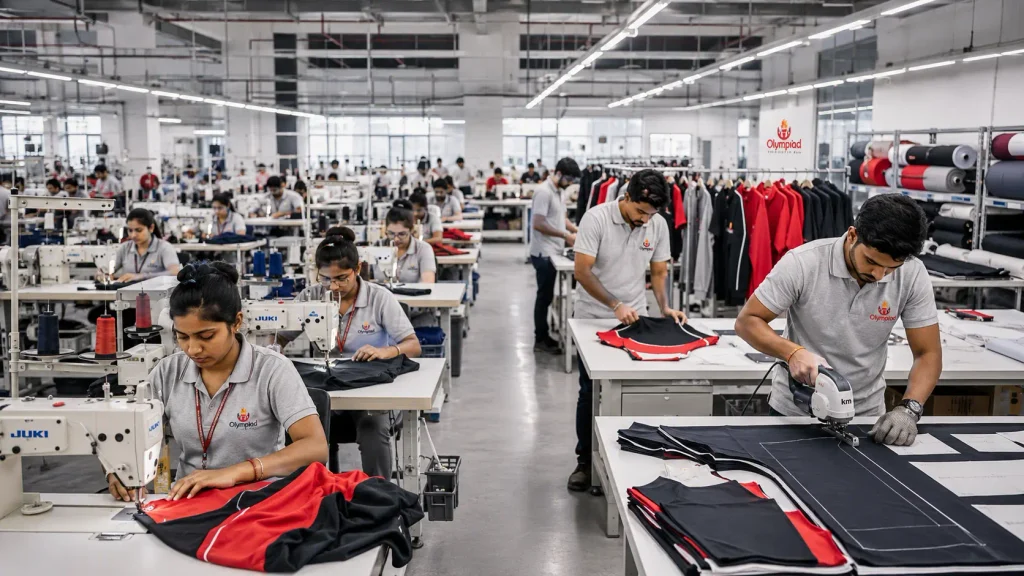

Custom leggings are one of the most important products in the activewear market, but they are also among the most technically demanding garments to manufacture correctly. A pair of leggings may look simple from the outside, yet the final performance depends on fabric stretch, recovery, opacity, pattern engineering, waistband construction, seam placement, sizing, and quality control.
For brands, private-label businesses, gyms, retailers, and fitness startups, the difference between average leggings and high-quality leggings is often found in small development decisions. A waistband that rolls down, a fabric that becomes transparent during a squat, seams that feel uncomfortable, or material that loses shape after washing can quickly create customer complaints.
Successful leggings development therefore requires more than choosing a color and adding a logo. The product should be designed around movement, fit, comfort, and repeated use.
This guide explains custom leggings manufacturing from initial product planning through fabric selection, GSM, pattern development, sampling, squat-proof testing, private labels, MOQ, bulk production, quality control, and packaging.
What Is Custom Leggings Manufacturing?
Custom leggings manufacturing is the process of producing leggings according to buyer-specific requirements rather than selling an unchanged stock product. The buyer may control the fabric, GSM, fit, waistband, length, seam construction, colors, pockets, branding, labels, and packaging.
Customization can range from modifying an existing base pattern to developing a completely new legging from the ground up. A startup may begin with a relatively simple design using an available stretch fabric, while an established brand may request custom fabric composition, specific compression, exclusive colors, unique panel lines, and a proprietary size chart.
Custom leggings can be developed for different purposes, including:
- Gym training
- Yoga
- Running
- Athleisure
- Compression
- Everyday fitness
- Studio wear
The manufacturing process should reflect the intended use because a yoga legging and a high-compression training legging should not necessarily use the same fabric or construction.
Why Leggings Require Specialized Manufacturing
Leggings fit very close to the body and are placed under significant tension during movement. This makes them more sensitive to development errors than many looser garments.
The fabric must stretch enough to allow movement, but it also needs enough recovery to return toward its original shape. If recovery is weak, the leggings may become loose around the knees, seat, or waistband after only a short period of wear.
Opacity is another major challenge. Material that looks fully covered when relaxed can become transparent under stretch. The final result depends on fabric density, GSM, color, pattern fit, and how much tension the garment creates.
Manufacturers also need to manage:
- Seam strength
- Waistband stability
- Rise
- Inseam
- Hip shaping
- Stretch direction
- Size grading
These factors make leggings manufacturing more technical than producing a standard loose-fitting T-shirt.
Custom Leggings vs Private Label vs White Label Leggings
These terms describe different levels of product control.
Custom leggings are developed according to the buyer’s specific technical and visual requirements. Private label leggings are sold under the buyer’s own brand and may also include extensive customization. White-label leggings are usually pre-developed products that multiple buyers can brand and resell.
Custom Leggings
Custom development can include:
- Unique pattern
- Custom measurements
- Fabric selection
- Specific GSM
- Custom waistband
- Pockets
- Panel construction
- Logo placement
This approach gives brands the greatest product differentiation.
Private Label Leggings
Private label can include:
- Brand labels
- Care labels
- Hang tags
- Packaging
- Custom colors
- Modified fit
- Custom logos
Depending on the manufacturer, private label can be almost as customized as full custom production.
White Label Leggings
White-label products can provide:
- Faster launch
- Lower development time
- Simpler sourcing
However, the buyer has less control over fit and construction.
For brands building a long-term product identity, custom or private-label manufacturing usually offers stronger differentiation.
Types of Leggings Brands Can Manufacture
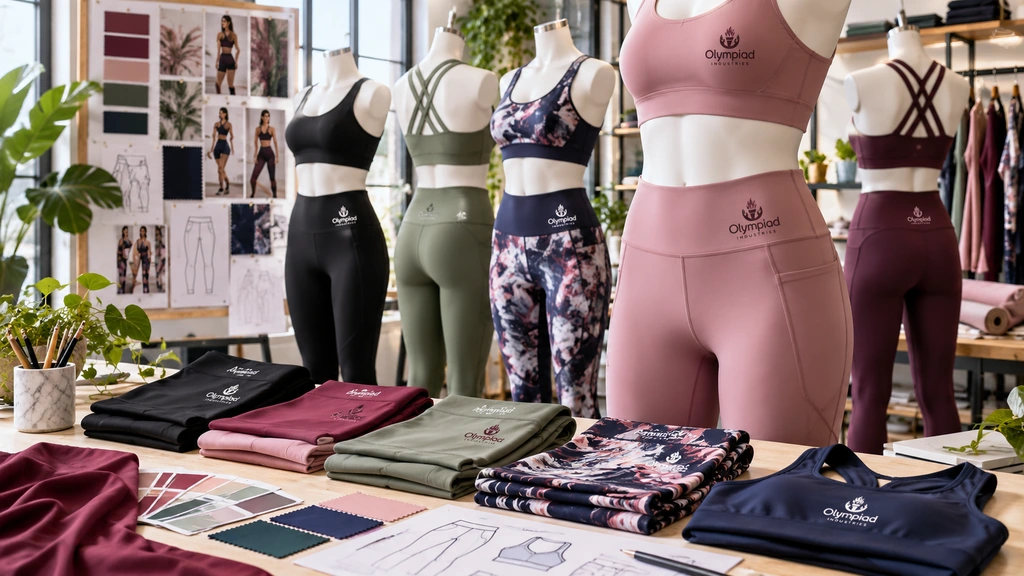
Not all leggings are designed for the same activity. The intended use should influence fabric, fit, waistband, compression, and construction.
A clear product category also helps the manufacturer recommend the right material and development approach.
High-Waisted Leggings
High-waisted leggings are popular because they provide greater coverage and support around the waist.
Important considerations include:
- Waistband height
- Compression
- Elastic structure
- Pattern angle
- Body proportions
The waistband should remain secure without feeling excessively tight.
Compression Leggings
Compression leggings are designed to fit more firmly around the body.
They typically require:
- Dense stretch fabric
- Strong recovery
- Reinforced seams
- Accurate sizing
The goal is controlled compression rather than simply making the garment smaller.
Yoga Leggings
Yoga leggings often prioritize:
- Softness
- Flexibility
- Comfortable seams
- Smooth movement
They may use softer nylon-spandex fabrics and moderate compression.
Gym and Training Leggings
Training leggings need to handle repeated:
- Squats
- Lunges
- Lifting
- Dynamic movement
Important requirements often include:
- Squat-proof opacity
- Stable waistband
- Strong seams
- Good recovery
Running Leggings
Running leggings may benefit from:
- Moisture management
- Breathability
- Pockets
- Secure waistband
Some designs also include reflective detailing.
Pocket Leggings
Pocket leggings require additional pattern development.
Pockets can be placed on:
- Side thighs
- Waistband
- Back waistband
The pocket should hold items securely without creating bulky or uncomfortable areas.
Seamless-Style Leggings
Some leggings are designed to create a cleaner, less interrupted visual appearance with minimal visible seams.
Even when produced with cut-and-sew construction, manufacturers can use strategic seam placement to create a smooth look.
Biker Shorts and Cropped Leggings
Biker shorts and cropped leggings use similar development principles but different lengths.
They still require careful attention to:
- Hem pressure
- Thigh fit
- Stretch
- Opacity
How the Custom Leggings Manufacturing Process Works
Leggings manufacturing should follow a controlled sequence from concept to approved bulk production.
Each stage helps reduce the risk of discovering major problems after large quantities have already been produced.
1. Define Product Requirements
The first step is to establish what the leggings need to do.
The buyer should provide information about:
- Intended activity
- Target customer
- Fabric preference
- Compression
- Waist height
- Length
- Pockets
- Color
- Branding
- Quantity
Clear requirements help the manufacturer recommend appropriate materials and construction.
2. Develop the Leggings Design
Design includes both appearance and function.
Consider:
- Waistband shape
- Seam lines
- Pockets
- Paneling
- Gusset
- Logo placement
- Hem
A visual design should also be practical to manufacture and comfortable during movement.
3. Choose the Fabric
Fabric selection should consider:
- Composition
- GSM
- Stretch
- Recovery
- Opacity
- Surface feel
- Moisture management
Physical swatches should be reviewed whenever possible.
4. Select GSM and Compression Level
Fabric weight and compression should work together.
A heavier fabric may offer more structure, but GSM alone does not determine compression.
Compression also depends on:
- Elastane content
- Knit construction
- Pattern fit
5. Develop the Pattern
The pattern determines how the garment fits.
Pattern development should consider:
- Waist
- Hip
- Thigh
- Rise
- Inseam
- Leg opening
Stretch fabric often uses negative ease, so the finished garment can be smaller than body measurements.
6. Create the Size Chart
The size chart should be developed from the approved base pattern.
It should define key measurement points across sizes.
Consistency is important because customers expect a predictable fit when moving between sizes.
7. Produce a Sample
The sample allows the buyer to test the design physically.
It should be made as close as possible to the intended production specification.
8. Test Fit and Performance
The sample should be worn during:
- Squats
- Lunges
- Bending
- Walking
- Training
This helps expose problems that are not visible when the garment is laid flat.
9. Approve Branding and Labels
Logo size, position, label type, and packaging should be finalized before bulk production.
10. Start Bulk Production
Bulk production should follow the approved sample and specifications.
11. Quality Control
Finished garments should be inspected for:
- Measurements
- Fabric
- Stitching
- Opacity
- Branding
- Labels
12. Tagging and Packaging
Approved products can then receive:
- Hang tags
- Size labels
- Care labels
- Individual packaging
Best Fabrics for Custom Leggings
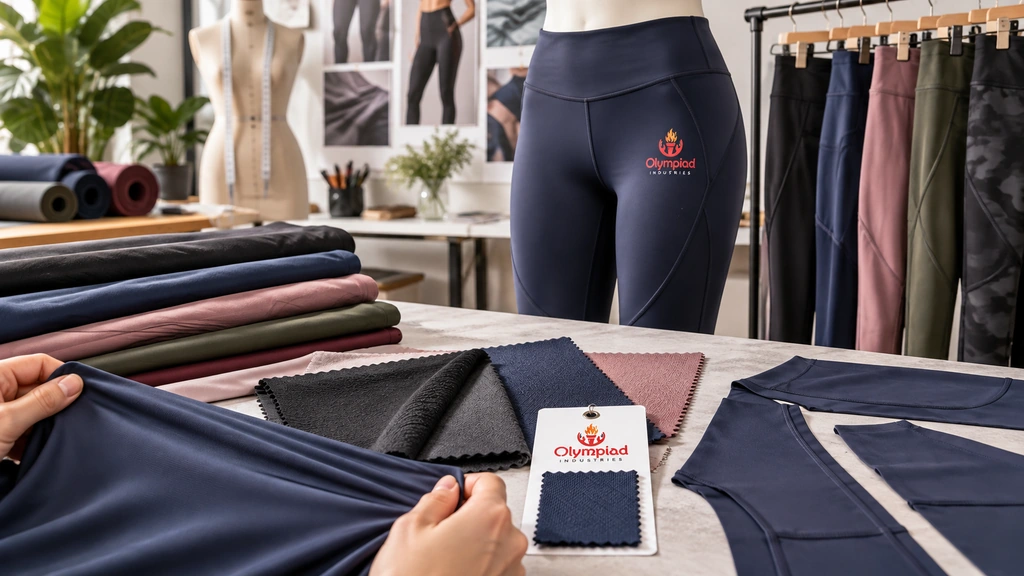
The right leggings fabric depends on the target product. There is no single material that is best for every brand.
Important properties include:
- Stretch
- Recovery
- Opacity
- Compression
- Comfort
- Durability
- Moisture management
Nylon-Spandex
Nylon-spandex is commonly used for premium leggings because it can provide:
- Smooth hand feel
- Strong stretch
- Soft compression
- Good recovery
It is particularly suitable for yoga and studio-style activewear.
Polyester-Spandex
Polyester-spandex is versatile and can provide:
- Durability
- Stretch
- Moisture management
- Strong print compatibility
It can be useful for gym, training, and printed leggings.
Recycled Polyester-Spandex
Recycled polyester blends can provide similar applications to conventional polyester-spandex.
Brands should still evaluate:
- Recovery
- Opacity
- Durability
- Stretch
rather than selecting the material only for its recycled content.
Brushed Performance Fabrics
Brushed fabrics have a softer surface and can create a premium feel.
They may be suitable for:
- Yoga leggings
- Winter activewear
- Lifestyle fitness wear
However, pilling should be tested carefully.
Ribbed Stretch Fabrics
Ribbed leggings provide visual texture.
They can be attractive for fashion-oriented activewear but should still be tested for:
- Recovery
- Opacity
- Seam stability
Also read: Best Fabrics for Activewear: Nylon, Polyester & Spandex
Nylon vs Polyester for Leggings
Both nylon and polyester can produce high-quality leggings when blended and knitted correctly.
Nylon is often preferred for a softer, more premium hand feel. Polyester is often preferred for durability, printing, and broad production flexibility.
Nylon may be better suited to:
- Yoga
- Studio wear
- Premium lifestyle activewear
Polyester may be better suited to:
- Gym leggings
- Running tights
- Sublimated designs
- Performance-focused collections
The final choice should depend on the intended use rather than general assumptions.
How Much Spandex Should Leggings Contain?
Spandex provides much of the stretch and recovery in leggings.
However, the ideal percentage depends on:
- Fabric construction
- Compression level
- Knit density
- Garment fit
A fabric with a higher elastane percentage can still perform poorly if the knit structure is unsuitable.
Brands should therefore evaluate actual stretch and recovery rather than relying only on the composition label.
The final sample should feel:
- Supportive
- Flexible
- Comfortable
- Stable
during movement.
What GSM Is Best for Leggings?
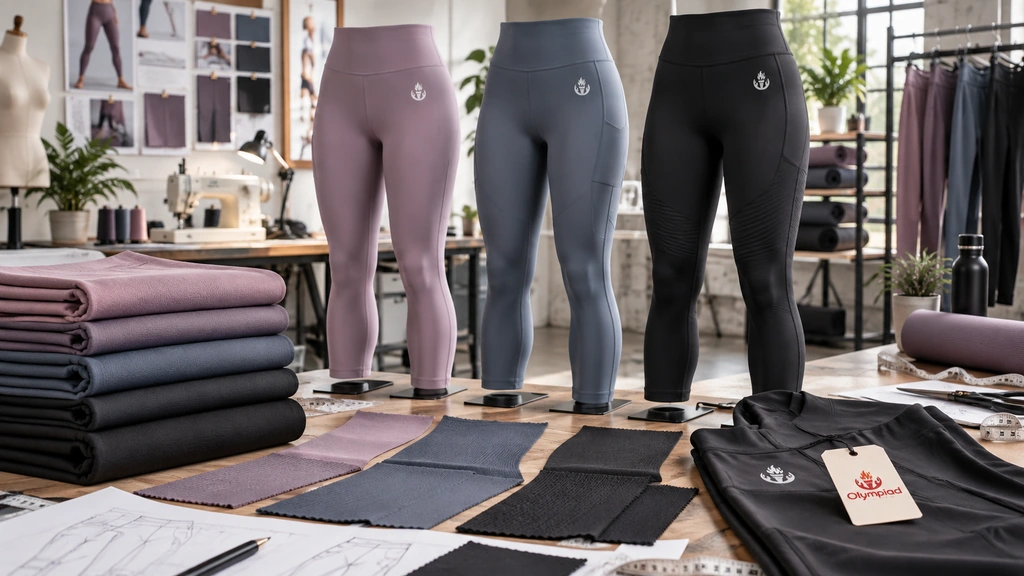
GSM describes fabric weight, but it should not be used as the only measure of quality.
Leggings usually require enough density to provide coverage and structure, especially during stretching.
The correct GSM depends on:
- Fabric type
- Knit
- Activity
- Compression
- Climate
Lightweight Leggings
Lighter fabrics may be useful for:
- Hot-weather training
- Running
- Light studio wear
However, opacity should be checked carefully.
Medium-Weight Leggings
Medium-weight fabrics often provide a practical balance of:
- Coverage
- Flexibility
- Comfort
- Compression
This range is common across general gym and fitness leggings.
High-Compression and Heavyweight Leggings
Heavier stretch fabrics can provide:
- Stronger structure
- More compression
- Better opacity
However, they may feel warmer or more restrictive.
The final choice should be based on physical testing.
What Makes Leggings Squat-Proof?
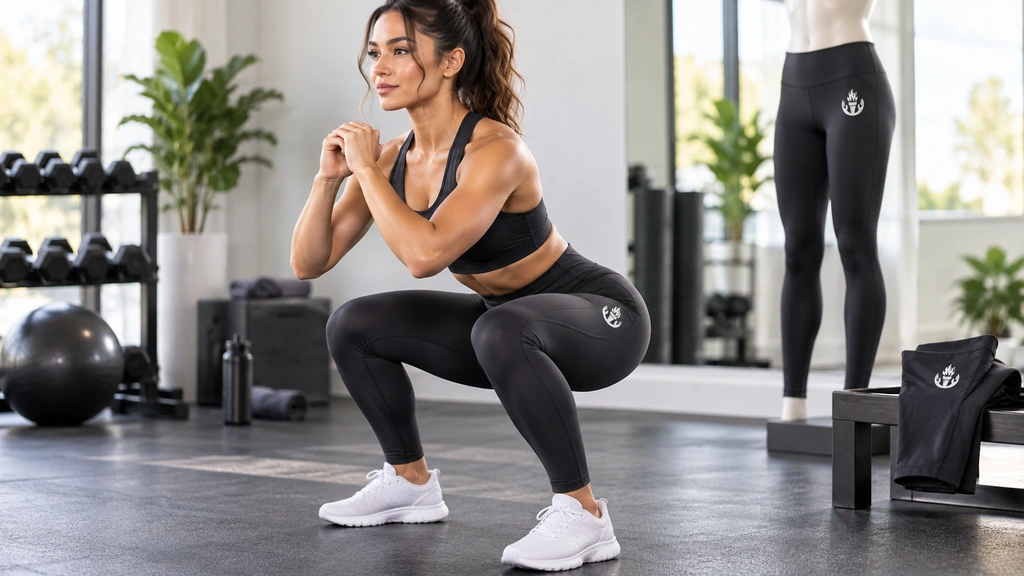
Squat-proof leggings remain acceptably opaque when the fabric is stretched during a squat or similar movement.
This depends on several variables working together.
Important factors include:
- Fabric density
- GSM
- Knit construction
- Color
- Stretch
- Pattern fit
- Correct sizing
A very good fabric can still become transparent if the garment is too small and overstretched.
This is why squat-proof performance should be assessed on the finished garment rather than the fabric alone.
How to Test Leggings for Opacity
Opacity testing should be performed under realistic conditions.
The wearer should test movements such as:
- Squats
- Lunges
- Bending
- Stretching
The garment should be checked in natural or bright lighting.
For more accurate evaluation, brands should test:
- Multiple sizes
- Multiple colors
- Different body shapes
Light-colored fabric often needs additional attention because transparency can become more visible.
Why Light-Colored Leggings Need Extra Testing
Light shades can reveal more under stretch than dark colors.
Colors such as:
- White
- Cream
- Beige
- Light gray
- Pastel pink
may show:
- Skin
- Underwear lines
- Seam allowances
more easily.
This does not mean light-colored leggings cannot be manufactured successfully.
Possible solutions include:
- Denser fabric
- Better knit construction
- Slightly heavier GSM
- Correct sizing
Every important colorway should be tested individually rather than assuming black-fabric approval applies to the full collection.
4-Way Stretch for Leggings
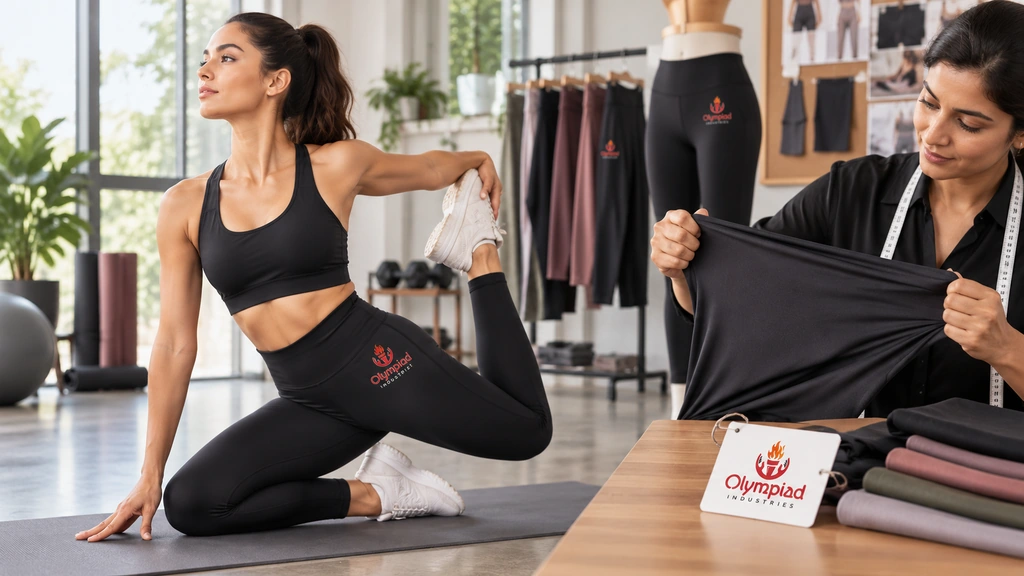
Four-way stretch is particularly valuable in leggings because the garment needs to move in several directions.
During exercise, the fabric may need to expand:
- Across the hips
- Around the thighs
- Along the legs
Four-way stretch can improve movement during:
- Squatting
- Yoga
- Running
- Lunging
However, the fabric must also recover properly after stretching.
Maximum stretch without strong recovery can result in a loose or unstable garment.
Stretch Recovery and Shape Retention
Stretch recovery determines whether leggings maintain their shape after being worn.
Poor recovery can create:
- Baggy knees
- Loose waistband
- Sagging seat
- Distorted fit
Brands should test recovery by repeatedly stretching the fabric and allowing it to return.
The complete garment should also be worn for a longer period before approval.
Areas that deserve special attention include:
- Knees
- Seat
- Waist
- Thighs
Strong recovery contributes significantly to a premium fit.
Compression Level in Leggings
Compression affects how firm the leggings feel against the body.
Different products may require different levels.
A yoga legging may use softer compression, while a performance training legging may provide a firmer feel.
Compression depends on more than fabric.
It is influenced by:
- Pattern measurements
- Fabric stretch
- Recovery
- GSM
- Elastane
Too much compression can cause discomfort.
Too little can make the leggings feel loose and unsupported.
The correct level should be tested on the intended customer profile.
How to Design a Supportive Waistband
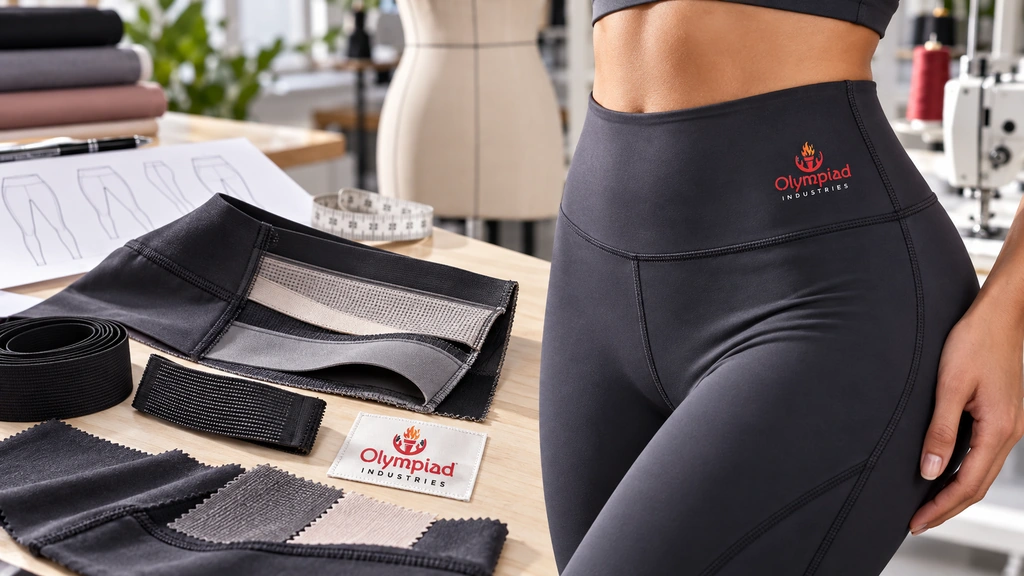
The waistband is one of the most important parts of leggings.
Customers often judge leggings by whether the waistband:
- Stays in place
- Rolls down
- Feels too tight
- Gaps at the back
A well-designed waistband should provide support without restricting movement.
High-Rise Waistbands
High-rise waistbands can offer:
- Greater coverage
- More stability
- Supportive feel
The waistband height should match the target customer and product style.
Waistband Rolling Problems
Rolling can occur because of:
- Incorrect waistband height
- Weak fabric recovery
- Excessive compression
- Poor pattern shape
Sample testing during movement is essential.
Waistband Compression
Compression should be enough to hold the waistband in place but not create uncomfortable pressure.
Some designs use:
- Double-layer fabric
- Internal elastic
- Shaped waistband patterns
The correct construction depends on the desired product.
Seam Placement and Leggings Construction
Seam placement affects both appearance and comfort.
Poorly positioned seams can create rubbing or uncomfortable pressure.
They can also change how the body is visually shaped.
Leggings may use different stitching systems according to the design.
Flat Seams
Flat seams can reduce bulk and create a smoother feel against the skin.
They are useful for close-fitting garments.
Overlock Seams
Overlock stitching is widely used in stretch apparel.
It provides seam flexibility and can be efficient for production.
Cover Stitching
Cover stitching can provide:
- Stretch
- Reinforcement
- Clean finishing
It may be used in selected areas depending on garment construction.
How to Add Pockets to Custom Leggings
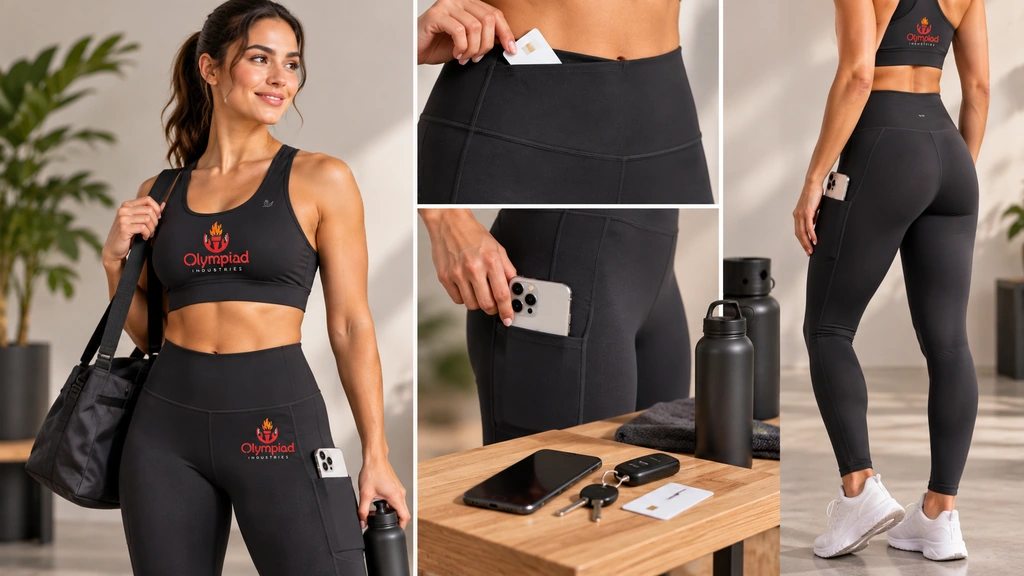
Pockets can improve product functionality but require careful design.
Side pockets should be large enough to hold items such as:
- Phone
- Card
- Key
without creating excessive bulk.
Pocket fabric should stretch with the main garment.
Important considerations include:
- Pocket depth
- Placement
- Opening angle
- Seam reinforcement
Waistband pockets are another option for smaller items.
The sample should be tested while walking, running, and training to ensure items remain secure.
Gusset Design and Why It Matters
A gusset is a fabric panel inserted into the crotch area.
It can help improve:
- Movement
- Comfort
- Fit
- Seam distribution
A well-designed gusset can reduce stress on the center crotch seam.
This can be especially useful in:
- Yoga
- Gym training
- Running
The gusset shape should work with the intended pattern and fabric.
Poor gusset construction can create unwanted bulk, so it should be tested physically.
Leggings Length Options
Length affects both style and intended use.
Brands may offer several options across a collection.
Full Length
Full-length leggings generally extend to the ankle.
They are suitable for:
- Gym
- Yoga
- Training
- Everyday activewear
7/8 Length
7/8 leggings finish above the ankle and are popular for fitness and lifestyle use.
Capri
Capri leggings finish around the lower calf.
They can be useful in warmer climates or studio wear.
Biker Length
Biker-style shorts usually finish above the knee or mid-thigh depending on design.
They require careful thigh-opening fit so the hem does not:
- Roll
- Dig into the leg
- Become loose
How to Develop a Leggings Size Chart
A leggings size chart should be developed from the actual pattern and fabric.
Important measurements may include:
- Waist
- Hip
- Thigh
- Rise
- Inseam
- Outseam
- Leg opening
Fabric stretch influences how garment measurements relate to body measurements.
For this reason, the same size chart may not work equally well with different materials.
The brand should maintain a consistent fit philosophy across future collections.
If one Medium fits very differently from another Medium, customers may lose confidence in sizing.
Negative Ease in Leggings Explained
Negative ease means the garment is smaller than the body measurement because the fabric stretches during wear.
This is normal in fitted activewear.
For example, leggings may have a smaller waist measurement than the wearer’s body waist.
The correct amount of negative ease depends on:
- Stretch percentage
- Recovery
- Compression goal
- Fabric construction
Too much negative ease can create:
- Excessive pressure
- Transparency
- Seam stress
Too little can create:
- Loose fit
- Poor support
Pattern development should therefore be based on the selected fabric.
Women’s vs Men’s Leggings Patterns
Men’s and women’s leggings should not automatically use the same pattern with different sizes.
Body proportions and fit expectations can differ.
Women’s leggings may require different shaping around:
- Waist
- Hip
- Rise
- Thigh
Men’s performance tights may require changes to:
- Front rise
- Hip proportions
- Waist construction
Brands targeting both markets should consider separate pattern development where appropriate.
This helps improve both fit and customer comfort.
Sampling Before Bulk Production
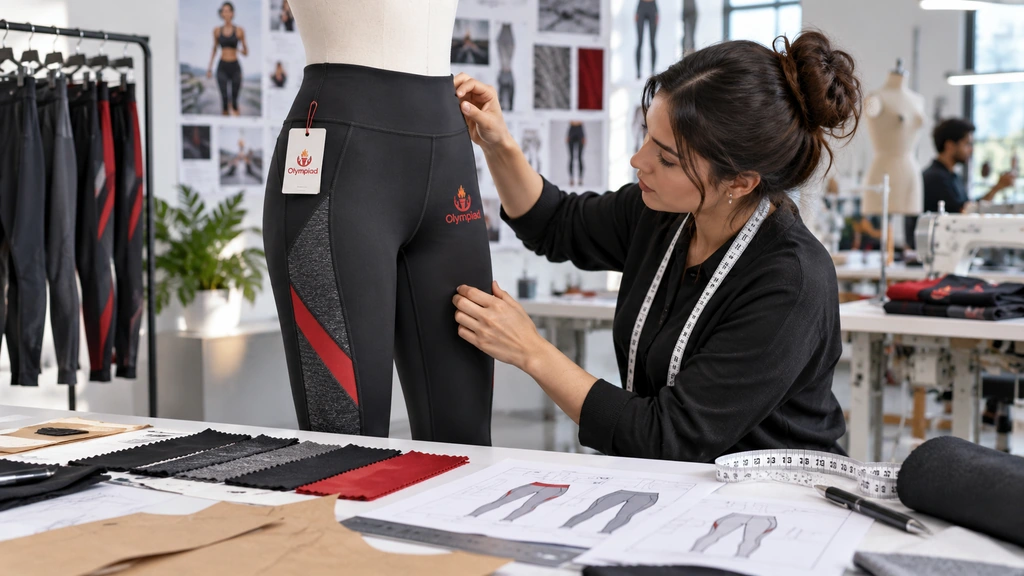
Sampling is one of the most important stages in leggings manufacturing.
Digital mockups can show:
- Color
- Logo
- General design
but cannot accurately show:
- Compression
- Opacity
- Waistband stability
- Seam comfort
- Fabric recovery
A physical sample should therefore be developed before bulk production.
The first sample may require several adjustments.
Common changes can include:
- Waist
- Rise
- Length
- Pocket size
- Compression
- Logo position
Sample revisions should be documented clearly.
What to Check on a Leggings Sample
A leggings sample should be tested systematically rather than judged only by appearance.
The objective is to identify both visual and performance problems.
Waist Fit
Check whether the waistband:
- Stays in place
- Gaps
- Rolls
- Feels overly tight
Hip and Thigh Fit
The fabric should fit smoothly without:
- Excessive wrinkles
- Overstretching
- Restricting movement
Rise
Rise affects both comfort and coverage.
A rise that is too short can create pulling and discomfort.
Inseam
Check whether the length matches the approved specification.
Seam Comfort
Seams should not create:
- Rubbing
- Sharp edges
- Excessive bulk
Stretch Recovery
Wear the leggings for an extended period and check whether the fabric remains stable.
Opacity
Perform squat and bend tests.
Movement
Test the garment during:
- Squats
- Lunges
- Walking
- Stretching
The waistband, seams, and fabric should remain comfortable.
Also read: How to Start an Activewear Brand: Complete Step-by-Step Guide
Leggings Wash Testing
Washing can reveal problems that are not visible on a new garment.
A sample should be washed according to expected consumer care instructions.
After washing, inspect:
- Measurements
- Color
- Surface
- Stretch
- Logo
- Seam condition
Compare the garment before and after washing.
Possible issues include:
- Shrinkage
- Pilling
- Shape loss
- Color change
Multiple wash cycles can provide a better indication of long-term performance.
Pilling and Abrasion Testing
Leggings are exposed to repeated friction.
Common contact areas include:
- Inner thighs
- Gym benches
- Equipment
- Seats
Pilling can significantly reduce the premium appearance of the product.
Soft or brushed fabrics deserve particular attention.
Sample garments can be worn repeatedly or tested using controlled abrasion methods.
The goal is to identify whether the surface develops visible fiber balls or roughness too quickly.
Color Fastness and Dye Transfer
Leggings are frequently exposed to sweat and washing, so color stability is important.
Poorly controlled fabric can:
- Fade
- Transfer dye
- Stain lighter garments
Dark colors such as black, navy, and red may deserve special attention.
Brands should also check color matching when producing coordinated sets.
A sports bra and leggings intended to match should appear consistent even if the garment construction differs.
Printing Options for Custom Leggings
Printing needs to work with highly stretchable fabric.
A method that looks correct while the garment is relaxed may behave differently when stretched.
Sublimation
Sublimation is suitable for compatible polyester fabrics.
It can create:
- Full-color graphics
- Patterns
- All-over designs
Because the dye becomes part of the fabric, the printed area does not create a thick surface layer.
Heat Transfer
Heat transfer is useful for:
- Logos
- Small graphics
- Branding
The transfer material should be flexible enough to stretch with the garment.
Screen Printing
Screen printing can be used in some leggings applications, but ink flexibility needs to be considered.
Large rigid prints may feel uncomfortable or crack under stretch.
Logo Placement on Leggings
Logo placement should support both branding and garment appearance.
Common locations include:
- Upper hip
- Back waistband
- Lower leg
- Side leg
The logo should be sized according to the garment rather than simply copied from larger products.
Brands should also consider how placement behaves during stretch.
A logo positioned over a high-tension area can distort more than one placed on a stable area.
The final position should be approved on a physical sample.
Private Labels for Leggings
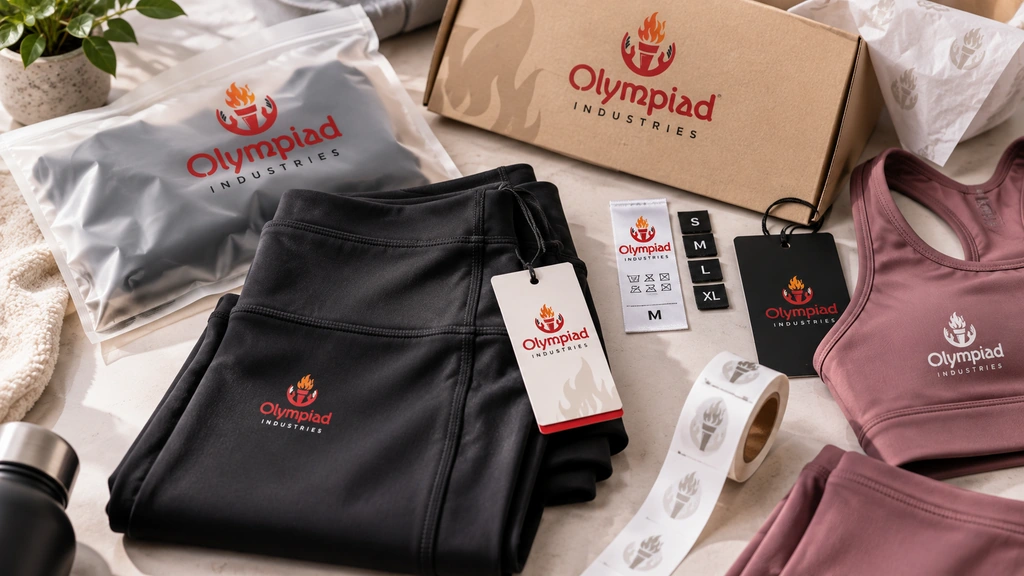
Private labels help create a complete branded product.
Leggings can include several types of labels depending on the brand strategy.
Waist Labels
A main brand label can be positioned inside the waistband.
It should be soft enough to avoid irritation.
Care Labels
Care labels may provide:
- Fabric composition
- Washing instructions
- Size
- Other required product information
Size Labels
Size identification should be clear and consistent.
Hang Tags
Hang tags can include:
- Logo
- Product name
- Website
- Barcode
- Retail information
The entire labeling system should feel consistent with the brand.
Also read: Private Label Activewear Manufacturing: Complete Brands Guide
Custom Packaging for Private Label Leggings
Packaging protects the garment and helps create the final customer presentation.
Possible options include:
- Standard polybags
- Branded bags
- Zip bags
- Tissue paper
- Stickers
- Custom boxes
Direct-to-consumer brands may want stronger presentation.
Wholesale buyers may prioritize efficient:
- Size identification
- Carton packing
- Product sorting
Startups can begin with simpler packaging and upgrade as order volume increases.
MOQ for Custom Leggings
MOQ means Minimum Order Quantity.
The MOQ for custom leggings may depend on:
- Fabric
- Color
- Design
- Labels
- Packaging
- Production method
Using available stock fabric can sometimes support smaller initial quantities.
Custom-dyed material may require a larger commitment because the fabric mill has its own minimum.
Brands should ask whether MOQ applies per:
- Style
- Color
- Fabric
- Design
before finalizing the collection.
How Fabric Choice Affects Leggings MOQ
Fabric is often one of the strongest MOQ drivers.
If the required fabric already exists in stock, the manufacturer may be able to source a smaller quantity.
Custom fabric may require:
- Dedicated knitting
- Custom dyeing
- Special finishing
Each of these can increase the minimum order.
Brands can often reduce initial complexity by choosing:
- Existing fabrics
- Available colors
- Standard finishes
Custom development can be introduced later once demand becomes predictable.
How Much Does Custom Leggings Manufacturing Cost?
There is no universal price for custom leggings because cost depends on the complete specification.
Two products that look similar may have very different costs.
Important factors include:
- Fabric type
- GSM
- Elastane
- Pockets
- Seam construction
- Quantity
- Branding
- Labels
- Packaging
A premium nylon-spandex legging with multiple pockets and custom packaging will generally cost more than a simple polyester-spandex basic style.
Brands should request quotations using the same specification when comparing manufacturers.
Factors That Affect Leggings Unit Price
Unit cost is influenced by both materials and manufacturing complexity.
Major factors can include:
- Fabric cost
- Fabric consumption
- Pattern complexity
- Number of panels
- Pockets
- Stitching
- Printing
- Labels
- Packaging
- Quantity
Larger quantities can reduce unit cost because setup and material purchasing become more efficient.
However, startups should not over-order only to obtain a lower price.
Unsold inventory creates its own financial risk.
Planning Your First Leggings Bulk Order
A first leggings order should balance cost with realistic demand.
Before ordering, consider:
- Existing audience
- Pre-orders
- Size demand
- Color demand
- Marketing budget
Avoid dividing the order across too many combinations.
For example, five colors across six sizes already create 30 inventory combinations for one legging style.
A startup may benefit from launching:
- One core style
- Two or three colors
- A focused size range
and then using real customer data to guide repeat production.
Quality Control for Custom Leggings
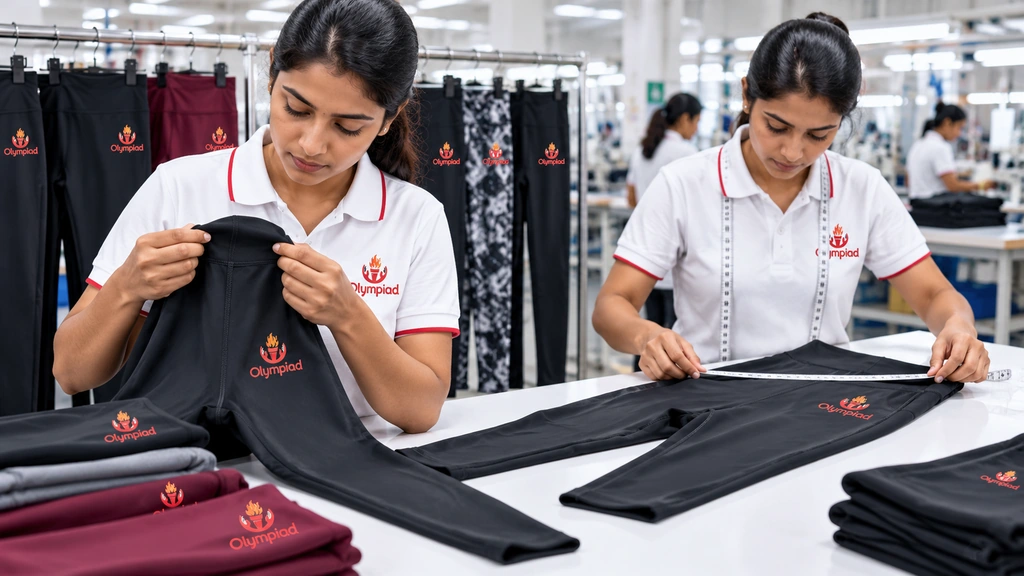
Leggings quality control should go beyond appearance because many important defects appear only during stretching or movement.
The final inspection should compare bulk production with the approved sample.
Measurement Inspection
Check important points such as:
- Waist
- Hip
- Rise
- Inseam
- Length
Measurements should remain within the approved tolerance.
Fabric Inspection
Check:
- Shade
- Surface quality
- Defects
- Stretch
- Consistency
Seam Inspection
Inspect seams for:
- Loose threads
- Missed stitches
- Puckering
- Weak areas
Opacity Testing
Random pieces can be checked under stretch where appropriate.
Branding Inspection
Confirm:
- Logo size
- Position
- Color
- Adhesion
Final Packing Inspection
Verify:
- Size labels
- Hang tags
- Packaging
- Quantity
before shipment.
Common Leggings Manufacturing Defects
Leggings can develop several recurring manufacturing problems.
Examples include:
- Uneven seams
- Waistband twisting
- Poor stretch recovery
- Transparent fabric
- Puckering
- Incorrect rise
- Uneven leg length
- Cracked logos
- Misaligned pockets
Many of these issues can be prevented through:
- Correct fabric
- Accurate patterns
- Proper samples
- Quality control
The earlier a problem is identified, the easier it is to correct.
Common Mistakes New Leggings Brands Make
New brands often focus on the visual design while underestimating product performance.
One of the most common mistakes is choosing fabric only because it looks soft or premium.
Other frequent mistakes include:
- Ignoring opacity testing
- Using the wrong GSM
- Approving fit from photos
- Skipping wash testing
- Launching too many colors
- Using weak waistbands
- Ignoring seam comfort
- Ordering bulk before sample approval
- Choosing the lowest price instead of the best value
A smaller but well-tested first collection can create a much stronger foundation than a large poorly developed one.
Questions to Ask a Leggings Manufacturer
Before placing an order, brands should confirm both technical and commercial details.
Useful questions include:
- Which leggings fabrics do you offer?
- What are the available GSM options?
- Can you provide nylon-spandex and polyester-spandex?
- Can I receive fabric swatches?
- Can you develop custom patterns?
- Can you produce high-waisted leggings?
- Can you add pockets?
- How do you test opacity?
- Can you produce product samples?
- What stitching methods do you use?
- Can you provide private labels?
- What is the MOQ?
- Can colors and sizes be mixed?
- What packaging options are available?
- How do you manage repeat production?
The manufacturer’s answers should be clear enough to help you understand what will actually be produced.
How Olympiad Industries Manufactures Custom Leggings
Olympiad Industries develops custom and private-label leggings for activewear brands, startups, fitness businesses, retailers, distributors, and other B2B buyers.
Projects can begin from:
- Tech packs
- Reference images
- Existing samples
- Sketches
- Measurement charts
- Buyer specifications
The product requirements can then be reviewed according to the intended use, fabric, fit, compression, branding, and quantity.
Fabric Selection
Potential fabrics can be evaluated according to:
- Composition
- GSM
- Stretch
- Recovery
- Opacity
- Surface feel
- Moisture management
Available materials may include nylon-spandex, polyester-spandex, and other performance stretch fabrics according to project requirements.
Pattern Making
Patterns can be developed around:
- Waist
- Hip
- Rise
- Thigh
- Inseam
- Length
Fabric behavior is considered because stretch affects final fit.
Sampling
A physical sample allows the buyer to evaluate:
- Fit
- Compression
- Opacity
- Waistband
- Pockets
- Seams
- Branding
Changes can be documented and applied before bulk manufacturing.
Stitching and Construction
Construction is selected according to the product.
Important considerations include:
- Seam stretch
- Comfort
- Reinforcement
- Movement
Branding
Depending on the design, branding can include:
- Heat transfer
- Sublimation
- Screen printing
- Other suitable applications
Private-label development can also include:
- Main labels
- Care labels
- Size labels
- Hang tags
Quality Control
Finished leggings can be reviewed for:
- Measurements
- Stitching
- Fabric
- Opacity
- Branding
- Labels
- Finishing
Tagging and Packing
Approved garments can be prepared with:
- Hang tags
- Size identification
- Care labels
- Individual bags
- Custom packaging
This can be adjusted according to retail, ecommerce, wholesale, or other B2B requirements.
Frequently Asked Questions
What is the best fabric for custom leggings?
Nylon-spandex and polyester-spandex are both common options. The best fabric depends on softness, compression, stretch, opacity, moisture performance, printing method, and intended use.
What GSM is best for leggings?
There is no single ideal GSM. The correct fabric should provide enough coverage, structure, comfort, and stretch for the product. Physical sample testing is more useful than selecting fabric only by GSM.
How do you make leggings squat-proof?
Squat-proof performance depends on fabric density, GSM, color, stretch, correct pattern fit, and sizing. The finished garment should be tested under movement.
Is nylon better than polyester for leggings?
Nylon often provides a softer premium feel, while polyester can offer strong durability, moisture management, and better compatibility with sublimation. Both can produce excellent leggings.
What is 4-way stretch in leggings?
Four-way stretch allows the fabric to stretch meaningfully across both horizontal and vertical directions, supporting movements such as squatting and lunging.
Should leggings have a gusset?
A gusset can improve movement, comfort, and crotch seam distribution, but its suitability depends on the product design.
Can custom leggings include pockets?
Yes. Side, waistband, and other pocket styles can be developed depending on the garment.
Should I order a sample before bulk production?
Yes. Sampling is especially important for leggings because opacity, compression, waistband stability, fit, and stretch recovery cannot be fully evaluated from a digital design.
What is the MOQ for custom leggings?
MOQ varies according to fabric, color, design, labels, packaging, and manufacturer. Using stock fabrics and existing colors can sometimes reduce initial quantity requirements.
Can leggings be private labeled?
Yes. Private-label leggings can include custom brand labels, care labels, size labels, hang tags, logos, and packaging.
Conclusion
Custom leggings manufacturing requires careful coordination between fabric, pattern, stretch, recovery, opacity, sizing, waistband design, seam construction, and quality control.
A high-quality pair of leggings should not only look attractive. It should remain comfortable during movement, maintain sufficient coverage, recover its shape after stretching, and continue performing after repeated wear and washing.
Fabric selection is one of the most important decisions. Nylon-spandex can provide a smooth premium feel, while polyester-spandex can offer strong durability, moisture performance, and decoration flexibility. GSM should be evaluated together with knit density and stretch rather than treated as a standalone quality measure.
Sampling is essential. The garment should be tested through squats, lunges, bending, and extended wear before bulk production begins. Waistband stability, opacity, seam comfort, and shape retention should all be reviewed.
Brands should also plan MOQ, labels, packaging, production quantities, and quality control before placing their first bulk order.
A focused, properly developed legging can become a core product around which an activewear collection grows.
Olympiad Industries supports activewear brands, startups, fitness businesses, retailers, distributors, and other B2B buyers with custom leggings development, fabric selection, pattern making, sampling, private labeling, branding, quality control, packaging, and bulk manufacturing according to buyer-specific requirements.



Leave a Reply