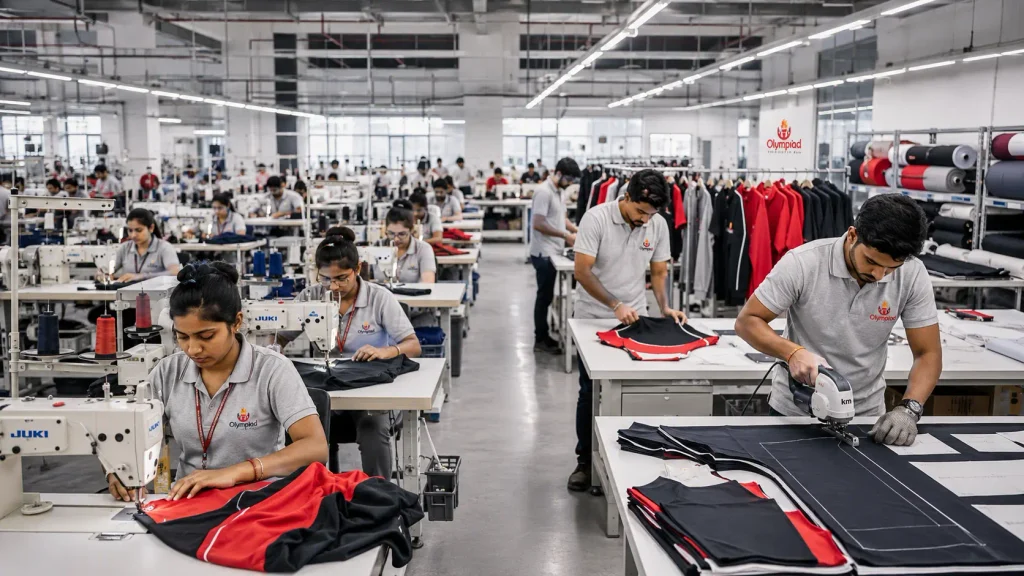
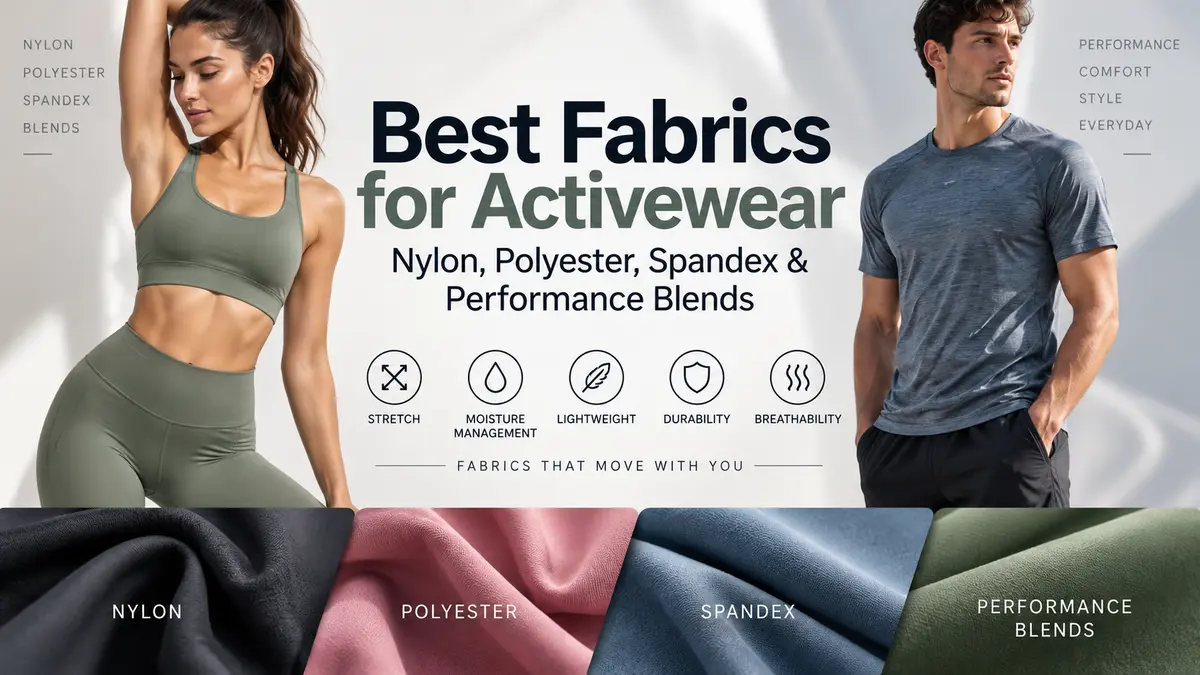

Best Fabrics for Activewear: Choosing the right fabric is one of the most important decisions in activewear product development. A garment can have an attractive design and strong branding, but if the material does not stretch correctly, recover its shape, manage moisture, or provide enough coverage, customers are unlikely to consider it a high-quality product.
Activewear fabrics also need to perform differently depending on the garment. Leggings require different characteristics from lightweight running shirts, while sports bras need more controlled stretch and support than relaxed gym tops. Compression products introduce another set of requirements because they must remain close to the body without becoming uncomfortable or losing shape.
For this reason, brands should not select fabric based only on composition. A label saying “polyester-spandex” does not tell the complete story. Knit construction, GSM, stretch direction, recovery, surface finish, opacity, moisture behavior, and durability can all change how the finished garment performs.
This guide explains the most commonly used activewear fabrics, their advantages and limitations, how different blends behave, which fabrics suit particular products, how GSM affects performance, and what brands should test before approving material for bulk production.
Why Fabric Choice Matters in Activewear Manufacturing
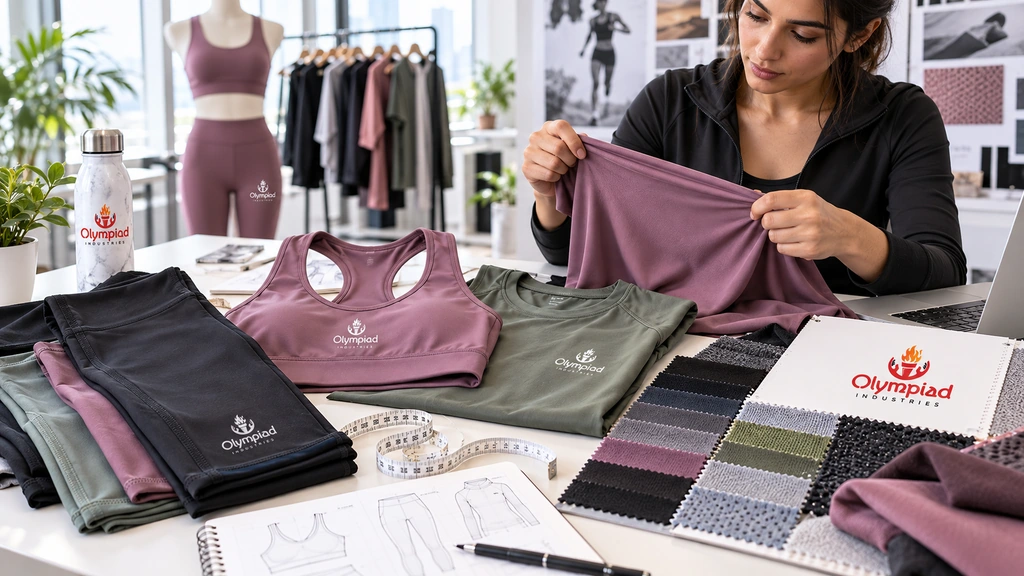
Best Fabric For Activewear: Fabric influences almost every part of an activewear garment, from how the product feels when first worn to how it performs after repeated washing and exercise. The material affects whether leggings remain opaque, whether a sports bra holds its shape, whether a running shirt feels breathable, and whether compression wear maintains consistent pressure. It can also influence pattern measurements because highly stretchable fabrics behave differently from more stable knits.
Poor fabric selection can create problems such as:
- Excessive transparency
- Weak shape recovery
- Pilling
- Heat buildup
- Uncomfortable compression
- Poor moisture management
- Color fading
- Excessive shrinkage
Fabric also influences manufacturing. Some materials are easier to sublimate, print, cut, or sew than others. A highly elastic fabric may require different stitch construction and pattern allowances than a standard performance jersey.
This means fabric should be considered at the beginning of product development rather than chosen as an afterthought.
What Makes a Good Activewear Fabric?
A good activewear fabric needs to match the intended activity and garment design. There is no single material that performs best in every situation.
For example, a soft fabric suitable for yoga may not provide enough compression for high-intensity training leggings. A lightweight running fabric may perform well in hot conditions but offer insufficient coverage for fitted bottoms.
Brands should evaluate several performance characteristics together.
Stretch
Stretch allows the garment to move with the body.
Close-fitting products such as:
- Leggings
- Compression tops
- Sports bras
- Cycling-style shorts
generally require significantly more stretch than relaxed training shirts.
The amount of stretch should also match the pattern. A very tight pattern combined with limited-stretch fabric can create discomfort and seam stress.
Recovery
Recovery describes how well a fabric returns toward its original dimensions after being stretched.
Strong recovery helps prevent:
- Baggy knees
- Loose waistbands
- Sagging seat areas
- Stretched straps
A fabric may stretch easily but still have poor recovery, which can cause the garment to lose shape during wear.
Breathability
Breathability affects how easily heat and moisture can move through the material.
This is especially important for:
- Running
- High-intensity workouts
- Outdoor training
- Warm climates
Breathability can be influenced by fiber type, knit structure, thickness, and mesh construction.
Moisture Management
Activewear needs to handle sweat effectively.
Some fabrics are designed to move moisture away from the skin and spread it across a larger surface, helping it evaporate more efficiently.
This feature is particularly useful in garments intended for:
- Gym training
- Running
- Team practice
- High-intensity exercise
Opacity
Opacity is a major concern for fitted bottoms.
A fabric can appear opaque when lying flat but become transparent under stretch.
Brands should test opacity under realistic movement rather than relying on visual inspection alone.
Durability
Activewear is often exposed to repeated:
- Stretching
- Washing
- Friction
- Sweat
- Machine drying
A durable fabric should maintain its appearance and function over time.
Comfort
Comfort depends on several factors, including:
- Softness
- Seam compatibility
- Stretch
- Surface texture
- Moisture behavior
- Weight
A technically strong fabric may still perform poorly commercially if customers do not enjoy wearing it.
Nylon for Activewear
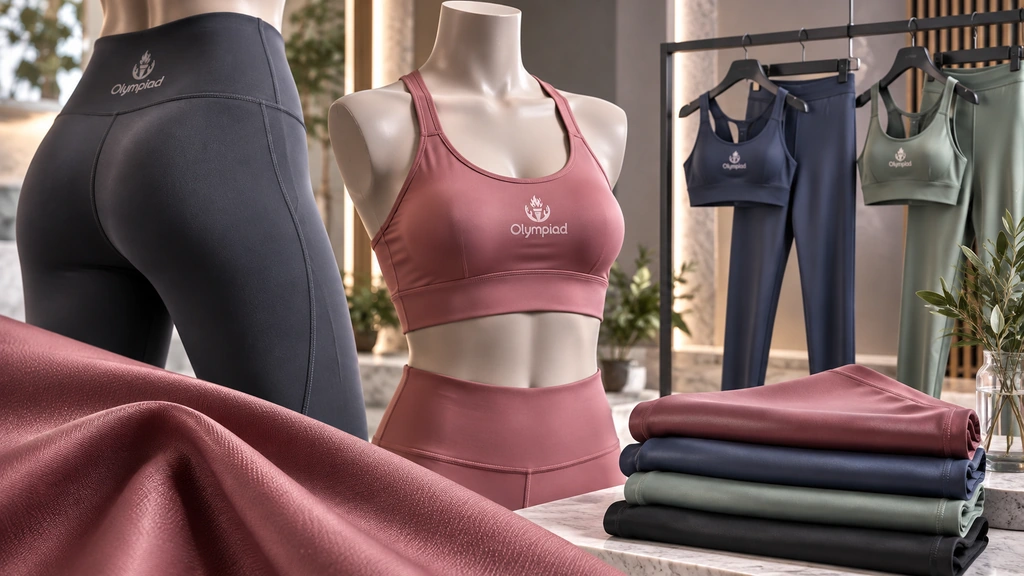
Nylon is commonly used in premium activewear because it can provide a smooth, soft surface and excellent flexibility when blended with elastane.
It is especially popular in garments designed to feel close to the body, including leggings, sports bras, and fitted fitness sets.
Nylon-based fabrics can create a refined hand feel that is often associated with higher-end activewear. However, the final performance depends heavily on the knit construction and blend percentage.
Advantages of Nylon
Nylon can offer:
- Smooth surface
- Soft hand feel
- Strong abrasion resistance
- Good stretch when blended
- Premium appearance
- Comfortable compression
It can work especially well in garments where softness and body contouring are important.
Disadvantages of Nylon
Nylon is not automatically the best material for every activewear product.
Possible limitations can include:
- Higher cost than some polyester fabrics
- More limited compatibility with certain sublimation processes
- Potential sensitivity to high heat depending on construction
- Different moisture behavior from polyester
Brands should therefore consider the decoration method before approving nylon-based fabric.
Best Products for Nylon
Nylon blends are commonly suitable for:
- Premium leggings
- Sports bras
- Yoga sets
- Fitted gym wear
- Compression-style apparel
- Biker shorts
Polyester for Activewear
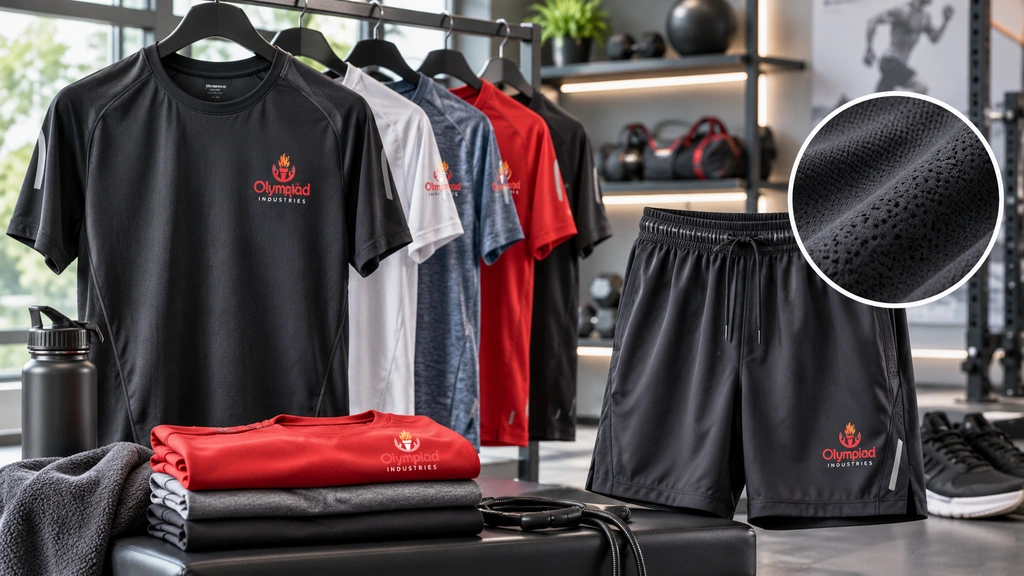
Polyester is one of the most widely used fibers in performance apparel because it combines durability, versatility, and compatibility with many sportswear manufacturing processes.
It is used across fitted and loose garments, including training tops, shorts, leggings, jerseys, compression wear, and tracksuits.
Polyester fabrics can vary significantly. A lightweight bird-eye polyester used for training shirts will behave very differently from a dense polyester-spandex knit used for leggings.
Advantages of Polyester
Polyester can provide:
- Good durability
- Low moisture absorption
- Quick drying
- Strong color retention
- Wide fabric availability
- Compatibility with sublimation
- Competitive production cost
These characteristics make it particularly useful for performance apparel produced at larger scale.
Disadvantages of Polyester
Depending on construction and quality, some polyester materials may feel less soft than premium nylon blends.
Other potential concerns include:
- Heat retention in dense constructions
- Surface pilling in lower-quality fabrics
- Static buildup
- Odor retention if fabric performance is poor
Higher-quality fabric construction and finishing can reduce many of these issues.
Best Products for Polyester
Polyester is commonly suitable for:
- Training T-shirts
- Running tops
- Gym shorts
- Leggings
- Compression wear
- Activewear tracksuits
- Sublimated products
Spandex / Elastane in Activewear
Spandex, also known as elastane, is added to other fibers to provide stretch and recovery.
It is rarely used alone. Instead, it is blended with materials such as:
- Nylon
- Polyester
- Cotton
to improve flexibility.
The presence of elastane is especially important in fitted garments because it allows the fabric to expand during movement and return toward its original shape afterward.
However, higher elastane content does not automatically equal better performance.
The way elastane is integrated into the knit construction can be just as important as its percentage.
How Much Spandex Should Activewear Fabric Contain?
The correct elastane percentage depends on the garment and desired fit.
A relaxed training top may require relatively little elastane, while compression leggings may need significantly more.
Instead of focusing only on a percentage, brands should evaluate:
- Stretch range
- Recovery
- Compression
- Fabric density
- Comfort
For example, two fabrics containing similar elastane percentages can still behave differently because of differences in knit construction.
Lower Stretch Requirements
Products such as:
- Loose gym shirts
- Lightweight running tops
- Relaxed shorts
may need only limited stretch.
Higher Stretch Requirements
Products such as:
- Leggings
- Sports bras
- Compression garments
- Biker shorts
generally require stronger multi-directional stretch and recovery.
The physical fabric should always be tested rather than approved based only on composition data.
Nylon-Spandex Blends
Nylon-spandex is one of the most popular combinations for premium fitted activewear.
The nylon provides softness and durability, while elastane adds stretch and recovery.
This blend can produce a smooth, dense surface that works well for garments designed to contour the body.
Typical applications include:
- Leggings
- Sports bras
- Yoga sets
- Biker shorts
- Fitted tops
Nylon-spandex can be particularly attractive for brands positioning themselves around comfort, premium feel, or studio-style activewear.
However, brands should confirm decoration compatibility because some printing processes work more naturally with polyester-based fabrics.
Polyester-Spandex Blends
Polyester-spandex combines the durability and quick-dry qualities of polyester with the flexibility of elastane.
It is widely used across both performance and commercial activewear.
This blend can provide a good balance of:
- Stretch
- Recovery
- Durability
- Moisture management
- Print compatibility
It can be used for:
- Leggings
- Sports bras
- Training shirts
- Shorts
- Compression wear
- Fitness sets
For brands requiring printed patterns or sublimated designs, polyester-based stretch fabrics can offer additional advantages.
Nylon vs Polyester for Activewear
The choice between nylon and polyester depends on the intended product rather than one fiber being universally better.
Nylon is often selected when brands prioritize:
- Softness
- Premium hand feel
- Smooth surface
- Comfortable compression
Polyester may be preferred when the product requires:
- Quick drying
- Durability
- Sublimation printing
- Cost efficiency
- Broad fabric availability
A premium yoga legging may benefit from nylon-spandex, while a printed training legging may be easier to produce using polyester-spandex.
The final decision should consider performance, target customer, manufacturing method, and retail positioning together.
Which Fabric Is Better for Leggings?
Leggings require a balance of stretch, opacity, recovery, comfort, and durability.
Both nylon-spandex and polyester-spandex can work well when the fabric construction is suitable.
For premium soft-touch leggings, nylon-spandex is often attractive because of its smooth feel.
Polyester-spandex may be preferable when the leggings require:
- Sublimated graphics
- Strong moisture management
- Competitive manufacturing cost
Regardless of fiber type, leggings should be tested for:
- Squat opacity
- Waistband recovery
- Pilling
- Stretch
- Shape retention
The best fabric is the one that performs consistently in the approved pattern.
Which Fabric Is Better for Sports Bras?
Sports bras require controlled stretch rather than simply maximum flexibility.
A very soft and highly stretchable fabric may feel comfortable but provide insufficient support.
Sports bra fabric should maintain:
- Band stability
- Strap recovery
- Coverage
- Compression
Nylon-spandex can work well for premium studio and fitness bras, while polyester-spandex can be suitable for more performance-focused products.
Some designs also use mesh panels to improve ventilation.
Support level should be tested using the complete garment because fabric is only one part of sports bra performance.
Which Fabric Is Better for Gym T-Shirts?
Gym T-shirts generally benefit from lightweight, breathable, quick-drying fabrics.
Common options include:
- Polyester jersey
- Polyester mesh
- Bird-eye
- Polyester-spandex
A small percentage of elastane can improve mobility in fitted shirts.
For oversized or relaxed gym tops, stretch may be less important.
The main priorities should often include:
- Moisture management
- Breathability
- Low weight
- Comfortable surface
Which Fabric Is Better for Training Shorts?
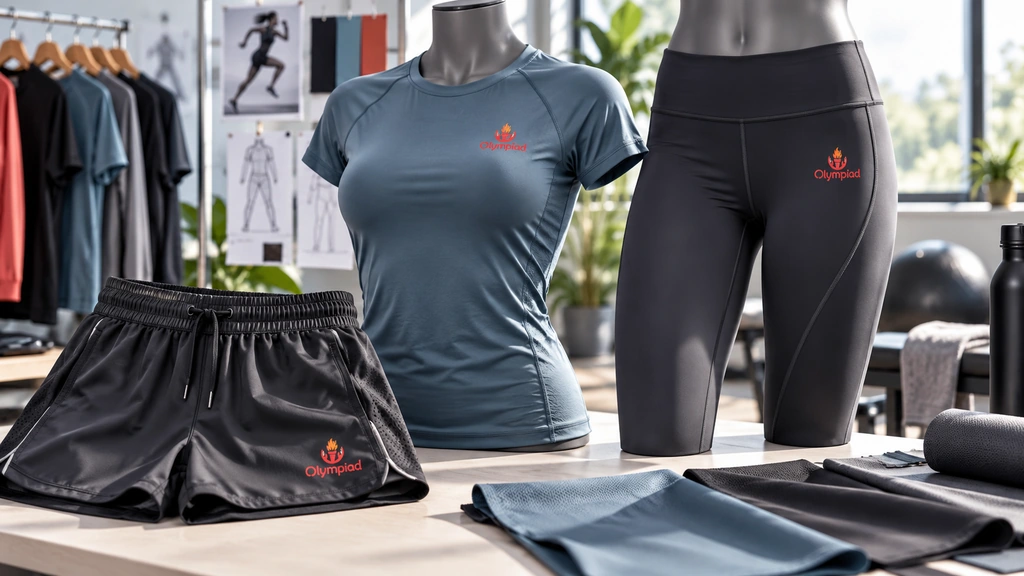
Training shorts can use either knit or woven performance fabrics.
The ideal material depends on the intended activity.
Gym shorts may prioritize:
- Stretch
- Durability
- Lightweight construction
Running shorts may require:
- Lower weight
- Quick drying
- Ventilation
Stretch polyester, lightweight woven polyester, or polyester-spandex can all be suitable depending on the design.
Pocket construction, inner lining, and waistband also influence fabric selection.
Which Fabric Is Better for Compression Wear?
Compression wear needs stronger recovery than many other activewear products.
The fabric must remain close to the body and resist becoming loose during movement.
Suitable materials often include dense:
- Nylon-spandex
- Polyester-spandex
The final material should be tested for controlled stretch rather than simply flexibility.
Excessive stretch can reduce compression, while insufficient stretch can restrict movement.
Brands should also consider seam strength because compression garments place more tension on stitching.
Recycled Polyester for Activewear
Recycled polyester is increasingly used by brands that want to incorporate recycled fibers into activewear collections.
From a manufacturing perspective, recycled polyester can often be developed into fabrics with similar product categories to conventional polyester.
However, brands should still evaluate performance rather than assuming all recycled fabric is equivalent.
Important characteristics include:
- Stretch
- Recovery
- Color stability
- Moisture management
- Durability
- Surface quality
If environmental claims are part of the product marketing, buyers should also request appropriate sourcing or certification information from suppliers where required.
Mesh Fabrics for Ventilation
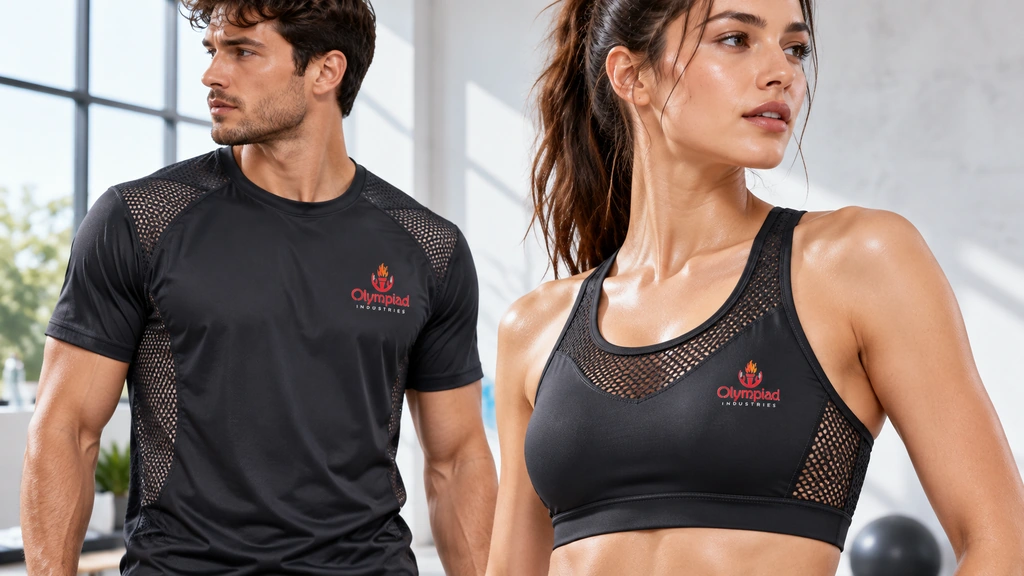
Mesh is commonly incorporated into activewear to increase airflow in specific areas.
It may be used as:
- Side panels
- Back panels
- Underarm inserts
- Decorative ventilation sections
Mesh is especially useful for:
- Running apparel
- Training tops
- Sports bras
- Shorts
However, mesh areas can be more vulnerable to snagging or damage than dense fabric.
The mesh should therefore be tested for both ventilation and durability.
Interlock Fabrics for Activewear
Interlock is a knit construction that can provide a smooth, stable surface on both sides.
It is commonly used in sportswear and activewear because it can offer:
- Good structure
- Smooth appearance
- Durability
- Comfortable feel
Stretch interlock versions can be suitable for:
- Training tops
- Tracksuits
- Fitness wear
- Some leggings
Interlock can also provide a good surface for branding and printing depending on composition.
Jersey Knit Fabrics
Jersey knit fabrics are flexible and widely used in apparel.
Performance jersey can be lightweight and comfortable, making it useful for:
- Gym T-shirts
- Running tops
- Training apparel
Jersey construction can vary from thin and lightweight to more structured stretch versions.
Brands should evaluate whether the fabric twists, curls, or loses shape after washing.
High-quality jersey should remain stable enough for its intended garment.
Brushed Activewear Fabrics
Brushed fabrics have a modified surface that creates a softer hand feel.
They can provide a warm, premium sensation and are commonly used in:
- Winter leggings
- Yoga sets
- Cold-weather activewear
- Athleisure
Brushing can affect:
- Surface softness
- Warmth
- Appearance
However, brushed surfaces should be tested carefully for pilling and abrasion.
Products intended for heavy gym use may require a more abrasion-resistant surface.
Rib Fabrics in Activewear
Rib knit can be used either as a main fabric or as a design element.
It can provide:
- Texture
- Stretch
- Visual differentiation
Rib activewear is often seen in:
- Leggings
- Sports bras
- Crop tops
- Fitness sets
The rib structure needs to recover well after stretching. Poor-quality rib can lose definition and become loose after repeated wear.
Brands should also evaluate whether thicker rib textures affect printing or seam construction.
What Is 4-Way Stretch Fabric?
Four-way stretch refers to material that provides meaningful stretch in both horizontal and vertical directions.
This property is useful in activewear because the body moves across several planes.
Four-way stretch can support:
- Squatting
- Running
- Lunging
- Yoga
- Weight training
It is particularly valuable in close-fitting garments.
However, brands should not rely only on the supplier’s label. Stretch percentage and recovery should be tested physically.
2-Way Stretch vs 4-Way Stretch
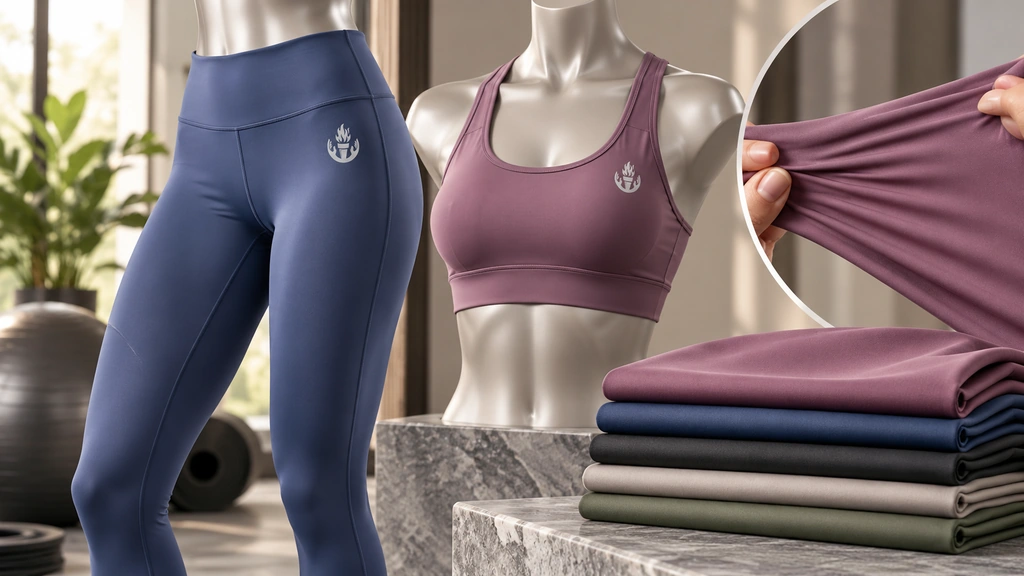
Two-way stretch generally provides more flexibility along one principal direction.
This may be adequate for certain products where movement requirements are limited.
Four-way stretch usually offers better freedom of movement for:
- Leggings
- Sports bras
- Compression products
The difference becomes particularly noticeable during movements that extend the fabric both lengthwise and widthwise.
Pattern development should also reflect the fabric’s stretch direction.
A pattern developed for four-way stretch may not fit correctly if later produced using a more limited-stretch fabric.
Stretch Recovery and Shape Retention
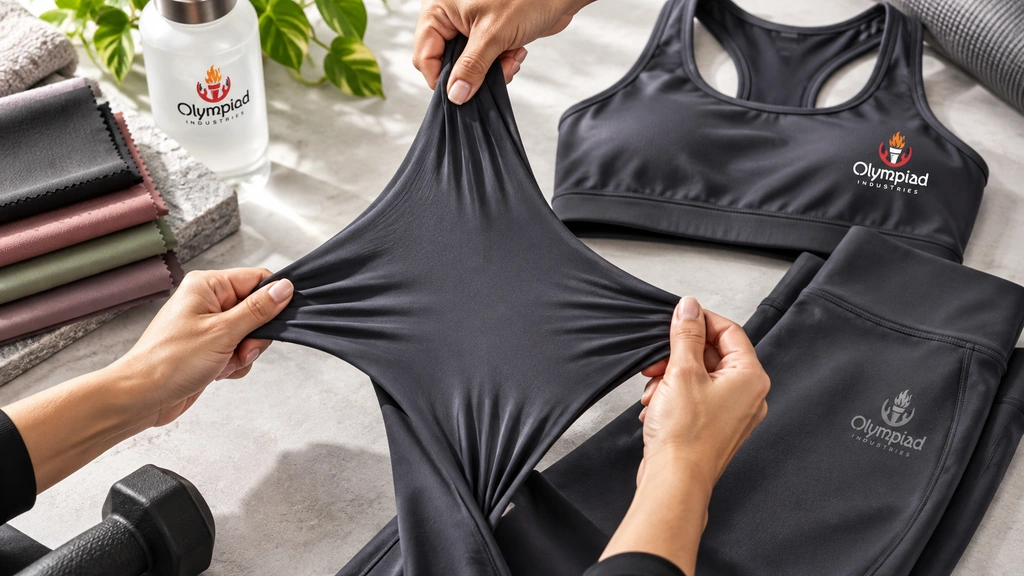
Stretch recovery determines whether a garment keeps its intended shape after use.
Poor recovery can make premium activewear look worn out quickly.
Brands should examine areas that experience repeated stress, including:
- Knees
- Waistbands
- Seat
- Sports bra straps
Recovery can be evaluated by stretching a fabric to a controlled distance and observing how closely it returns to its original measurement.
Repeated wear testing provides even better information.
Shape retention should be considered a core quality requirement for fitted activewear.
Moisture-Wicking Activewear Fabrics
Moisture-wicking fabrics are designed to move sweat away from the skin toward the outer surface of the material.
The goal is to help moisture spread and evaporate rather than remain concentrated against the body.
This can improve comfort during:
- Running
- Gym training
- Cycling
- High-intensity workouts
Moisture performance depends on more than fiber type.
Important factors include:
- Yarn structure
- Knit
- Fabric finish
- Garment ventilation
Brands making specific performance claims should test the actual production fabric.
Quick-Dry Fabrics
Quick-dry performance describes how rapidly moisture leaves the material after becoming wet.
This is particularly useful in sports apparel because customers often want garments that feel lighter during training and dry quickly after washing.
Polyester fabrics are frequently used for this purpose because polyester absorbs relatively little moisture into the fiber itself.
However, fabric thickness matters.
A very heavy polyester fabric can still dry more slowly than a lightweight knit.
Quick-dry performance should therefore be assessed using the complete fabric structure.
Breathable Fabrics for Training and Running
Training and running apparel often needs greater airflow than studio-style activewear.
Brands can improve breathability through:
- Lightweight knit structures
- Mesh
- Perforation
- Ventilation panels
- Strategic garment construction
The correct balance is important.
Extremely open fabric may provide excellent ventilation but reduced durability or coverage.
A running shirt and compression legging therefore require different approaches to breathability.
What GSM Is Best for Activewear?
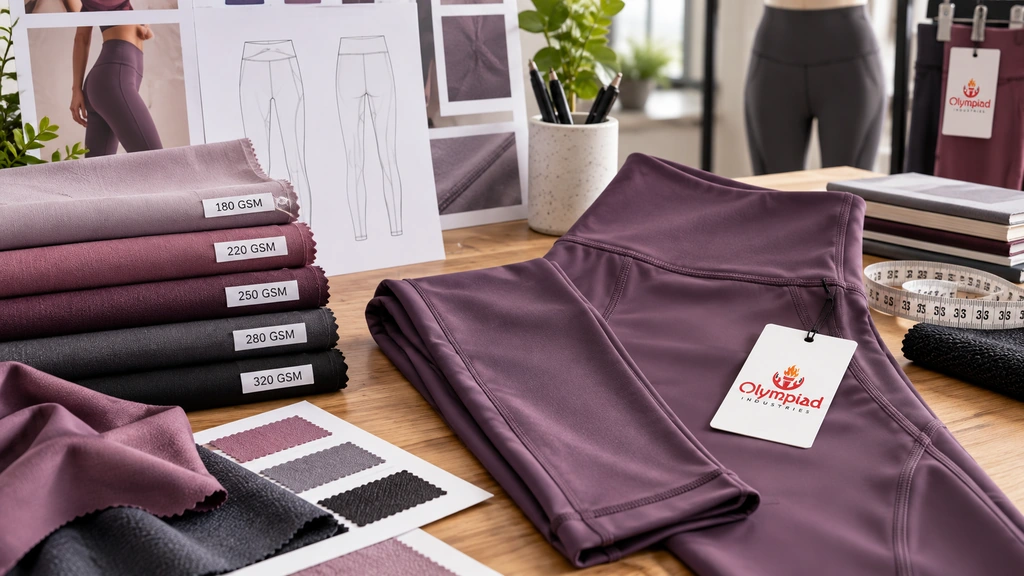
GSM means grams per square meter and describes fabric weight.
There is no universal activewear GSM because different garments have different performance requirements.
Brands should use GSM as one part of the specification rather than treating it as the sole indicator of quality.
Fabric composition, knit density, stretch, and finishing can make two fabrics with similar GSM feel completely different.
Lightweight Activewear Fabrics
Lighter fabrics are often suitable for:
- Running shirts
- Training tops
- Lightweight tanks
They can provide:
- Lower weight
- Better airflow
- Faster drying
However, very light fabric may provide less structure.
Medium-Weight Fabrics
Medium-weight stretch fabrics can provide a balance between:
- Coverage
- Flexibility
- Comfort
They are often useful for:
- Leggings
- Sports bras
- Fitness sets
Heavyweight and Compression Fabrics
Heavier stretch materials may provide:
- Stronger compression
- Better opacity
- More structure
However, they can also feel warmer.
The final material should match the climate and intended activity.
Best GSM for Leggings
Legging fabric needs enough structure to remain opaque and supportive without becoming excessively heavy.
Rather than selecting one universal GSM number, brands should compare several fabric samples within the intended weight range.
Test each sample for:
- Opacity
- Compression
- Heat
- Recovery
- Comfort
A dense knit can sometimes provide better coverage than a heavier but looser fabric.
Pattern fit also affects opacity because excessive tension can make any material more transparent.
Best GSM for Sports Bras
Sports bras typically require enough fabric structure to provide coverage and support.
The appropriate weight depends on:
- Support level
- Padding
- Layering
- Fabric compression
A low-impact yoga bra may use a softer and more flexible fabric.
Higher-impact designs may require stronger fabric or layered construction.
GSM should therefore be selected together with the sports bra pattern rather than independently.
Best GSM for Training Tops
Training tops usually benefit from lighter materials than leggings or compression wear.
A performance top should feel comfortable during repeated movement and allow heat to escape.
Fabric selection should consider:
- Weight
- Moisture management
- Breathability
- Opacity
- Durability
Very thin fabric may feel lightweight but can look inexpensive or become overly transparent.
The goal is to balance low weight with sufficient structure.
Squat-Proof Fabric and Opacity
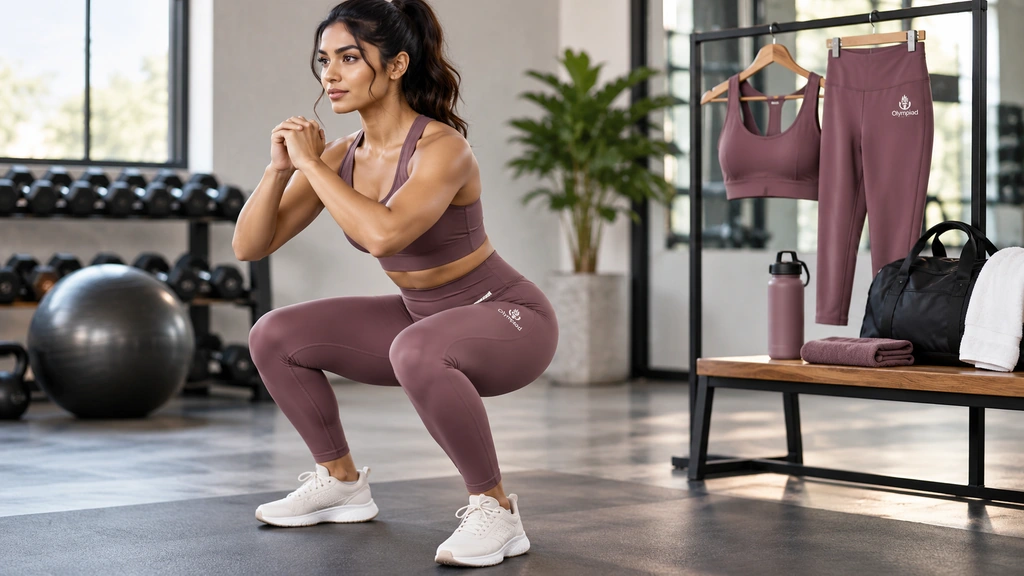
Squat-proof performance is not created by GSM alone.
A high-quality legging needs a combination of:
- Dense fabric construction
- Appropriate stretch
- Correct fit
- Adequate weight
- Suitable color
Opacity testing should be done on the finished sample because pattern tension affects the final result.
The wearer should test the garment while:
- Squatting
- Lunging
- Bending
- Stretching
Checking only the flat fabric can produce misleading conclusions.
Why Dark and Light Colors Perform Differently
Color can influence how fabric appears under stretch.
Dark colors such as black generally provide more visual coverage than lighter shades.
Colors such as:
- White
- Beige
- Pale pink
- Light gray
can reveal transparency more easily.
This means a fabric approved in black should not automatically be assumed suitable in every lighter color.
Brands developing several colorways should test the lightest shade separately.
Color can also influence dyeing requirements, production MOQ, and color consistency between fabric batches.
Fabric Pilling and Abrasion Resistance
Pilling occurs when surface fibers form small balls after friction and wear.
Activewear can experience significant friction from:
- Gym equipment
- Repeated washing
- Thigh contact
- Bags
- Seating surfaces
Pilling can quickly reduce the perceived quality of premium leggings and tops.
Fabric testing should include repeated rubbing or wear where possible.
Brushed fabrics and very soft surfaces may require especially careful evaluation because the finishing process can affect abrasion behavior.
Fabric Shrinkage and Wash Stability
Stretch activewear can change dimensions after washing if the material has not been stabilized properly.
Possible issues include:
- Shorter body length
- Waist changes
- Twisting
- Uneven shrinkage
A pre-production wash test can reveal these problems before bulk manufacturing.
Brands should compare measurements before and after washing.
This is especially important if multiple materials are combined in one garment because different fabrics may shrink differently.
Color Fastness in Activewear Fabrics
Color fastness describes how well the fabric retains color when exposed to washing, friction, sweat, or other conditions.
Poor color fastness can result in:
- Fading
- Color transfer
- Staining other garments
This is particularly important for strong colors such as:
- Black
- Red
- Navy
Activewear is frequently exposed to perspiration, so performance under moisture should also be considered.
Brands producing matching sets should pay attention to shade consistency between tops and bottoms.
Sublimation Compatibility
Sublimation is most commonly associated with suitable polyester fabrics.
The process allows complex designs to become integrated into the material rather than sitting as a heavy surface print.
This can be useful for:
- Printed leggings
- Training tops
- Running apparel
- Fitness sets
Brands planning sublimated products should select fabric specifically compatible with the process.
Nylon and certain other fibers generally require different decoration approaches.
Heat Transfer Compatibility
Heat transfer is frequently used for:
- Small logos
- Branding
- Personalization
on activewear.
The transfer material needs to flex with the fabric.
A rigid transfer applied to high-stretch leggings may crack or restrict movement.
Manufacturers should test:
- Adhesion
- Stretch
- Wash durability
before approving the final production method.
Temperature and pressure must also suit the base fabric.
Screen Printing Compatibility
Screen printing can work on activewear when the correct inks and fabric are used.
However, large printed areas can affect:
- Stretch
- Breathability
- Surface feel
For this reason, screen printing may be more appropriate for:
- Gym T-shirts
- Relaxed training tops
- Hoodies
than heavily stretched leggings.
Brands should test the finished print rather than evaluating only the unprinted fabric.
Embroidery Considerations
Embroidery creates a premium stitched appearance but introduces additional weight and rigidity.
On lightweight stretch fabrics, heavy embroidery can cause:
- Puckering
- Distortion
- Uncomfortable stiffness
It is often better suited to:
- Tracksuits
- Jackets
- Hoodies
- Structured training tops
Small, carefully developed embroidery may still be possible on some activewear products.
The manufacturer should select appropriate backing and stitch density.
How to Evaluate Activewear Fabric Swatches
Fabric swatches are one of the most useful tools available during activewear product development.
Rather than choosing material from a digital catalog, brands should physically compare options whenever practical.
Evaluate each swatch for:
- Surface feel
- Stretch
- Recovery
- Thickness
- Opacity
- Color
- Weight
Stretch the material in different directions.
Allow it to return and check whether the dimensions recover.
Hold it against strong light.
Rub the surface.
Comparing several materials side by side often makes differences much easier to identify.
Fabric Testing Before Bulk Production
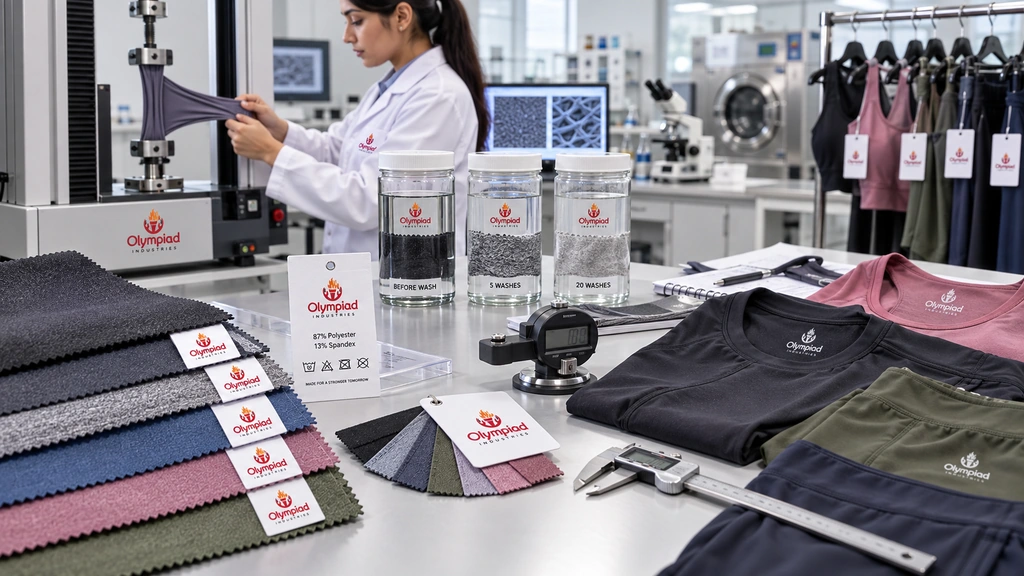
Testing should happen before a brand commits to a large fabric purchase or bulk garment order.
The purpose is not simply to find defects. It is to confirm that the fabric behaves correctly for the intended product.
Stretch Test
Measure how far the fabric comfortably stretches in each direction.
This information helps both pattern development and fit evaluation.
Recovery Test
After stretching, observe how closely the fabric returns to its original dimensions.
Poor recovery is a warning sign for fitted products.
Opacity Test
Test both flat fabric and the completed garment under realistic stretch.
Light colors deserve extra attention.
Wash Test
Wash the sample according to expected consumer care conditions.
Check:
- Size changes
- Pilling
- Surface changes
- Color
- Shape
Pilling Test
Rub or wear the material repeatedly to identify surface degradation.
Areas exposed to friction are especially important.
Color Test
Check whether the material:
- Fades
- Transfers dye
- Changes shade
after washing or moisture exposure.
Stock Fabrics vs Custom-Developed Fabrics
Stock fabrics are materials already available from the manufacturer or fabric supplier.
They can be useful for startups because they often provide:
- Lower MOQ
- Faster sampling
- Shorter lead times
- Lower development cost
Custom-developed fabrics provide more control over:
- Composition
- GSM
- Color
- Knit
- Finishing
but usually require larger production commitments.
Startups can often benefit from beginning with a proven stock fabric and moving into custom development after sales volume becomes predictable.
Established brands may choose custom materials to create more distinctive product performance.
How Fabric Choice Affects MOQ
Fabric can be one of the largest factors determining activewear MOQ.
Using available stock fabric generally creates more flexibility.
Custom development can require larger quantities because the mill may need to:
- Knit a dedicated batch
- Dye a custom color
- Apply a special finish
Each color may also have its own minimum requirement.
Brands planning many colors should understand this before finalizing the collection.
A simpler fabric strategy can significantly reduce the financial commitment of an initial production run.
How Fabric Choice Affects Manufacturing Cost
Fabric often represents a significant portion of activewear manufacturing cost.
Pricing can vary according to:
- Fiber
- Elastane content
- GSM
- Knit construction
- Finishing
- Color
- Quantity
Premium nylon-spandex may cost more than standard polyester performance fabric.
Heavy compression fabric uses more material weight than lightweight training fabric.
Custom dyeing and finishing can also increase cost.
Brands should therefore compare fabric based on total product value rather than always choosing the cheapest option.
An inexpensive material that causes returns, pilling, or customer dissatisfaction can be more costly in the long term.
Also read: How to Start an Activewear Brand: Complete Step-by-Step Guide
Common Fabric Selection Mistakes Activewear Brands Make
Fabric mistakes usually occur when appearance or price is given more importance than actual performance.
One common problem is approving material before testing it in the final garment.
Other mistakes include:
- Choosing fabric only from photos
- Assuming all polyester is the same
- Looking only at GSM
- Ignoring recovery
- Not testing lighter colors
- Ignoring printing compatibility
- Selecting very soft fabric without checking pilling
- Using one fabric for every product
- Skipping wash testing
Brands should select fabric according to the specific garment rather than trying to simplify the collection through one universal material.
Questions to Ask Your Activewear Manufacturer About Fabrics
A reliable manufacturer should be able to explain fabric options clearly rather than providing only generic names.
Ask questions such as:
- What is the exact fabric composition?
- What is the GSM?
- Does it provide 2-way or 4-way stretch?
- How strong is the recovery?
- Is it suitable for leggings?
- Can it remain opaque under stretch?
- Is the material moisture-wicking?
- Is it suitable for sublimation?
- Can I receive physical swatches?
- Are stock colors available?
- Can custom colors be developed?
- What is the fabric MOQ?
- Has the fabric been tested for pilling?
- How does it perform after washing?
- Can the same fabric be sourced for repeat orders?
Detailed answers make it easier to compare suppliers and reduce production risk.
How Olympiad Industries Selects Fabrics for Activewear
Olympiad Industries develops custom and private-label activewear for brands, fitness businesses, retailers, distributors, startups, and other B2B buyers.
Fabric selection is considered according to the intended garment rather than using one standard material across every activewear product.
Projects can begin from:
- Tech packs
- Existing samples
- Reference images
- Product concepts
- Buyer specifications
Understanding the Product Requirement
The first consideration is how the garment will be used.
Requirements for:
- Leggings
- Sports bras
- Training tops
- Compression wear
- Shorts
- Tracksuits
can vary significantly.
This helps determine the required combination of stretch, GSM, recovery, breathability, and coverage.
Fabric Selection
Potential materials can be reviewed according to:
- Composition
- GSM
- Stretch
- Recovery
- Surface feel
- Opacity
- Intended decoration
Fabric options may include nylon-based, polyester-based, stretch blends, mesh, and other performance materials depending on the project.
Sample Development
The selected fabric is evaluated as part of the physical garment sample.
This allows the buyer to assess how the material behaves in the actual pattern.
Review can include:
- Fit
- Stretch
- Opacity
- Compression
- Comfort
- Appearance
Performance Review
Where relevant, garments can be assessed through practical checks involving:
- Movement
- Stretch
- Measurements
- Seam behavior
- Wash response
Problems identified during sample development can be corrected before bulk manufacturing.
Bulk Production
Once fabric and sample specifications have been approved, the selected material becomes part of the production reference.
Consistency is then important across:
- Cutting
- Stitching
- Branding
- Quality control
Repeat Orders
For repeat production, maintaining accurate fabric specifications helps support consistency.
Records such as:
- Composition
- GSM
- Color
- Fabric type
can be used as reference points for future orders.
Also read: Private Label Activewear Manufacturing: Complete Brands Guide
FAQs About Best Fabric For Activewear
What is the best fabric for activewear?
There is no single best fabric. Nylon-spandex and polyester-spandex are commonly used for fitted activewear, while lightweight polyester fabrics are widely used for training and running tops.
Is nylon or polyester better for leggings?
Both can work well. Nylon-spandex often provides a softer premium feel, while polyester-spandex can offer strong durability, moisture performance, and easier compatibility with sublimation.
Why is spandex used in activewear?
Spandex provides stretch and recovery. It allows garments to move with the body while helping them return toward their original shape.
What is 4-way stretch?
Four-way stretch fabric can stretch meaningfully in both horizontal and vertical directions, making it useful for activewear that needs freedom of movement.
What GSM is best for leggings?
The correct GSM depends on fabric construction, stretch, opacity, and intended compression. Brands should test actual samples instead of relying on one universal number.
Which fabric is best for gym T-shirts?
Lightweight polyester jersey, mesh, bird-eye, and polyester-spandex fabrics can all be suitable depending on fit and performance requirements.
What makes leggings squat-proof?
Squat-proof performance depends on fabric density, GSM, stretch, color, garment fit, and pattern. The finished legging should be tested under movement.
Can nylon be sublimated?
Traditional sublimation is generally most suitable for polyester-based materials. Nylon typically requires different printing or decoration methods.
Should I test fabric before bulk production?
Yes. Fabric testing should include stretch, recovery, opacity, washing, pilling, and color evaluation according to the intended product.
Can an activewear manufacturer provide custom fabrics?
Some manufacturers can arrange custom fabric development, including specific GSM, colors, compositions, or finishes, but custom development can increase MOQ and lead time.
Conclusion (Best Fabric For Activewear)
Choosing the best activewear fabric requires much more than selecting nylon, polyester, or spandex from a material list.
The final garment performance depends on how fibers, elastane, knit construction, GSM, finishing, pattern, and manufacturing work together.
Nylon-spandex can be an excellent option for premium leggings, sports bras, and studio activewear where softness and smooth compression are priorities. Polyester-spandex provides a versatile balance of stretch, durability, moisture performance, and decoration flexibility. Lightweight polyester fabrics are particularly useful for running and training tops, while mesh can provide strategic ventilation.
Brands should also evaluate technical characteristics such as stretch recovery, opacity, pilling resistance, color fastness, shrinkage, and moisture management before approving bulk production.
GSM should be treated as part of the fabric specification rather than a standalone quality score. Likewise, a higher percentage of spandex does not automatically make a material superior.
The safest development process is to review physical fabric swatches, select several promising options, develop a garment sample, test that product during realistic movement, and only then approve the material for bulk manufacturing.
A well-selected fabric improves not only performance but also fit, customer comfort, product durability, brand reputation, and repeat-order consistency.
Olympiad Industries supports activewear brands, startups, fitness businesses, retailers, distributors, and other B2B buyers with fabric selection, product development, pattern making, sampling, performance-focused manufacturing, private labeling, quality control, packaging, and bulk production according to buyer-specific requirements.



Leave a Reply