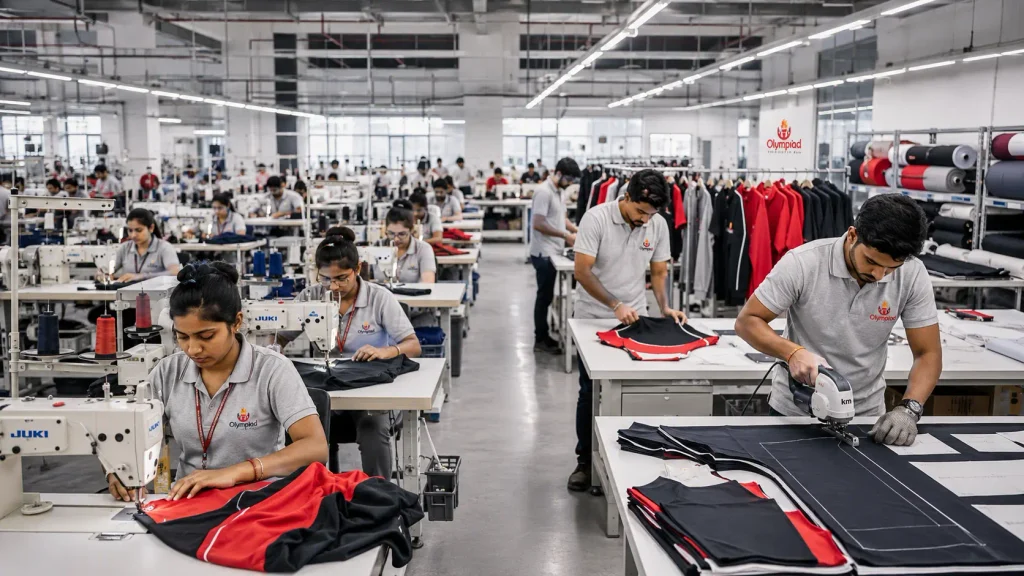
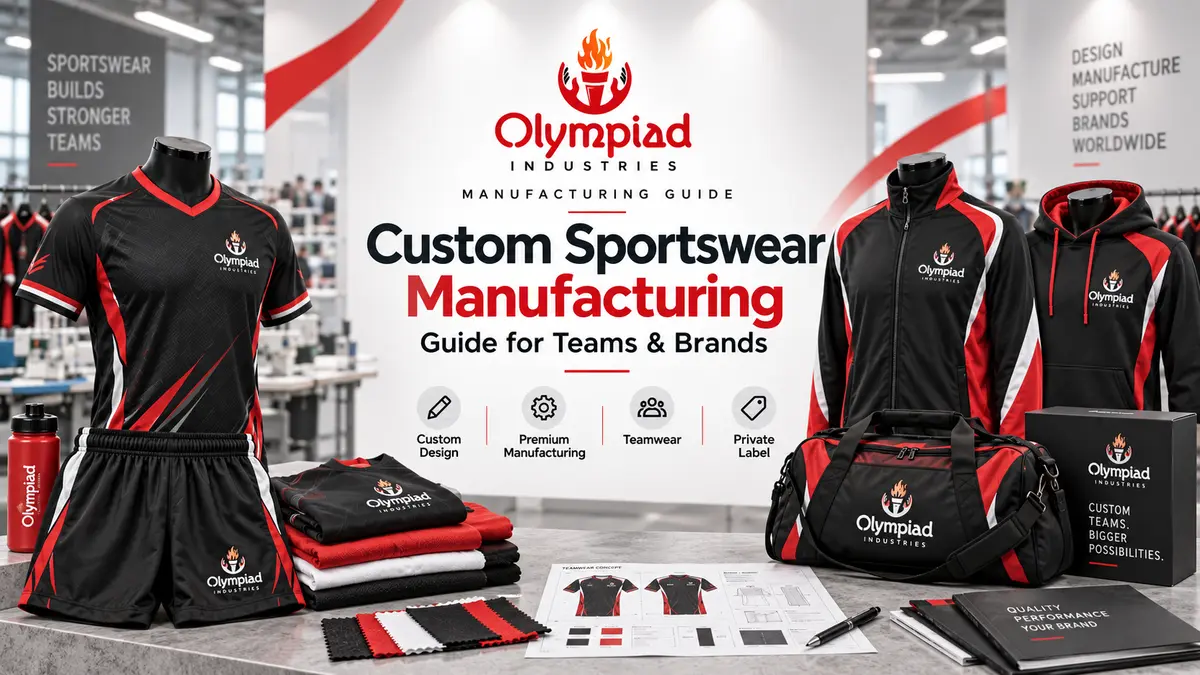

Custom sportswear manufacturing allows teams, clubs, academies, retailers and apparel brands to create products according to their own designs, colors, performance requirements and branding.
Instead of selecting standard ready-made garments, buyers can customize important details such as fabric, fit, color combinations, logos, names, numbers, printing methods, labels and packaging.
For a sports team, this may mean creating a complete uniform that reflects the team’s identity. For an apparel brand, custom manufacturing can involve developing an entire private-label sportswear collection for retail.
However, successful sportswear manufacturing involves much more than simply placing a logo on a garment.
Fabric performance, pattern development, stitching, decoration, sizing, quality control and production consistency all affect the final product.
In this guide, we explain how custom sportswear manufacturing works, what buyers should prepare before contacting a manufacturer and what to consider before starting bulk production.
What Is Custom Sportswear Manufacturing?
Custom sportswear manufacturing is the process of producing athletic and performance apparel according to a buyer’s specific requirements.
These requirements may include:
- Garment design
- Fabric type
- Fabric weight or GSM
- Colors
- Size range
- Fit
- Panels and construction
- Team logos
- Brand logos
- Player names
- Player numbers
- Printing
- Embroidery
- Labels
- Tags
- Packaging
Depending on the product, manufacturers may develop garments completely from a buyer’s tech pack or work from reference images, sketches and existing samples.
The objective is to manufacture a product specifically for the customer’s team, organization or brand rather than supplying a standard ready-made item.
Who Uses Custom Sportswear Manufacturing?
Custom manufacturing is suitable for many types of buyers.
Sports Teams and Clubs
Football, basketball, rugby, hockey, cricket and other sports teams commonly require customized uniforms featuring their own:
- Team colors
- Logos
- Sponsor logos
- Player names
- Player numbers
- Club identity
Teams may also require matching tracksuits, jackets, shorts, training shirts and other apparel.
Sports Academies
Academies often need coordinated uniforms for players, coaches and training staff.
A consistent apparel program helps create a professional identity across different age groups and teams.
Apparel Brands
Sportswear brands usually require a higher level of customization.
In addition to the garment itself, they may request:
- Custom woven labels
- Printed neck labels
- Hang tags
- Branded packaging
- Custom trims
- Specialized fabrics
- Unique fits
- Custom color combinations
This is commonly known as private-label sportswear manufacturing.
Gyms and Fitness Businesses
Gyms, fitness studios and training organizations may develop branded:
- Gym T-shirts
- Shorts
- Leggings
- Sports bras
- Tank tops
- Tracksuits
- Hoodies
- Training tops
Retailers and Distributors
Retail businesses may order custom sportswear collections for resale under their own brand or for specific customer markets.
What Types of Sportswear Can Be Custom Manufactured?
A professional sportswear manufacturer may produce a broad range of performance apparel.
Common products include:
Team Sportswear
- Football and soccer kits
- Basketball uniforms
- Rugby kits
- Cricket uniforms
- Hockey jerseys
- Baseball jerseys
- Volleyball uniforms
- Goalkeeper kits
- Team shorts
Training Apparel
- Training T-shirts
- Performance tops
- Training shorts
- Tracksuits
- Warm-up suits
- Training jackets
- Compression garments
Activewear
- Gym T-shirts
- Gym shorts
- Leggings
- Sports bras
- Tank tops
- Fitness sets
- Yoga wear
- Running apparel
Team Outerwear
- Sports jackets
- Hoodies
- Sweatshirts
- Tracksuit jackets
- Warm-up jackets
The exact construction and material requirements depend on the sport, climate, target market and intended use.
How Does the Custom Sportswear Manufacturing Process Work?
Although manufacturing processes vary between factories and products, custom sportswear generally moves through several important stages.
1. Product Requirements
The process begins with understanding exactly what the buyer wants to manufacture.
A buyer may provide:
- Tech pack
- Sketch
- Reference image
- Existing garment
- Logo files
- Color references
- Measurements
- Fabric requirements
The more accurate the information provided at the beginning, the easier it becomes to develop the product correctly.
For team uniforms, buyers should also clarify whether they require individual names and numbers.
For brands, information about labels, packaging and branding should be provided early in the development process.
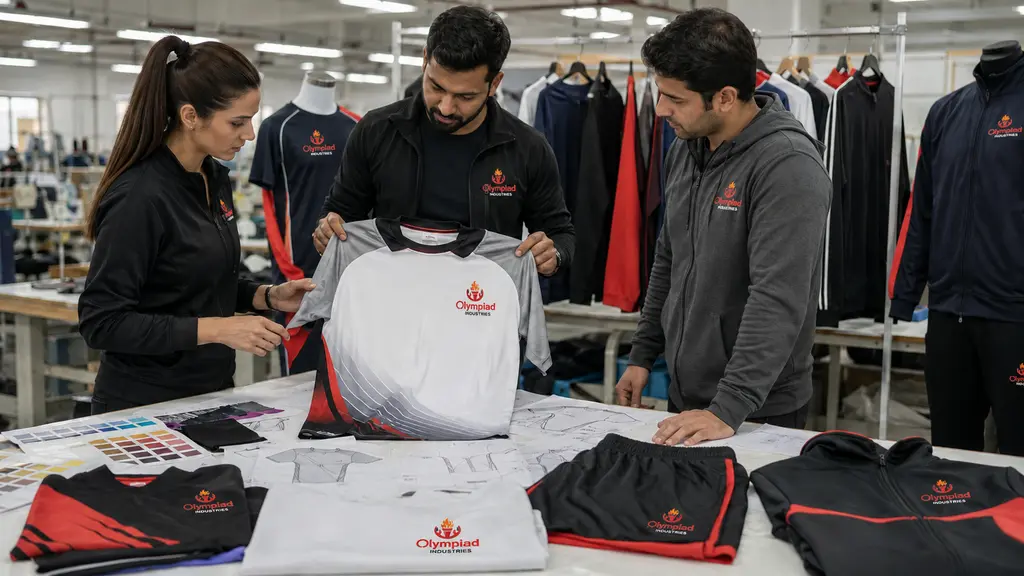
2. Design Development
Once the requirements are understood, the garment design can be prepared or refined for manufacturing.
Design development may include decisions about:
- Main colors
- Secondary colors
- Panel placement
- Sleeves
- Collars
- Necklines
- Side panels
- Pockets
- Cuffs
- Waistbands
- Logo positions
- Names and numbers
- Decorative details
For sublimated sportswear, the complete artwork may become part of the garment design.
For cut-and-sew products, different colored fabrics or panels may be joined together to create the required appearance.
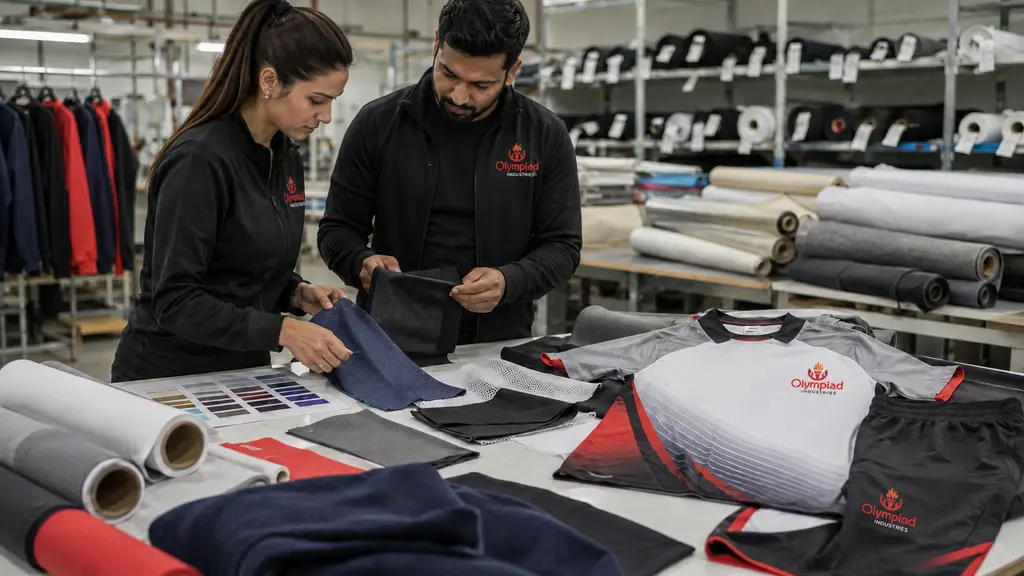
3. Fabric Selection
Fabric is one of the most important elements of sportswear manufacturing.
The correct material should be selected according to the intended activity and performance requirements.
Common sportswear fabrics include:
Polyester
Polyester is widely used in performance apparel because it is durable, lightweight and suitable for moisture-management applications.
It is commonly used for:
- Jerseys
- Training shirts
- Team uniforms
- Shorts
- Tracksuits
Polyester-Spandex Blends
Adding spandex gives the fabric greater stretch and flexibility.
These fabrics are commonly used for:
- Leggings
- Compression wear
- Fitness apparel
- Training garments
- Sports bras
Mesh
Mesh fabrics can be incorporated into garments to improve airflow and ventilation.
They may be used in:
- Jerseys
- Training tops
- Basketball uniforms
- Shorts
Fleece
Fleece is commonly used for warmer apparel such as:
- Hoodies
- Sweatshirts
- Joggers
- Tracksuits
- Warm-up clothing
When choosing fabric, buyers should consider not only appearance but also:
- Weight
- Stretch
- Breathability
- Moisture management
- Durability
- Comfort
- Intended climate
- Printing compatibility
4. Fabric GSM
GSM stands for grams per square meter and is commonly used to describe fabric weight.
A lower GSM generally indicates a lighter fabric, while a higher GSM usually means a heavier material.
However, heavier does not automatically mean better.
For example, lightweight fabric may be preferable for high-intensity training, while heavier material may be suitable for sweatshirts or winter tracksuits.
The correct GSM depends on the product and its intended use.
Buyers should therefore discuss both fabric type and GSM with their manufacturer.
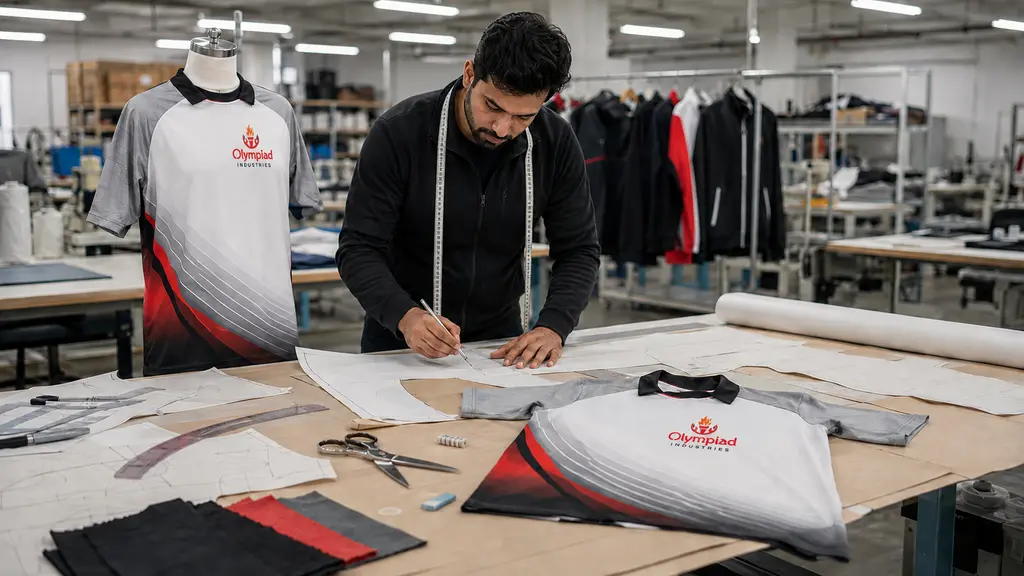
5. Pattern Making
After the garment specifications are finalized, patterns are developed.
Patterns determine the shape and dimensions of individual garment components.
These may include:
- Front panel
- Back panel
- Sleeves
- Collar
- Side panels
- Shorts panels
- Waistband
Accurate pattern development is essential because it affects:
- Fit
- Comfort
- Movement
- Garment proportions
- Size consistency
For sportswear, patterns may also need to allow sufficient freedom of movement for athletic activity.
6. Sampling
Before moving into bulk production, a sample is usually developed.
Sampling allows both the manufacturer and buyer to evaluate the product before producing larger quantities.
A sample may be checked for:
- Overall appearance
- Fabric
- Colors
- Measurements
- Fit
- Logo position
- Printing
- Embroidery
- Stitching
- Trims
- Construction
If changes are required, they should ideally be made before bulk production begins.
This reduces the risk of producing a large quantity of garments with incorrect details.
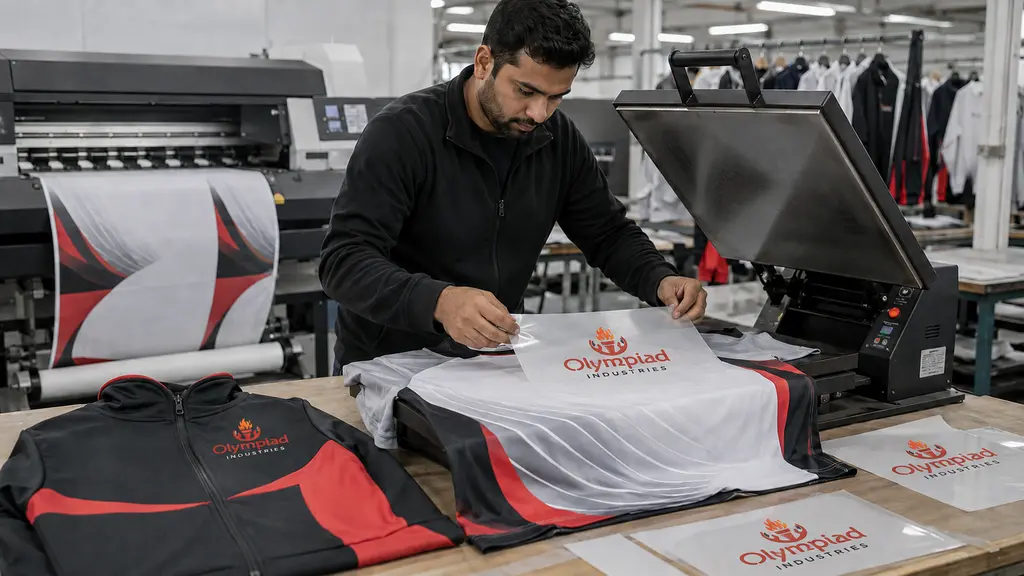
7. Printing and Embellishment
Custom sportswear can be decorated using several methods.
The correct method depends on the fabric, design, quantity and desired appearance.
Sublimation Printing
Sublimation is one of the most popular techniques for polyester sportswear.
It is particularly suitable for:
- Football jerseys
- Basketball uniforms
- Hockey jerseys
- Rugby uniforms
- Cycling apparel
- Running shirts
The design becomes part of the fabric rather than sitting as a thick layer on top.
This allows complex graphics, gradients and multiple colors to be incorporated into sportswear.
Embroidery
Embroidery creates a premium stitched appearance and is commonly used for:
- Polo shirts
- Jackets
- Caps
- Tracksuits
- Hoodies
Screen Printing
Screen printing can be used for bold graphics and logos on many apparel products.
Heat Transfer
Heat-transfer methods can be useful for:
- Logos
- Player numbers
- Names
- Sponsor branding
- Small graphics
Different decoration techniques can also be combined within the same apparel program.
8. Cutting
Once the fabric and patterns are approved, the fabric is prepared for cutting.
Accurate cutting is important because errors at this stage can affect:
- Measurements
- Garment balance
- Panel alignment
- Fit
- Stitching accuracy
Different garment components are cut according to the approved patterns before being transferred to the stitching department.
9. Stitching and Garment Construction
Cut components are then assembled into finished garments.
Sportswear stitching must be strong enough to withstand movement and repeated use while remaining comfortable for the wearer.
The required construction depends on the garment.
Manufacturers may use different stitching techniques for:
- Seams
- Hems
- Sleeves
- Collars
- Waistbands
- Cuffs
- Stretch fabrics
Stretch garments such as leggings and compression wear may require different construction techniques compared with standard jerseys or T-shirts.
10. Quality Control
Quality control is an essential stage of custom sportswear manufacturing.
Garments may be checked for issues involving:
- Fabric
- Measurements
- Colors
- Stitching
- Logo placement
- Printing
- Embroidery
- Labels
- Finishing
Testing may also be carried out depending on the product and material.
The purpose of quality checking is to identify potential problems before products are packed and prepared for shipment.
Consistent quality becomes particularly important during bulk manufacturing because every garment should remain close to the approved standard.
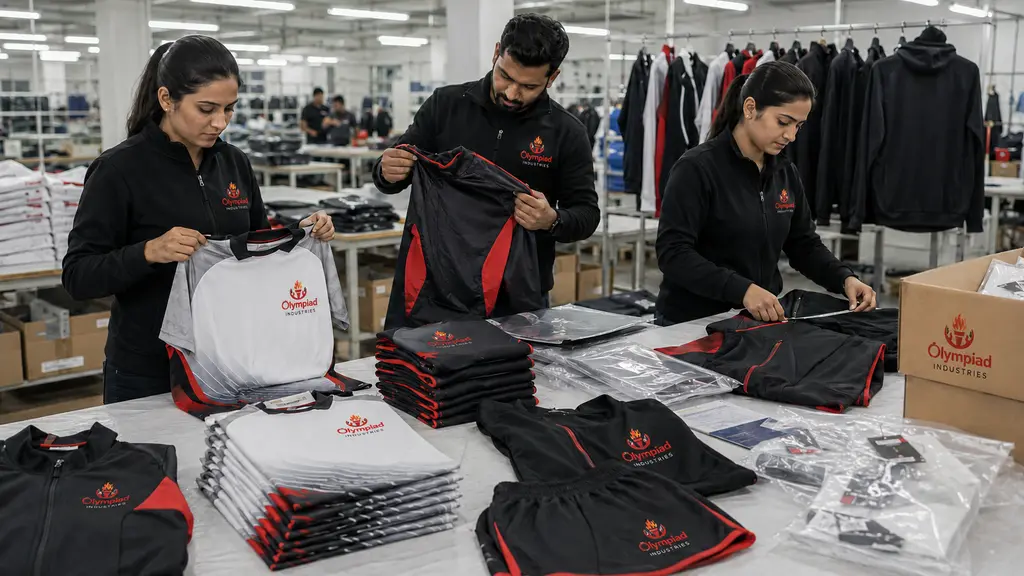
11. Tagging and Packing
After production and quality inspection, garments are prepared for packing.
Depending on the buyer’s requirements, this may include:
- Steam pressing
- Folding
- Size labels
- Brand labels
- Hang tags
- Individual poly bags
- Size stickers
- Carton packing
Private-label brands may require customized packaging so the finished products are prepared according to their retail presentation requirements.
What Should You Send a Sportswear Manufacturer?
Providing complete information can significantly improve product development.
Before requesting a quotation, buyers should prepare as much of the following information as possible:
Product Type
Clearly state what you want to manufacture.
For example:
Custom sublimated football uniform including jersey and shorts.
Quantity
Provide the expected total quantity and, if possible, quantity per design.
Sizes
Include your required size range.
For example:
XS, S, M, L, XL and XXL.
Design
Provide:
- Artwork
- Mockup
- Tech pack
- Reference images
Logos
Vector files are preferable when available.
Common file formats include:
- AI
- EPS
- SVG
Fabric
If you already know the required fabric or GSM, provide this information.
Otherwise, explain how the garment will be used so the manufacturer can discuss suitable options.
Customization
Mention requirements such as:
- Sublimation
- Embroidery
- Screen printing
- Names
- Numbers
- Sponsor logos
- Woven labels
- Hang tags
Packaging
Private-label buyers should explain any special packaging requirements.
How to Choose a Custom Sportswear Manufacturer
Choosing the right manufacturing partner can affect product quality, communication and long-term business growth.
Consider the following factors.
Product Specialization
Look for a manufacturer experienced in the types of garments you intend to produce.
Customization Capability
Confirm whether the manufacturer can support:
- Custom patterns
- Custom fabrics
- Logos
- Printing
- Embroidery
- Labels
- Packaging
Sampling
A clear sampling process helps buyers evaluate the product before bulk manufacturing.
Quality Control
Ask how products are inspected during and after production.
Communication
Clear communication is especially important when working with an overseas sportswear manufacturer.
Specifications, revisions and approvals should be easy to understand.
Production Capacity
For larger programs, buyers should also discuss expected production volume and timelines.
Custom Sportswear for Teams vs Private-Label Brands
Although both use custom manufacturing, their requirements can differ.
Sports Teams
Teams typically focus on:
- Team identity
- Colors
- Logos
- Names
- Numbers
- Sponsor logos
- Performance
Private-Label Brands
Brands may place greater emphasis on:
- Unique garment construction
- Custom sizing
- Fabric selection
- Fashion details
- Private labels
- Hang tags
- Retail packaging
- Repeat production consistency
A manufacturer should understand the buyer’s business model before recommending a production approach.
Why Custom Sportswear Manufacturing Matters
Custom manufacturing gives buyers greater control over their products.
Instead of adapting to available stock garments, teams and brands can develop apparel around their own identity.
For teams, this creates a unified professional appearance.
For brands, it provides an opportunity to develop products that are recognizable and differentiated within the market.
Customization also makes it possible to coordinate multiple garments—including jerseys, shorts, tracksuits, jackets and training wear—within one visual identity.
Custom Sportswear Manufacturing at Olympiad Industries
Olympiad Industries provides custom apparel manufacturing for sports teams, clubs, academies, brands, retailers and private-label customers.
Our sportswear development capabilities include products such as team uniforms, jerseys, shorts, training apparel, tracksuits, jackets and other customized performance garments.
Depending on the product, buyers can specify details such as:
- Design
- Fabric
- GSM
- Colors
- Sizing
- Logo placement
- Names and numbers
- Sublimation
- Embroidery
- Printing
- Labels
- Tags
- Packaging
Our manufacturing process covers key stages including raw material selection, pattern making and cutting, stitching, embellishment, quality checking, tagging and packing.
The objective is to develop apparel around each customer’s product requirements rather than forcing every buyer into the same standard product.
Frequently Asked Questions
Can sportswear be manufactured according to my own design?
Yes. Custom sportswear can generally be developed from a tech pack, artwork, sketch, reference image or approved sample, depending on the product and manufacturing requirements.
Can I add my own logo?
Yes. Logos can be applied using methods such as sublimation, embroidery, screen printing or heat transfer depending on the garment and fabric.
Can player names and numbers be customized?
Yes. Team sportswear can be produced with individual names, numbers and other player-specific details.
Can I use my own brand labels?
Private-label orders can include custom brand labels, size labels, hang tags and packaging according to the agreed requirements.
Is sampling recommended before bulk production?
Yes. Sampling is an important step because it allows the design, measurements, materials, colors and branding to be evaluated before bulk manufacturing.
Which fabric is best for sportswear?
There is no single fabric suitable for every product. Polyester, polyester-spandex, mesh and other performance fabrics may be used depending on the sport, garment construction, climate and performance requirements.
Also read: How to Choose a Custom Sportswear Manufacturer for Your Team
Final Thoughts
Successful custom sportswear manufacturing depends on much more than selecting a design.
Fabric selection, pattern development, sizing, sampling, decoration, stitching, quality control and packaging all contribute to the finished product.
Teams should focus on performance, identity and consistency, while apparel brands should also consider private labeling, product differentiation and retail presentation.
Providing clear specifications and working with an experienced manufacturer can make the development process significantly more efficient.
At Olympiad Industries, we work with international buyers to develop custom sportswear according to their product, branding and manufacturing requirements.
Planning your next sportswear collection or team uniform?
Contact Olympiad Industries to discuss your designs, quantity, fabrics, customization and production requirements.



Leave a Reply