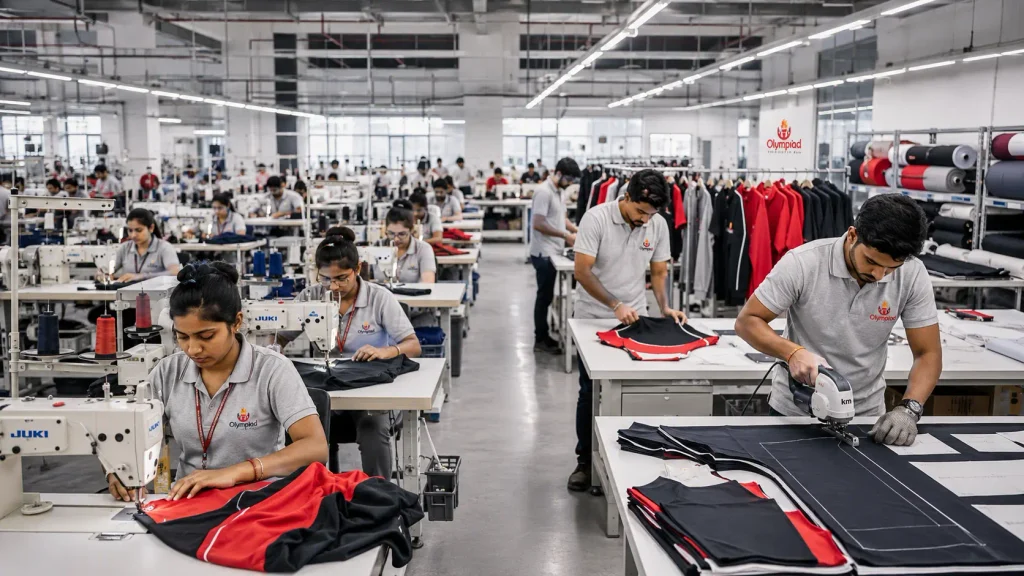
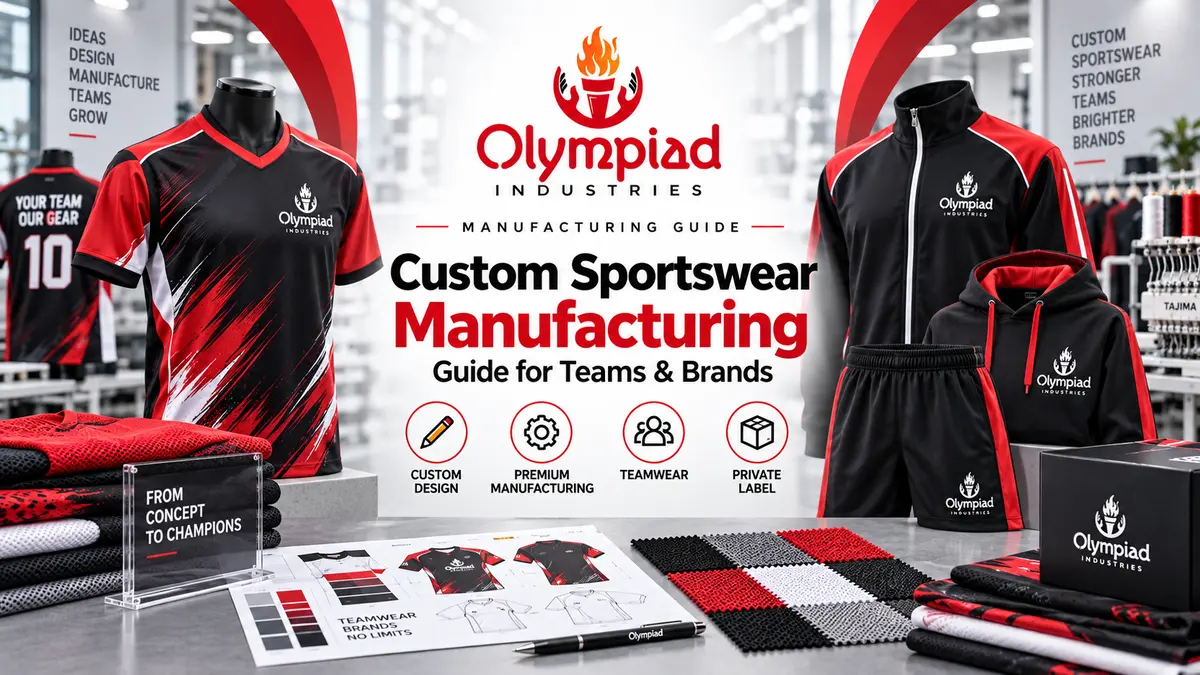

Choosing the right custom sportswear manufacturer is one of the most important decisions a team, club, sports organization, retailer, or private-label brand can make. The manufacturer you select affects much more than the final appearance of your garments. It can influence fabric quality, fit, durability, customization, production consistency, delivery times, communication, and ultimately the reputation of your brand.
For new buyers, comparing manufacturers can feel difficult because many suppliers appear similar at first. Most can show attractive product photos, offer custom logos, and provide competitive quotations. However, the real differences usually become clear when we examine how they handle product development, sampling, materials, quality control, branding, production, and communication.
This guide explains how to choose a custom sportswear manufacturer step by step so teams and brands can make better sourcing decisions and build stronger long-term manufacturing partnerships.
What Is a Custom Sportswear Manufacturer?
A custom sportswear manufacturer produces athletic and performance apparel according to the specific requirements of a buyer rather than simply selling ready-made garments.
Depending on the project, customization may include:
- Product design
- Fabric selection
- GSM and material composition
- Colors
- Measurements and sizing
- Logos
- Team names and player numbers
- Sublimation printing
- Screen printing
- Embroidery
- Heat-transfer applications
- Labels and tags
- Packaging
- Private-label branding
A reliable manufacturer should be able to take a buyer’s idea, reference image, sketch, sample garment, measurement chart, or tech pack and help turn it into a production-ready product.
This flexibility is particularly important for sports clubs, academies, teams, clothing brands, distributors, wholesalers, retailers, and businesses developing their own apparel collections.
Why Choosing the Right Sportswear Manufacturer Matters?
Sportswear is different from ordinary fashion apparel.
Athletes need garments that support movement, comfort, breathability, and repeated use. Teams also require consistent colors, accurate logos, correct player numbers, and reliable sizing across many garments.
For brands, the requirements can become even more detailed. A private-label sportswear brand may need specific fabrics, custom fits, woven labels, printed neck labels, hang tags, customized packaging, and carefully controlled branding.
Choosing the wrong manufacturer can result in problems such as:
- Poor fabric quality
- Incorrect sizing
- Color inconsistency
- Weak stitching
- Logo placement errors
- Delayed production
- Inconsistent bulk orders
- Poor communication
- Unexpected costs
- Packaging mistakes
The lowest quotation therefore does not always represent the best value.
A strong manufacturing partner should help protect the quality and identity of the products being developed.
1. Identify Your Product Requirements First
Before contacting a custom sportswear manufacturer, we should clearly understand what we want to produce.
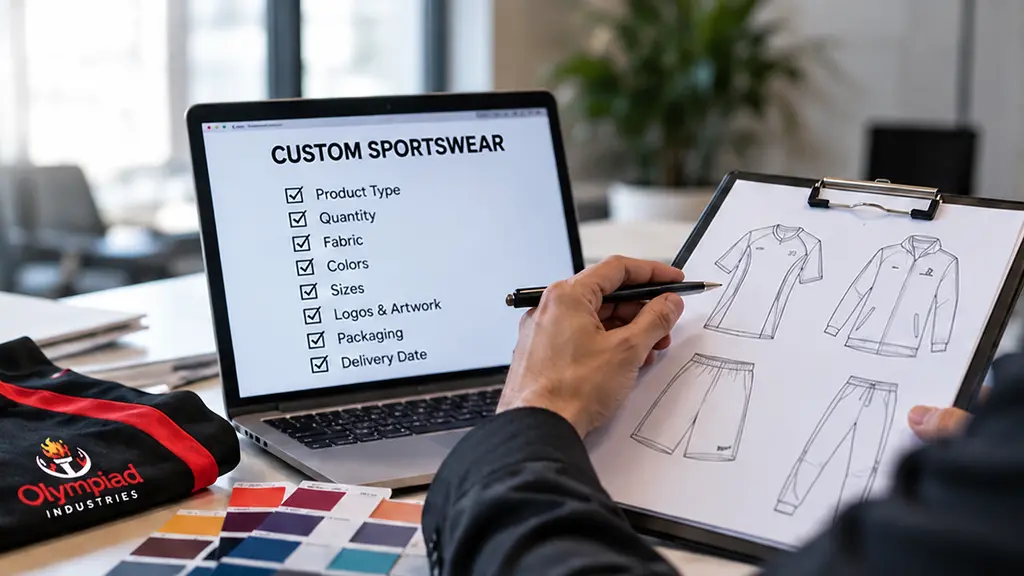
A manufacturer can provide better guidance and a more accurate quotation when the buyer provides detailed information.
Important details may include:
- Product type
- Quantity
- Target market
- Fabric preference
- Required colors
- Size range
- Logo or artwork
- Printing or embroidery requirements
- Packaging requirements
- Target delivery date
- Reference products or images
For example, simply asking:
“How much for football uniforms?”
does not provide enough information.
A more useful inquiry would explain whether the project requires jerseys only or complete kits, how many pieces are needed, what type of fabric is preferred, whether player names and numbers are required, and where the order must be delivered.
The clearer the initial specification, the easier it becomes to compare manufacturers fairly.
2. Check the Manufacturer’s Product Specialization
Not every clothing manufacturer specializes in performance sportswear.
A factory that mainly produces fashion T-shirts may not necessarily have the experience required to manufacture football kits, basketball uniforms, compression wear, goalkeeper jerseys, tracksuits, or technical training apparel.
Look for a manufacturer with experience in the types of products you actually need.
A capable sportswear supplier may manufacture products such as:
- Football and soccer kits
- Basketball uniforms
- Cricket uniforms
- Rugby kits
- Tennis apparel
- Golf apparel
- Sports jerseys
- Sports shorts
- Goalkeeper kits
- Training wear
- Tracksuits
- Sports jackets
- Team wear
- Custom uniforms
Specialization matters because each product category can require different fabrics, construction techniques, fits, printing methods, and performance characteristics.
3. Evaluate Customization Capabilities
Customization is one of the biggest reasons buyers work directly with a sportswear manufacturer.
However, the word “custom” can mean different things to different suppliers.
Some manufacturers may only allow buyers to change colors and add a logo to an existing design. Others can develop an entirely new garment according to the buyer’s own specifications.
Before choosing a manufacturer, find out how much flexibility is available.
Product Design
A good custom manufacturer should be able to work from different forms of product direction, including:
- Sketches
- Reference images
- Existing garments
- Tech packs
- Digital artwork
- Measurement charts
- Previous samples
This is particularly helpful for startup brands that may have a clear idea but do not yet have complete technical documentation.
Colors
Ask whether custom colors can be developed or matched according to your requirements.
For teamwear, accurate colors are especially important because uniforms often need to match club identity.
Logo Placement
Confirm whether logos can be positioned according to your artwork rather than only in predetermined locations.
Branding areas may include:
- Chest
- Sleeves
- Back
- Shorts
- Trouser legs
- Waistbands
- Inside neck
- Labels
- Packaging
Names and Numbers
Teams may require individual player names, numbers, sponsor logos, or position-specific details.
The manufacturer should have a clear process for managing these variations without mixing up garments during production.
4. Understand the Available Fabric Options
Fabric selection can significantly affect the performance and feel of sportswear.
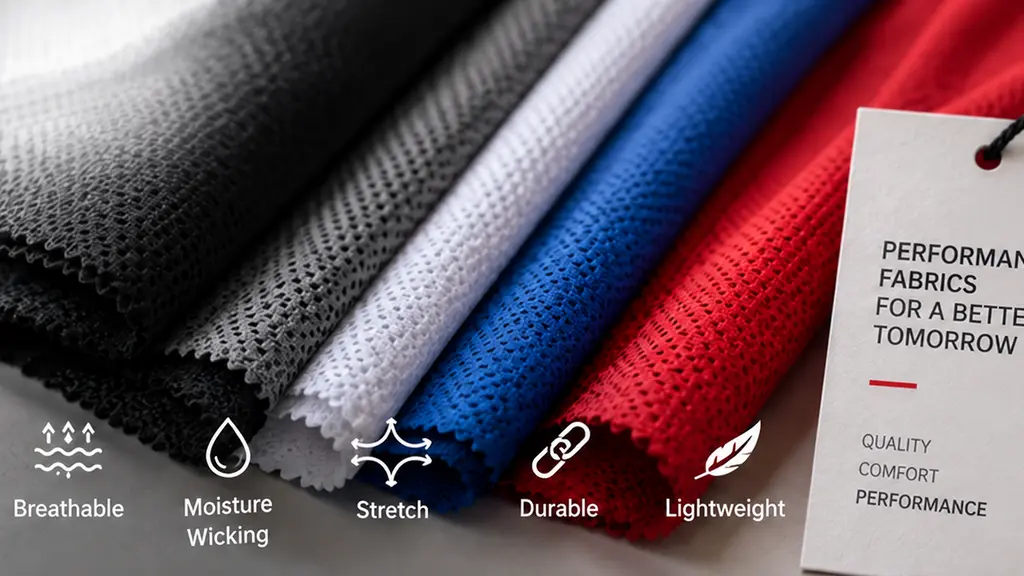
Different products require different material characteristics.
For example, a lightweight football jersey may need moisture-management properties, while a tracksuit may require a completely different fabric structure.
When discussing materials with a manufacturer, consider factors such as:
- Fiber composition
- Fabric weight
- GSM
- Stretch
- Breathability
- Moisture management
- Durability
- Surface texture
- Colorfastness
- Shrinkage
- Intended climate
- Intended activity
Rather than simply asking for “good fabric,” buyers should explain how the garment will be used.
The manufacturer can then recommend suitable materials based on the product and performance requirements.
5. Ask About GSM and Fabric Construction
GSM means grams per square meter and is commonly used to describe fabric weight.
It does not automatically determine quality, but it helps define how light or heavy a fabric is.
For example, two polyester fabrics can have different GSM values and feel very different.
When comparing quotations, make sure manufacturers are quoting comparable materials. A lower-priced garment may simply be made from a lighter or less suitable fabric.
Buyers should also ask about the fabric construction rather than comparing price alone.
Important questions may include:
- What is the fabric composition?
- What is the GSM?
- Does it stretch?
- Is it suitable for sublimation?
- How breathable is it?
- Is it appropriate for competition or training?
- Can a different fabric be selected?
These questions help buyers understand exactly what they are purchasing.
6. Review the Manufacturer’s Sampling Process
Sampling is one of the most important stages of custom sportswear production.
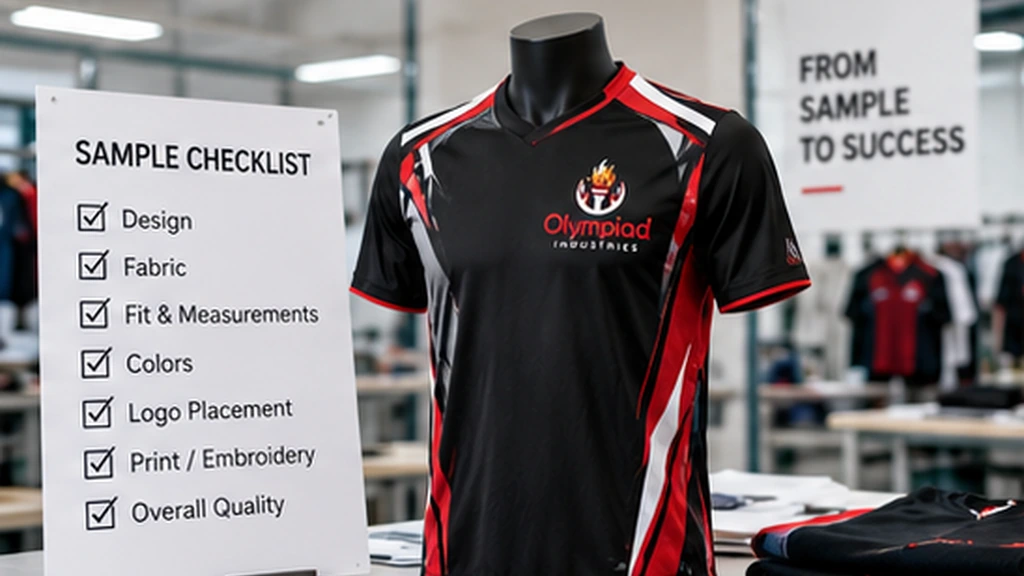
A sample allows the buyer to evaluate the product before approving a bulk order.
Depending on the project, the sample can help confirm:
- Overall design
- Fit
- Measurements
- Fabric
- Colors
- Stitching
- Logo size
- Logo placement
- Print quality
- Embroidery quality
- Labels
- Finishing
A professional manufacturer should be comfortable producing a sample before bulk manufacturing when the project requires one.
Buyers should also understand whether sample costs are refundable, adjustable against the bulk order, or charged separately.
7. Check the Manufacturer’s Pattern-Making Capabilities
A good-looking garment can still fail if the fit is incorrect.
Pattern making is therefore an important part of custom apparel development.
Patterns determine how individual garment pieces are shaped before they are cut and stitched together.
Ask whether the manufacturer can work with:
- Standard sizing
- Buyer-provided size charts
- Custom measurements
- Existing garment measurements
- Special fits
- Men’s, women’s, and kids’ sizing
For private-label brands, consistent sizing is especially important because customers expect the same size to fit consistently across repeated orders.
8. Examine Stitching and Construction Quality
Stitching quality has a direct effect on durability and appearance.
Sportswear is often exposed to movement, stretching, washing, friction, and repeated use, so garment construction should match its intended purpose.
During sampling, examine areas such as:
- Seams
- Hems
- Necklines
- Armholes
- Waistbands
- Zippers
- Pockets
- Cuffs
- Reinforced areas
Look for clean construction without loose threads, uneven seams, skipped stitches, or unnecessary puckering.
Different garments may require different stitching techniques, so the manufacturer should select construction methods according to the product.
9. Compare Embellishment Options
Branding and decoration are central to custom sportswear.
Before placing an order, understand what embellishment methods the manufacturer can provide.
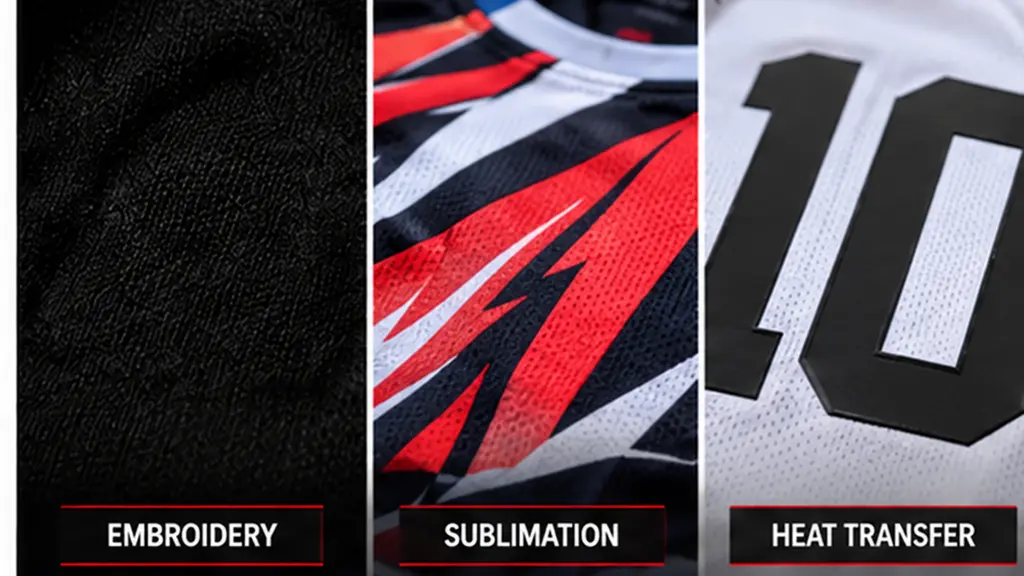
Sublimation Printing
Sublimation is widely used for polyester sportswear because the design becomes part of the fabric rather than sitting as a thick layer on top.
It can be particularly suitable for:
- Football jerseys
- Basketball uniforms
- Rugby kits
- Cycling apparel
- Team uniforms
- All-over printed garments
It allows detailed artwork, gradients, patterns, sponsor graphics, player names, and numbers to be incorporated into the design.
Embroidery
Embroidery can provide a premium, textured appearance.
It may be suitable for:
- Polo shirts
- Jackets
- Tracksuits
- Caps
- Teamwear
- Casual sports apparel
Screen Printing
Screen printing can work well for certain logos, graphics, and bulk production requirements.
Heat Transfer
Heat-transfer methods can be useful for names, numbers, logos, and specific graphic applications.
The best method depends on the fabric, design, order quantity, intended use, and desired appearance.
A capable manufacturer should help buyers select a suitable technique rather than using the same method for every product.
10. Evaluate Private-Label Manufacturing Options
For clothing brands, customization often goes beyond the garment itself.
Private-label manufacturing allows products to be produced under the buyer’s own brand identity.
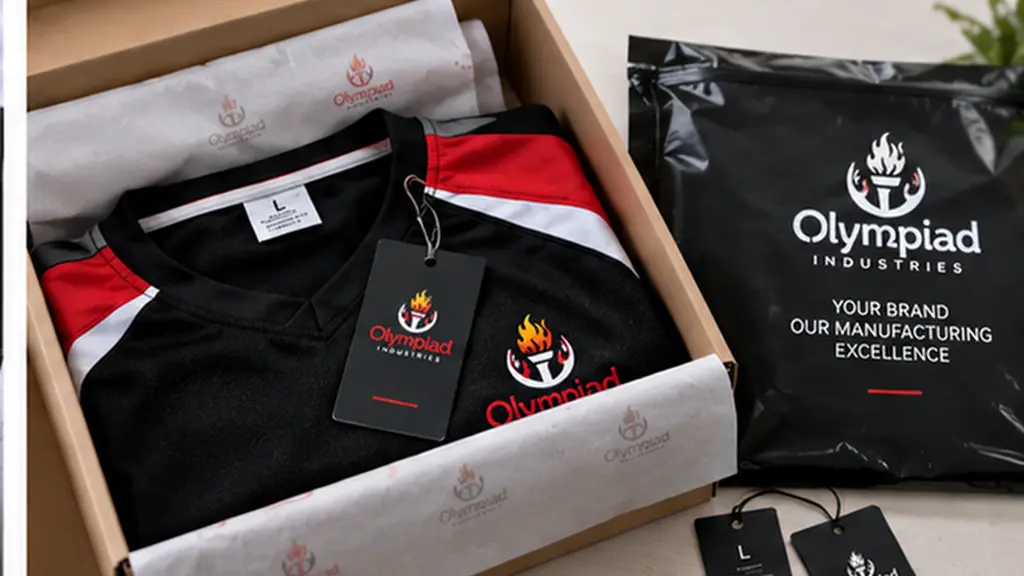
Depending on the project, this may include:
- Main labels
- Size labels
- Care labels
- Printed neck labels
- Woven labels
- Hang tags
- Barcode labels
- Branded packaging
- Custom polybags
- Carton markings
Ask the manufacturer which private-label services are available and whether minimum quantities apply.
Brands should also provide clear artwork and branding instructions to reduce errors.
11. Understand Minimum Order Quantity
MOQ stands for Minimum Order Quantity.
Different manufacturers may have different minimum quantities depending on:
- Product type
- Fabric availability
- Custom colors
- Printing method
- Labels
- Packaging
- Production setup
A small startup brand may prefer a manufacturer offering lower minimum quantities, while larger buyers may focus more on bulk pricing and production capacity.
However, buyers should not select a supplier based only on the lowest MOQ.
Very small production runs can sometimes increase the cost per garment because many production processes still require setup.
The important question is whether the manufacturer’s MOQ fits your business model.
12. Compare Pricing Carefully
Price is important, but quotations should be compared properly.
Two manufacturers may quote different prices because they are offering different specifications.
A quotation may vary according to:
- Fabric composition
- Fabric GSM
- Product construction
- Printing
- Embroidery
- Number of colors
- Custom labels
- Packaging
- Quantity
- Shipping method
- Destination
When comparing suppliers, make sure each quotation is based on the same product specifications.
Ask whether the price includes:
- Customization
- Labels
- Packaging
- Sampling
- Shipping
- Duties or taxes
This helps prevent unexpected costs later.
13. Do Not Choose a Manufacturer Based on Price Alone
Extremely low quotations should be reviewed carefully.
A lower price may sometimes result from:
- Lower fabric weight
- Different fabric composition
- Reduced quality control
- Simpler construction
- Lower-quality accessories
- Limited customization
- Excluded shipping costs
This does not mean the most expensive manufacturer is automatically better.
Instead, compare the complete value being offered.
The ideal supplier should provide a suitable balance between quality, customization, reliability, communication, and cost.
14. Review Quality-Control Procedures
Quality control should take place throughout the manufacturing process rather than only after production has finished.
A structured apparel production workflow may include checks during:
- Material inspection
- Pattern preparation
- Cutting
- Stitching
- Printing or embroidery
- Measurement checking
- Finishing
- Final inspection
- Packing
Ask the manufacturer how quality is checked.
Important areas may include:
- Measurements
- Colors
- Fabric
- Stitching
- Print placement
- Logo accuracy
- Names and numbers
- Labels
- Final appearance
- Quantity
- Packaging
Quality control is particularly important for bulk orders because even a small repeated mistake can affect hundreds of garments.
15. Check Communication Quality
Good communication is often one of the clearest signs of a reliable manufacturing partner.
Pay attention to how the supplier communicates before you place an order.
A professional manufacturer should be able to:
- Answer questions clearly
- Request missing specifications
- Explain production options
- Confirm details in writing
- Provide updates
- Identify potential problems
- Discuss realistic timelines
Poor communication during the quotation stage can become a much larger problem after production begins.
Whenever possible, keep important approvals documented through email, messaging platforms, order sheets, tech packs, or other written communication.
16. Provide a Clear Tech Pack or Product Specification
A tech pack is a technical document containing the information required to manufacture a garment.
It may include:
- Technical sketches
- Measurements
- Fabric details
- Color references
- Logo artwork
- Print locations
- Label information
- Stitching instructions
- Packaging requirements
Established brands often work with detailed tech packs.
However, buyers without a full tech pack can still work with manufacturers capable of developing products from references, sketches, existing garments, or measurement charts.
Regardless of the format, all important specifications should eventually be documented before bulk production begins.
17. Ask About Production Lead Times
Production timelines can vary depending on:
- Order quantity
- Product complexity
- Material availability
- Custom dyeing
- Printing
- Embroidery
- Sampling
- Production capacity
- Quality inspections
Always ask for an estimated lead time before confirming an order.
Do not forget that manufacturing time and shipping time are separate.
For example, an order may require several weeks for production followed by additional time for transportation.
Buyers working toward tournaments, product launches, school seasons, competitions, or retail campaigns should plan orders well in advance.
18. Understand Shipping and Export Support
International buyers should confirm how finished products will be shipped.
Common options may include:
- Express courier
- Air freight
- Sea freight
- Freight forwarding
The most suitable method depends on order size, destination, urgency, and budget.
Ask whether the manufacturer can assist with:
- Export documentation
- Commercial invoices
- Packing lists
- Carton preparation
- Shipping coordination
- Tracking information
It is also important to understand which shipping costs, import duties, and taxes are the responsibility of the buyer.
19. Look for Manufacturing Transparency
Professional manufacturers should be able to explain how products move through production.
A typical custom apparel manufacturing workflow may include:
Raw Material Selection
The required fabrics, threads, zippers, elastic, labels, and other components are selected according to the approved specification.
Pattern Making and Cutting
Patterns are prepared according to the required measurements before fabric is cut.
Stitching
Garment components are assembled using appropriate construction techniques.
Embellishment
Printing, sublimation, embroidery, heat transfer, or other decoration is applied according to the approved design.
Quality Check
Garments are checked for measurements, construction, branding, finishing, and other requirements.
Tagging and Packing
Approved garments receive the required labels, tags, and packaging before shipment.
Understanding this workflow helps buyers evaluate whether a manufacturer has a structured approach to production.
20. Check Whether the Manufacturer Can Grow With Your Business
Many buyers initially focus only on their first order.
However, a good supplier relationship can continue for years.
Before selecting a manufacturer, think about future requirements.
Can the supplier support:
- Additional product categories?
- Larger quantities?
- Repeat orders?
- Seasonal collections?
- New colorways?
- Custom packaging?
- Men’s, women’s, and kids’ products?
- Multiple team designs?
- International shipping?
A manufacturer that can support business growth may become much more valuable than a supplier capable of producing only one product.
21. Consider the Manufacturer’s Full Product Range
Working with one capable manufacturing partner can simplify sourcing.
For example, a sports organization may initially order match jerseys but later need:
- Training shirts
- Shorts
- Tracksuits
- Jackets
- Polo shirts
- Hoodies
- Team travel wear
Similarly, a private-label brand may begin with sportswear and later expand into activewear, streetwear, casualwear, or kidswear.
A broader manufacturing capability can reduce the need to manage multiple suppliers.
22. Check Sample Consistency Against Bulk Production
One common sourcing concern is whether bulk production will match the approved sample.
Before giving final approval, confirm which sample, specifications, fabrics, measurements, and artwork will become the production reference.
Important approvals may include:
- Fabric
- Color
- Measurements
- Logo size
- Logo placement
- Artwork
- Labels
- Packaging
The more clearly these details are documented, the easier it is for both buyer and manufacturer to maintain consistency.
23. Ask for Accurate Size Specifications
Sizing problems can create serious difficulties for teams and brands.
A size label such as “Medium” does not guarantee the same measurements between different manufacturers.
Always work with an approved measurement chart.
Common measurement points can include:
- Chest
- Body length
- Shoulder
- Sleeve length
- Waist
- Hip
- Inseam
- Outseam
For team orders, collect player sizes carefully before finalizing production.
For private-label brands, size charts should be developed according to the intended customer market and garment fit.
24. Pay Attention to Packaging
Packaging may seem less important than the garment, but it affects product presentation and logistics.
Depending on the buyer’s requirements, packaging may include:
- Individual polybags
- Size stickers
- Product labels
- Barcodes
- Hang tags
- Branded bags
- Cartons
- Quantity markings
Retail and private-label buyers should discuss packaging before production begins rather than after garments have already been completed.
25. Confirm Intellectual Property and Artwork Handling
Brands and teams often provide valuable intellectual property such as:
- Logos
- Artwork
- Custom prints
- Patterns
- Brand marks
- Original product designs
Before sharing sensitive designs, buyers should understand how the manufacturer handles customer artwork and production files.
Clear communication regarding ownership and authorized use of designs is especially important for established brands.
Red Flags When Choosing a Sportswear Manufacturer
Some warning signs deserve attention before sending payment or approving a large order.
Be cautious when a supplier:
- Avoids giving clear product specifications
- Offers extremely low prices without explaining materials
- Refuses to discuss sampling
- Changes specifications frequently
- Cannot explain fabric composition
- Provides unrealistic production promises
- Gives inconsistent answers
- Avoids written confirmation
- Cannot explain quality-control procedures
- Pressures buyers into placing large orders quickly
One warning sign alone does not necessarily mean a supplier is unreliable, but several together should encourage further investigation.
Questions to Ask a Custom Sportswear Manufacturer
Before selecting a supplier, buyers can ask questions such as:
- What types of sportswear do you manufacture?
- Can you develop products from our designs or references?
- What fabrics are available?
- Can we select fabric GSM and composition?
- What customization methods do you offer?
- Can you produce samples before bulk manufacturing?
- What is your MOQ?
- Can you work with our measurement chart?
- Do you provide private-label manufacturing?
- Can you produce custom labels and packaging?
- How do you check product quality?
- What is the estimated production lead time?
- What shipping options are available?
- Can you support repeat orders?
- Can you manufacture additional product categories in the future?
The answers can reveal a great deal about the manufacturer’s capabilities and working process.
Choosing a Manufacturer for a Sports Team
Sports teams should focus on several specific areas.
The manufacturer should be able to manage:
- Team colors
- Club logos
- Sponsor logos
- Player names
- Player numbers
- Multiple sizes
- Home and away variations
- Matching shorts
- Goalkeeper designs
- Training apparel
- Repeat player orders
Consistency is particularly important because all garments need to look like part of the same team program.
Teams should also keep a clear list of player names, numbers, and sizes to reduce production errors.
Choosing a Manufacturer for a Private-Label Brand
Brands often require deeper customization than teams.
In addition to product quality, they may need:
- Custom garment patterns
- Brand-specific sizing
- Unique colors
- Custom trims
- Woven labels
- Neck labels
- Care labels
- Hang tags
- Packaging
- Collection consistency
For this reason, private-label buyers should look for a manufacturer capable of product development rather than only basic logo customization.
The ideal manufacturing relationship should allow the brand to gradually develop its own recognizable product identity.
Why Manufacturing Location Can Matter
A manufacturer’s location can influence access to materials, skilled labor, supplier networks, logistics, and industry experience.
Some regions develop strong manufacturing ecosystems around particular industries.
Sialkot, Pakistan, for example, has a long-established manufacturing base serving international sports and apparel markets. For buyers sourcing custom sportswear, working with manufacturers located in specialized production regions can provide access to experienced apparel development, stitching, printing, embroidery, and supporting supply chains.
However, location alone should never determine the decision.
Buyers should still evaluate the individual manufacturer based on quality, communication, capabilities, sampling, and reliability.
How Olympiad Industries Approaches Custom Sportswear Manufacturing
At Olympiad Industries, we focus on custom apparel development rather than offering only a fixed range of ready-made products.
Our sportswear manufacturing capabilities are designed for teams, clubs, academies, organizations, retailers, distributors, and private-label brands that need products developed around their own requirements.
Projects can begin from:
- Reference images
- Sketches
- Tech packs
- Artwork
- Measurement charts
- Existing samples
- Buyer specifications
Our production workflow connects material selection, pattern making and cutting, stitching, embellishment, quality checking, tagging, and packing so that each stage supports the approved product direction.
Customization can include fabrics, colors, measurements, logos, names, numbers, printing, embroidery, labels, tags, and packaging depending on the requirements of the project.
The objective is not simply to place a logo on a standard garment. It is to help buyers develop products that reflect their own team identity or brand requirements.
Final Checklist Before Choosing Your Manufacturer
Before making a final decision, make sure you have reviewed the following:
- Product specialization
- Fabric options
- Customization capabilities
- Sampling process
- Sizing and pattern development
- Stitching quality
- Printing and embroidery
- Private-label options
- MOQ
- Pricing
- Production timelines
- Quality-control process
- Communication
- Packaging
- Shipping support
- Repeat-order capability
A manufacturer does not necessarily need to be the cheapest in every category. The goal should be to find a partner capable of producing the required product consistently while communicating clearly and supporting the buyer’s long-term needs.
Frequently Asked Questions
How do I find a good custom sportswear manufacturer?
Start by identifying manufacturers that specialize in the products you need. Compare their fabric options, customization capabilities, sampling process, quality-control procedures, MOQ, communication, pricing, and production timelines before selecting a supplier.
What should I send to a sportswear manufacturer for a quotation?
Provide the product type, quantity, sizes, fabric requirements if known, colors, logo artwork, customization details, reference images or tech pack, packaging requirements, and delivery destination.
Should I order a sample before placing a bulk order?
For custom products, sampling is highly recommended. A sample allows you to review fabric, sizing, colors, stitching, printing, logos, and overall appearance before approving bulk production.
What is MOQ in sportswear manufacturing?
MOQ means Minimum Order Quantity. It is the smallest quantity a manufacturer is willing to produce for a particular product or customization setup. MOQ can vary depending on the garment, fabric, printing method, labels, and production requirements.
Can manufacturers create sportswear from a photo or sketch?
Many custom manufacturers can work from reference photos, sketches, existing garments, artwork, measurement charts, or tech packs. However, the final specifications should be clearly documented before production.
What is private-label sportswear manufacturing?
Private-label manufacturing means a manufacturer produces garments that are sold under the buyer’s own brand. Products may include custom logos, labels, tags, packaging, colors, measurements, and other brand-specific details.
How long does custom sportswear manufacturing take?
Production time depends on the product, quantity, materials, customization, sample approval, and factory capacity. Buyers should request a project-specific lead-time estimate before confirming an order.
Is sublimation good for sportswear?
Sublimation is particularly suitable for many polyester sportswear products because it allows detailed designs, patterns, logos, names, and numbers to be incorporated into the fabric without creating a heavy surface layer.
What information should be approved before bulk production?
Buyers should approve the design, fabric, measurements, colors, artwork, logo placement, labels, packaging, and other relevant specifications before bulk manufacturing begins.
Can one manufacturer produce both teamwear and private-label sportswear?
Yes. A capable custom apparel manufacturer may support team uniforms as well as private-label collections, provided it has the necessary product-development, customization, labeling, and production capabilities.
Also read: Custom Sportswear Manufacturing Guide for Teams & Brands
Conclusion (Custom Sportswear)
Choosing a custom sportswear manufacturer should be treated as a business decision rather than simply a price comparison.
The right manufacturing partner should understand your product requirements, offer suitable materials, support customization, develop accurate samples, maintain consistent quality, communicate clearly, and provide realistic production and delivery expectations.
Teams should look for manufacturers capable of managing colors, logos, player details, sizes, and coordinated uniforms. Private-label brands should place additional emphasis on product development, custom sizing, labels, packaging, and long-term consistency.
By carefully evaluating these areas before production begins, buyers can reduce sourcing risks and build more reliable manufacturing relationships.
Olympiad Industries provides custom sportswear and apparel manufacturing solutions for teams, clubs, academies, organizations, distributors, retailers, and private-label brands. We develop products around buyer-specific designs, colors, measurements, branding, materials, and packaging requirements.



Leave a Reply