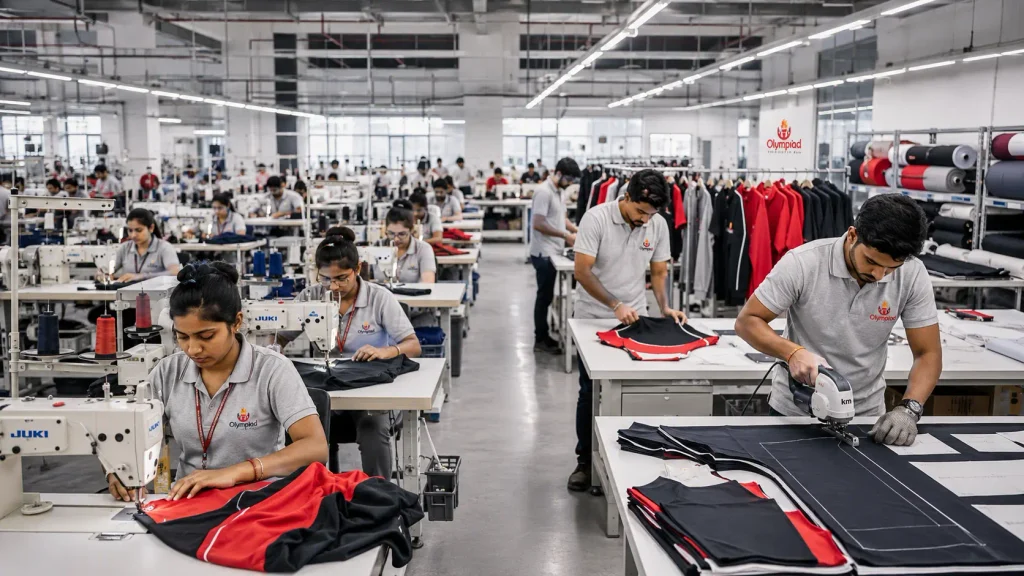
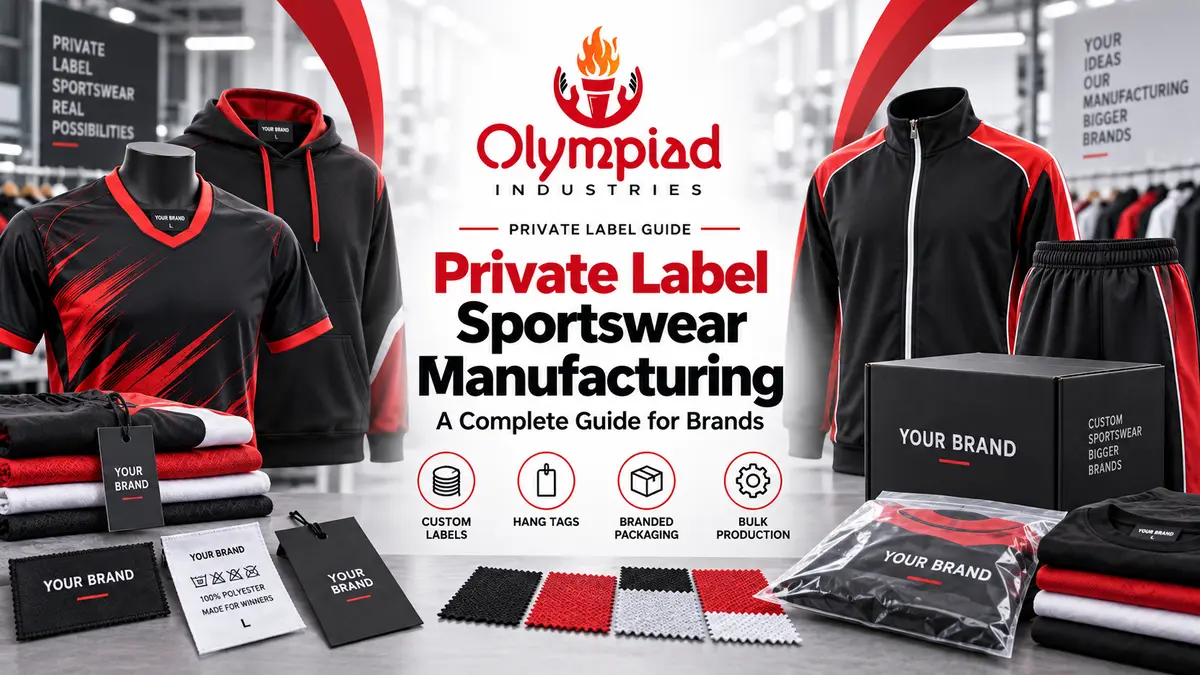

Private label sportswear manufacturing gives brands the opportunity to create apparel under their own identity without operating their own production facility. Instead of purchasing generic ready-made garments, businesses can work with a manufacturer to develop products around their preferred designs, fabrics, measurements, colors, branding, labels, packaging, and performance requirements.
This approach can be suitable for startup sportswear brands, established apparel companies, retailers, distributors, fitness businesses, teamwear suppliers, gyms, sports organizations, and other companies that want to sell customized apparel under their own brand.
However, successful private label manufacturing involves much more than simply placing a logo on a garment. Product development normally moves through several stages, including defining specifications, choosing materials, developing patterns, creating samples, approving branding, bulk manufacturing, quality checking, packing, and delivery.
This guide explains the complete private label sportswear manufacturing process and the key decisions brands should consider before beginning production.
What Is Private Label Sportswear Manufacturing?
Private label sportswear manufacturing is a business arrangement in which a manufacturer produces sportswear or athletic apparel that is sold under another company’s brand name.
The buyer controls the brand identity while the manufacturer handles the technical and production processes required to turn the product concept into finished garments.
Depending on the project, private label customization may include:
- Product designs
- Fabric selection
- Fabric composition
- GSM
- Colors
- Measurements
- Sizing
- Logos
- Sublimation
- Printing
- Embroidery
- Labels
- Hang tags
- Packaging
- Product finishing
Private label production can range from modifying an existing product direction to developing a completely custom garment from a tech pack, sketch, photograph, sample garment, measurement chart, or other buyer reference.
For brands that want greater control over their products, private label manufacturing provides significantly more flexibility than simply buying standard wholesale apparel.
Who Uses Private Label Sportswear Manufacturing?
Private label manufacturing can support many different types of businesses.
Common buyers include:
- Startup sportswear brands
- Established clothing brands
- Fitness apparel companies
- Activewear brands
- Gym clothing businesses
- Sports retailers
- Online apparel stores
- Teamwear suppliers
- Wholesalers
- Distributors
- Sports clubs
- Academies
- Schools
- Corporate sports programs
The requirements of each buyer can be very different.
A startup may begin with two or three products in relatively controlled quantities. An established brand may require a complete seasonal collection with multiple fabrics, custom sizing, private labels, packaging, and several colorways.
A suitable manufacturer should therefore understand both the product itself and the commercial requirements behind the project.
1. Start With a Clear Brand and Product Direction
Before contacting a manufacturer, brands should define what they want to create.
You do not necessarily need every technical detail finalized at this stage, but a clear overall direction helps the manufacturer understand your objectives.
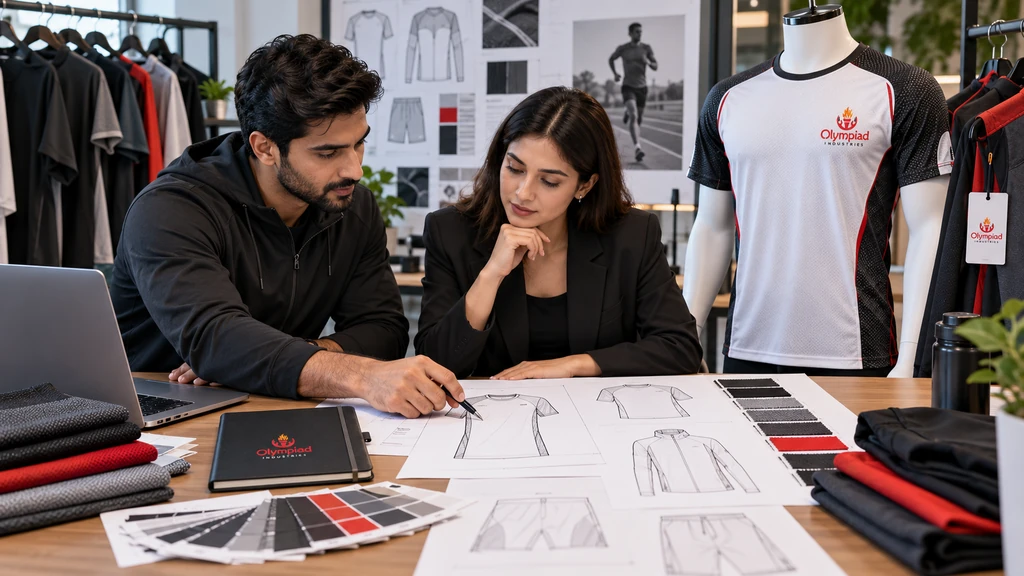
Consider questions such as:
- Who is the target customer?
- What type of sportswear will the brand sell?
- Is the product intended for competition, training, fitness, or lifestyle use?
- What level of quality is required?
- What price range will the brand target?
- Which markets will the products be sold in?
- What fit should the garments have?
- What colors represent the brand?
- What order quantities are expected?
For example, a fitness brand may focus on training T-shirts, gym shorts, leggings, compression garments, and tracksuits.
A teamwear business may focus on football kits, basketball uniforms, rugby kits, goalkeeper apparel, sports jackets, and training wear.
A clear direction helps reduce unnecessary product revisions later.
2. Decide Which Products to Manufacture
Private label sportswear can include a wide range of garments.
Depending on the manufacturer’s capabilities, buyers may develop products such as:
- Football and soccer kits
- Basketball uniforms
- Cricket uniforms
- Rugby kits
- Tennis apparel
- Golf apparel
- Sports jerseys
- Sports shorts
- Goalkeeper kits
- Training wear
- Tracksuits
- Sports jackets
- Polo shirts
- Performance T-shirts
- Gym shirts
- Gym shorts
- Tank tops
- Compression wear
- Leggings
- Fitness sets
- Running wear
- Hoodies
- Sweatshirts
- Joggers
New brands do not necessarily need to launch all possible categories immediately.
A smaller, focused collection can make it easier to manage:
- Sampling
- Inventory
- Product testing
- Marketing
- Sizing
- Customer feedback
- Cash flow
Once the first products are established, additional categories can be developed gradually.
3. Prepare Product References or a Tech Pack
Clear product information is essential for accurate manufacturing.
The more clearly a buyer communicates the required specifications, the easier it becomes for the manufacturer to develop the correct product.
What Is a Tech Pack?
A tech pack is a technical document that provides manufacturing instructions for a garment.
It can include:
- Front and back technical drawings
- Measurement charts
- Fabric specifications
- GSM
- Color references
- Stitching details
- Logo dimensions
- Logo placement
- Printing instructions
- Embroidery instructions
- Label details
- Packaging requirements
Established brands often use detailed tech packs to communicate specifications.
What If You Do Not Have a Tech Pack?
Not every startup has a professional tech pack.
Depending on the manufacturer, product development may also begin from:
- Reference photographs
- Hand sketches
- Existing garments
- Artwork
- Measurement charts
- Product samples
- Written instructions
These references can provide a starting point, but the final specifications should still be documented before bulk manufacturing begins.
4. Choose the Right Fabric
Fabric plays a major role in the performance, appearance, comfort, and durability of sportswear.
A fabric that works well for one product may not be suitable for another.
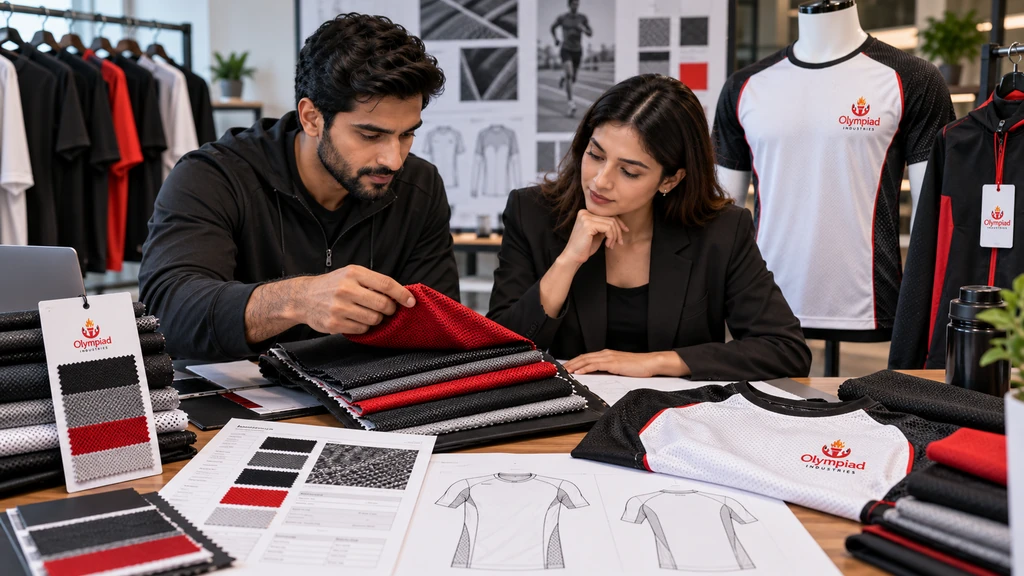
For example, a lightweight football jersey and a winter tracksuit require very different material characteristics.
When selecting fabrics, brands should consider:
- Fiber composition
- GSM
- Breathability
- Stretch
- Moisture management
- Durability
- Surface texture
- Softness
- Shrinkage
- Colorfastness
- Printing compatibility
- Intended activity
- Climate
Rather than simply asking a manufacturer for “premium fabric,” buyers should explain how the garment will be used.
This provides the manufacturer with more useful information for recommending appropriate materials.
5. Understand Fabric GSM
GSM stands for grams per square meter and is commonly used to describe fabric weight.
A higher GSM generally means a heavier fabric, while a lower GSM usually indicates a lighter material.
However, GSM should not be treated as a complete measure of quality.
Two fabrics with similar GSM values can still differ in:
- Fiber composition
- Knitting structure
- Stretch
- Breathability
- Softness
- Durability
- Finish
When comparing quotations from multiple manufacturers, brands should ensure that the proposed fabrics have similar specifications.
A cheaper quotation may sometimes use a lighter or different material, which can make a direct price comparison misleading.
6. Develop Custom Colors
Color plays an important role in brand recognition.
Private label brands may require:
- Standard fabric colors
- Custom shades
- Team colors
- Brand-specific colors
- Seasonal colors
- Home and away variations
- Multi-color designs
Color matching can be especially important for repeat orders.
If a brand uses a specific shade throughout its collection, maintaining consistency across future production runs helps protect the overall brand identity.
Buyers should provide clear color references whenever possible and approve important shades before bulk manufacturing begins.
7. Develop the Right Fit and Sizing
A product can look attractive but still receive poor customer feedback if the fit is incorrect.
Private label brands should therefore pay careful attention to measurements and sizing.
Possible fit directions include:
- Regular fit
- Athletic fit
- Slim fit
- Relaxed fit
- Oversized fit
- Compression fit
Brands may also need separate sizing systems for:
- Men
- Women
- Kids
- Youth teams
Important measurement points can include:
- Chest
- Body length
- Shoulder
- Sleeve length
- Waist
- Hip
- Inseam
- Outseam
For brands planning long-term repeat production, an approved measurement chart becomes an important manufacturing reference.
8. Pattern Making and Product Development
Patterns determine the shape and dimensions of individual garment components before the fabric is cut.
Accurate pattern development helps achieve:
- Correct proportions
- Consistent sizing
- Proper fit
- Balanced garment construction
A manufacturer may develop patterns from:
- Buyer measurement charts
- Existing garments
- Standard sizing
- Custom fit requirements
- Approved samples
For brands developing distinctive silhouettes, pattern development is especially important because the fit can become part of the product’s identity.
9. Select the Right Decoration Method
Branding and graphic application are major parts of sportswear manufacturing.
Different products and fabrics may require different decoration techniques.
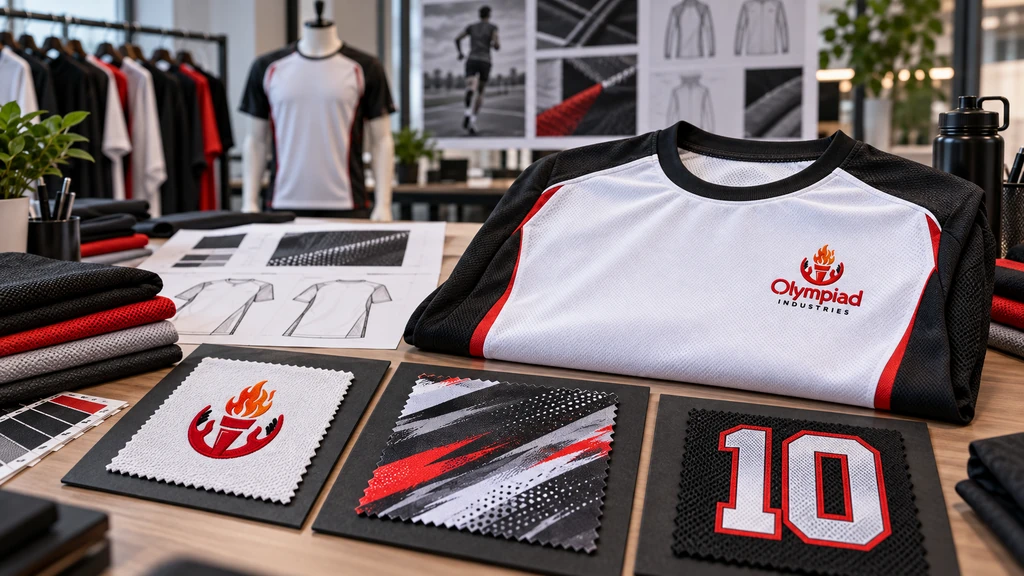
Sublimation Printing
Sublimation is commonly used for polyester sportswear.
It can be suitable for:
- Football jerseys
- Basketball uniforms
- Rugby kits
- Teamwear
- Cycling apparel
- All-over printed designs
Sublimation can reproduce:
- Patterns
- Gradients
- Team colors
- Sponsor logos
- Names
- Numbers
- Detailed artwork
Because the design is transferred into the polyester fibers, sublimation can create a lightweight finish without a thick printed layer sitting on top of the fabric.
Embroidery
Embroidery creates a stitched, textured finish that can provide a premium appearance.
It is often suitable for:
- Polo shirts
- Jackets
- Tracksuits
- Hoodies
- Teamwear
- Caps
The suitability of embroidery depends on the garment, fabric, logo size, and design complexity.
Screen Printing
Screen printing can be used for certain graphics and logo applications, particularly when a design is suitable for the process and the production quantity supports it.
Heat Transfer
Heat-transfer techniques can be useful for:
- Names
- Numbers
- Sponsor logos
- Small branding elements
- Certain graphic applications
The decoration method should be selected according to the fabric, intended use, design, quantity, and desired finish.
10. Develop Your Private Labels
Private labels help transform a manufactured garment into a branded product.
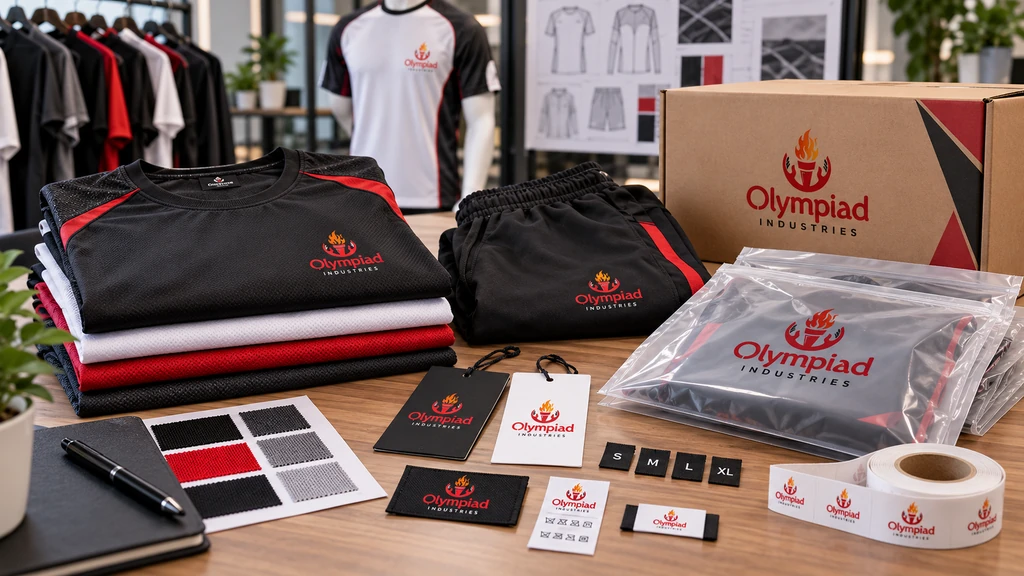
Depending on the brand and target market, labels may include:
- Main woven labels
- Printed neck labels
- Size labels
- Care labels
- Composition labels
- Country-of-origin labels
Brands should provide approved information for:
- Logo
- Dimensions
- Colors
- Placement
- Material
- Text
Label requirements should be discussed early because custom labels may have their own production lead times and minimum quantities.
11. Create Custom Hang Tags
Hang tags can provide branding and product information before the customer even wears the garment.
A hang tag may include:
- Brand logo
- Product name
- Size
- Barcode
- Website
- Social media information
- Collection name
- Care guidance
- Brand message
Brands should consider:
- Tag dimensions
- Paper or card type
- Printing
- Finish
- String
- Fastener
- Artwork
A consistent hang-tag design can strengthen the professional presentation of a private label collection.
12. Plan the Packaging
Packaging is another important part of private label manufacturing.
Depending on the business model, packaging may range from simple protective packing to customized retail presentation.
Possible options include:
- Individual polybags
- Branded bags
- Size stickers
- Barcode labels
- Tissue paper
- Custom boxes
- Cartons
- Shipping markings
An online direct-to-consumer brand may place more emphasis on presentation, while a distributor may prioritize efficient bulk packing.
Brands should communicate packaging requirements before production is completed.
13. Understand Minimum Order Quantity
MOQ means Minimum Order Quantity.
It refers to the minimum quantity a manufacturer is willing to produce under a particular production setup.
MOQ may depend on:
- Product type
- Fabric availability
- Custom colors
- Printing method
- Embroidery
- Labels
- Packaging
- Accessories
- Production setup
Startup brands often prefer lower MOQs because they reduce initial inventory exposure.
However, smaller quantities may have a higher cost per unit because setup and development expenses are distributed across fewer garments.
The best MOQ is not necessarily the smallest available. It should make commercial sense for the buyer’s business model.
14. Request a Product Sample
Sampling is one of the most important stages in private label sportswear manufacturing.
A sample allows the buyer to inspect the proposed product before approving bulk production.
Important areas to review include:
- Fabric
- Fit
- Measurements
- Colors
- Stitching
- Printing
- Embroidery
- Logo dimensions
- Logo placement
- Labels
- Overall appearance
Sampling can identify issues before they are repeated across a larger production run.
15. Review the Sample Carefully
Sample approval should not be treated as a formality.
The buyer should evaluate the garment against the intended product specification.
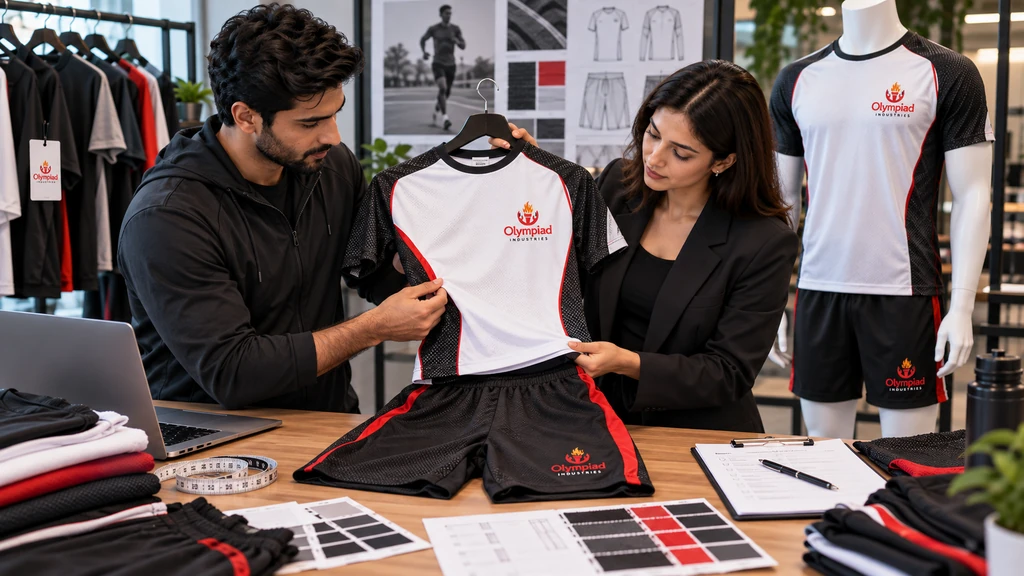
Ask questions such as:
- Is the fit correct?
- Are the measurements accurate?
- Does the fabric feel appropriate?
- Are the colors correct?
- Is the stitching clean?
- Are logos positioned correctly?
- Is the printing or embroidery acceptable?
- Are the labels correct?
- Does the garment match the intended brand positioning?
Brands may also consider basic wear and washing tests when appropriate.
Any required correction should be documented clearly before the next development stage.
16. Finalize Specifications Before Bulk Production
Once the sample is approved, the final manufacturing specification should be confirmed.
Important details may include:
- Product style
- Fabric
- GSM
- Colors
- Measurements
- Size breakdown
- Artwork
- Logo placement
- Decoration methods
- Labels
- Hang tags
- Packaging
- Quantity
- Delivery instructions
Late changes can create delays, additional costs, or inconsistencies.
For this reason, final approval should be given only after all important details are understood.
17. Begin Bulk Production
After specifications and samples are approved, the manufacturer can begin bulk production.
A typical workflow may include:
- Raw material preparation
- Material inspection
- Pattern preparation
- Fabric cutting
- Embellishment
- Stitching
- Finishing
- Measurement checks
- Quality inspection
- Tagging
- Packing
The exact sequence may differ depending on the type of garment and decoration process.
18. Raw Material Inspection
Before large quantities of fabric are cut, materials should be checked.
Inspection may include:
- Fabric shade
- Surface defects
- GSM
- Stretch
- Material consistency
- Threads
- Zippers
- Elastic
- Ribbing
- Labels
- Accessories
Identifying problems at the material stage can prevent defects from continuing into production.
19. Pattern Making and Cutting
Once materials are approved, fabric is cut according to the required patterns.
Accurate cutting contributes to:
- Consistent sizing
- Balanced garment shape
- Efficient stitching
- Correct proportions
Careful cutting is particularly important when multiple sizes are being produced in the same order.
20. Stitching and Garment Construction
Cut components are assembled into finished garments using construction techniques suited to the product.
Sportswear often needs to accommodate movement and repeated use.
Important areas may include:
- Seams
- Necklines
- Armholes
- Hems
- Waistbands
- Cuffs
- Zippers
- Reinforced points
Different garments may require different stitching methods.
A lightweight training shirt, compression garment, tracksuit, and sports jacket should not automatically be constructed in exactly the same way.
21. Apply Logos and Branding
Branding elements should follow the approved artwork and placement specification.
Applications may include:
- Chest logos
- Sleeve logos
- Back logos
- Sponsor artwork
- Player names
- Player numbers
- Shorts branding
- Trouser branding
- Inside neck branding
Consistency becomes especially important when the same logo must appear across multiple sizes and product types.
22. Quality Control During Production
Quality control should take place throughout manufacturing rather than only after all garments are finished.
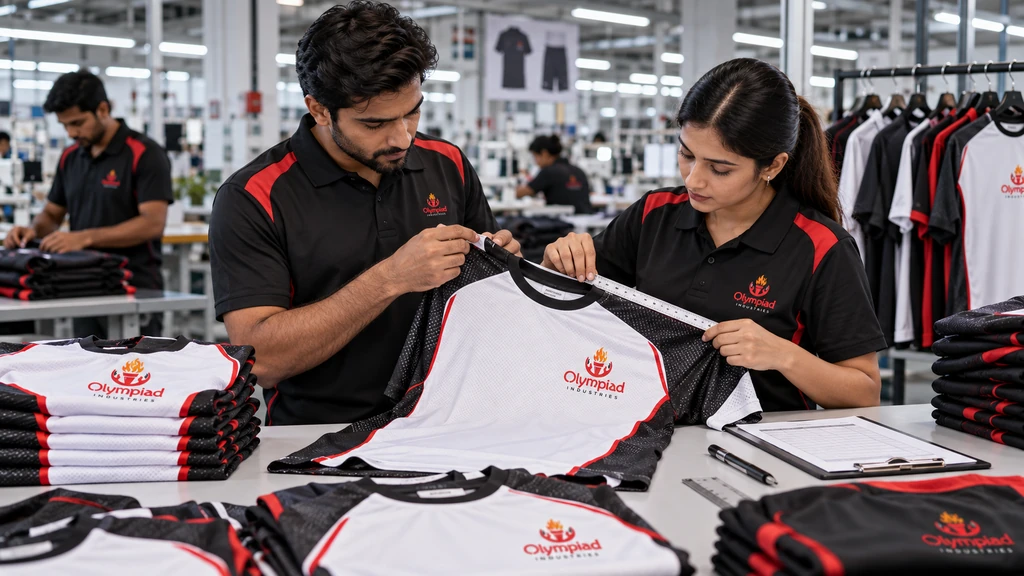
Checks may be performed during:
- Fabric preparation
- Cutting
- Stitching
- Printing
- Sublimation
- Embroidery
- Measurement checking
- Finishing
Early inspection can identify issues before they affect the complete order.
23. Final Quality Inspection
Before garments are packed, finished products should undergo a final review.
Depending on the project, this may include checking:
- Quantity
- Measurements
- Stitching
- Fabric
- Colors
- Prints
- Embroidery
- Logos
- Names
- Numbers
- Labels
- Accessories
- Cleanliness
- Finishing
The objective is to confirm that the production follows the approved specifications as closely as possible.
24. Tagging and Packing
After quality approval, garments can move to final tagging and packing.
This may include:
- Attaching hang tags
- Checking size labels
- Applying barcode labels
- Folding garments
- Packing individual pieces
- Arranging products by size
- Preparing cartons
- Adding carton markings
Private label brands should provide packing instructions if products need to arrive organized for warehousing, retail distribution, or direct customer fulfillment.
25. Plan Shipping and Delivery
Finished products can be transported through several shipping methods.
Common options may include:
- Express courier
- Air freight
- Sea freight
- Freight forwarding
The best method depends on:
- Quantity
- Weight
- Destination
- Urgency
- Budget
Brands should remember that production time and shipping time are separate.
A product launch schedule should allow sufficient time for both.
26. Understand Production Lead Times
Private label manufacturing requires more preparation than purchasing existing ready-made products.
Lead time may be affected by:
- Product development
- Sampling
- Sample revisions
- Fabric availability
- Custom colors
- Printing
- Embroidery
- Labels
- Packaging
- Order quantity
- Factory workload
Brands working toward seasonal launches, tournaments, retail campaigns, or scheduled collections should begin development well in advance.
Rushed orders can limit production options and increase logistics costs.
27. Compare Manufacturing Prices Properly
A quotation should always be evaluated together with the product specification.
Private label sportswear pricing may depend on:
- Fabric
- Composition
- GSM
- Quantity
- Construction
- Printing
- Embroidery
- Labels
- Hang tags
- Packaging
- Accessories
- Shipping
Two quotations that appear to be for the same garment may actually include different materials and services.
Brands should therefore confirm exactly what is included before comparing suppliers.
28. Do Not Choose Only on Price
The lowest quotation is not automatically the best option.
A very low price may sometimes reflect differences in:
- Fabric weight
- Material composition
- Stitching
- Accessories
- Quality control
- Packaging
- Customization
- Shipping
On the other hand, a higher price does not automatically guarantee better quality.
Brands should evaluate the overall manufacturing offer, including:
- Product capability
- Sampling
- Communication
- Materials
- Quality
- Reliability
- Pricing
- Lead time
The aim should be to find the most suitable manufacturing partner rather than simply the cheapest supplier.
29. Protect Brand Consistency
Strong brands maintain a recognizable identity across different products and production runs.
Important consistency areas include:
- Colors
- Logos
- Labels
- Packaging
- Sizing
- Fabric quality
- Fit
- Decoration
- Product presentation
Brands should retain approved references such as:
- Tech packs
- Measurement charts
- Artwork
- Color references
- Label files
- Packaging files
- Approved samples
These references can help improve consistency when placing future orders.
30. Plan for Repeat Orders
A successful first collection may lead to reorders.
Before choosing a manufacturer, consider whether the supplier can support:
- Repeat production
- Larger quantities
- Additional sizes
- New colorways
- New fabrics
- New product categories
- Seasonal collections
Keeping accurate records of the original product specification helps both the buyer and manufacturer manage future production more efficiently.
31. Expand Your Collection Gradually
Brands do not need to manufacture every product category immediately.
A teamwear brand might initially launch:
- Jerseys
- Shorts
and later add:
- Tracksuits
- Training shirts
- Jackets
- Polo shirts
- Hoodies
A fitness brand might begin with:
- Gym T-shirts
- Shorts
before expanding into:
- Leggings
- Sports bras
- Tank tops
- Compression wear
- Fitness sets
Gradual product expansion allows brands to use real customer feedback when planning future collections.
32. Choose a Manufacturer With Broader Capabilities
Working with one manufacturer across several product categories can simplify sourcing.
A broader manufacturing partner may help a brand maintain consistency in:
- Communication
- Colors
- Sizing
- Labels
- Packaging
- Quality expectations
For example, a sportswear brand may eventually expand beyond match apparel into activewear, streetwear, casualwear, or kidswear.
A manufacturer capable of supporting several categories may provide greater flexibility as the brand grows.
33. Make Communication a Priority
Even a technically capable manufacturer can become difficult to work with if communication is poor.
Important project information should be confirmed clearly and preferably in writing.
This includes:
- Product specifications
- Quantities
- Sizes
- Fabrics
- Colors
- Artwork
- Sample approvals
- Labels
- Packaging
- Production schedule
- Shipping requirements
Clear communication helps reduce misunderstandings and provides both parties with a reference throughout the production process.
Questions to Ask a Private Label Sportswear Manufacturer
Before selecting a production partner, consider asking:
- Which sportswear products do you manufacture?
- Can you work from our tech pack?
- Can you develop products from reference images or existing samples?
- Which fabrics are available?
- Can we choose fabric composition and GSM?
- What is the minimum order quantity?
- Do you produce development samples?
- Can you work with our custom size chart?
- Which printing methods are available?
- Do you provide embroidery?
- Can you manufacture custom labels?
- Can you provide custom hang tags?
- Can you produce branded packaging?
- How is quality controlled?
- What is the expected production lead time?
- Which shipping methods are available?
- Can you support repeat orders?
- Can you manufacture additional product categories later?
These questions can help reveal whether a manufacturer is suitable for both the current project and the brand’s longer-term plans.
Common Mistakes New Sportswear Brands Should Avoid
Several mistakes can make a first private label project more difficult than necessary.
Common examples include:
- Launching too many products at once
- Ordering bulk production before approving a sample
- Providing unclear measurements
- Sending poor-quality artwork
- Changing specifications during production
- Selecting a supplier only because of price
- Ignoring labels and packaging until the end
- Planning unrealistic delivery dates
- Failing to document approvals
- Selecting fabrics without considering the product’s intended use
A structured development process can reduce many of these risks.
Private Label Sportswear vs White Label Sportswear
The terms private label and white label are sometimes used interchangeably, but they can describe different approaches.
Private Label Sportswear
Private label products are generally developed around the buyer’s specifications.
Customization may include:
- Design
- Fabric
- Fit
- Measurements
- Colors
- Logos
- Labels
- Packaging
The final product can therefore be much more closely connected to the buyer’s brand identity.
White Label Sportswear
White label products are often existing or standardized products that can be supplied to different businesses with different branding.
The underlying garment may remain largely unchanged between buyers.
For companies seeking more product control and differentiation, private label development usually offers more customization.
Is Private Label Sportswear Suitable for Startup Brands?
Private label manufacturing can work well for startups when the project is planned carefully.
New brands should focus on:
- A clear target customer
- A manageable first collection
- Realistic quantities
- Accurate costing
- Professional branding
- Sample approval
- Reliable manufacturing
- Sufficient launch time
A startup may benefit from beginning with a small number of carefully developed products rather than trying to compete across every category immediately.
The information learned from the first production run can then guide future development.
Why Sialkot Is Relevant to Sportswear Manufacturing
Sialkot, Pakistan, has a long-established manufacturing ecosystem associated with sports goods and apparel.
The region includes experience and supporting services related to areas such as:
- Sportswear manufacturing
- Team uniforms
- Stitching
- Sublimation
- Embroidery
- Custom apparel
- Export production
For international buyers, specialized manufacturing regions can provide access to experienced workers and connected supplier networks.
However, manufacturing location alone should not determine supplier selection.
Brands should still evaluate individual manufacturers according to:
- Product capability
- Quality
- Communication
- Sampling
- Reliability
- Production systems
How Olympiad Industries Supports Private Label Brands
Olympiad Industries provides custom apparel development for brands, teams, retailers, distributors, and other B2B buyers that need products manufactured around their own requirements.
Projects can begin from:
- Tech packs
- Reference photographs
- Sketches
- Artwork
- Measurement charts
- Existing garments
- Product samples
- Buyer specifications
Depending on the project, customization can include:
- Fabric selection
- GSM
- Colors
- Measurements
- Product designs
- Logos
- Sublimation
- Printing
- Embroidery
- Labels
- Hang tags
- Packaging
Our manufacturing workflow follows six connected stages:
1. Raw Materials
Materials are reviewed according to the requirements of the product.
2. Pattern Making & Cutting
Patterns and measurements are prepared before fabric is cut for production.
3. Stitching
Garment components are assembled according to the approved product direction.
4. Embellishment
Approved logos, artwork, printing, sublimation, embroidery, or other branding methods are applied according to the project.
5. Quality Check
Garments are reviewed for relevant production requirements before final packing.
6. Tagging & Packing
Approved products are tagged and packed according to the buyer’s requirements.
The purpose of this workflow is to support customized apparel development rather than limit buyers to a fixed range of standard retail products.
Also read: How to Choose a Custom Sportswear Manufacturer for Your Team
FAQs About Private Label Sportswear
What is a private label sportswear manufacturer?
A private label sportswear manufacturer produces apparel that is sold under the buyer’s own brand. Depending on the project, products can include custom designs, fabrics, colors, measurements, logos, labels, tags, and packaging.
Can I start a sportswear brand without owning a factory?
Yes. Many clothing brands work with external manufacturers while managing branding, marketing, sales, distribution, and customer relationships themselves.
Do I need a tech pack to manufacture sportswear?
A tech pack is highly useful, but some manufacturers can also begin product development from reference images, sketches, sample garments, measurement charts, or other clear specifications.
Can I put my own logo and labels on the products?
Yes. Private label manufacturing can include custom logos, woven labels, printed neck labels, size labels, care labels, hang tags, and branded packaging depending on the project.
What does MOQ mean?
MOQ stands for Minimum Order Quantity. It is the smallest quantity that a manufacturer accepts for a particular product or production setup.
Should I order a sample before bulk production?
Sampling is strongly recommended for customized products. It gives the buyer an opportunity to review materials, measurements, fit, stitching, colors, branding, labels, and overall appearance before bulk production.
Can a sportswear manufacturer create a product from a picture?
Depending on its development capabilities, a manufacturer may be able to use photographs, sketches, existing garments, artwork, or samples as references. Final specifications should still be documented clearly before production.
Which products can be private labeled?
Potential categories include jerseys, team uniforms, training wear, tracksuits, sports jackets, T-shirts, shorts, activewear, gym wear, hoodies, joggers, leggings, and many other apparel products depending on manufacturer capability.
How long does private label sportswear manufacturing take?
Lead times vary according to product complexity, sampling, materials, quantity, decoration methods, packaging, and production capacity. Brands should request a project-specific production estimate from the manufacturer.
Can I reorder the same design later?
Yes. Keeping accurate records of approved fabrics, measurements, artwork, labels, colors, and samples can help improve consistency in repeat production.
Also read: Custom Sportswear Manufacturing Guide for Teams & Brands
Conclusion (Private Label Sportswear)
Private label sportswear manufacturing allows brands to create apparel around their own product direction, target customer, visual identity, and commercial requirements.
A successful manufacturing project normally begins with clear specifications and continues through material selection, pattern development, sampling, branding, bulk production, quality control, tagging, packing, and delivery.
Brands should evaluate potential manufacturers based on more than price alone. Product capabilities, materials, communication, customization, sampling procedures, quality control, production reliability, and the ability to support repeat orders can all influence the long-term success of the relationship.
For new brands, a focused initial collection can provide valuable experience while reducing unnecessary complexity. As sales and customer feedback develop, the product range can gradually expand into additional sportswear and apparel categories.
Olympiad Industries supports private label sportswear and custom apparel development for brands, teams, retailers, distributors, and other B2B buyers, with products developed around buyer-specific designs, materials, measurements, branding, labels, and packaging requirements.



Leave a Reply