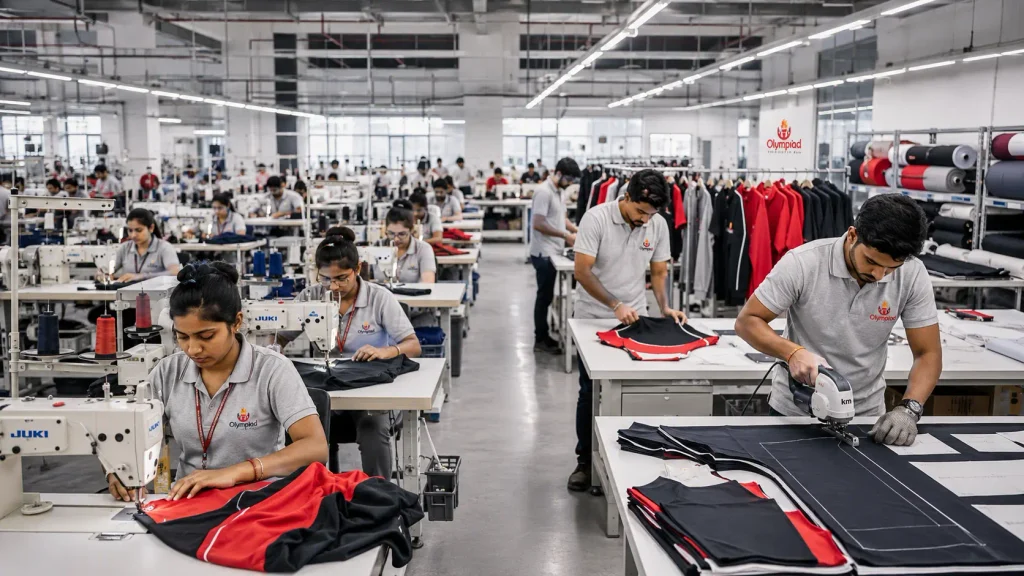

Best Fabrics for Sportswear: Choosing the right fabric is one of the most important decisions in custom sportswear manufacturing. A garment may have an excellent design, attractive colors, and professional branding, but if the fabric is not suitable for the intended activity, the final product may not deliver the comfort, durability, or performance the wearer expects.
Sportswear fabrics need to perform differently from many ordinary clothing materials. Depending on the sport or activity, garments may need to manage moisture, allow airflow, stretch with movement, remain lightweight, resist repeated washing, support sublimation printing, or provide warmth in cooler conditions.
For teams and apparel brands, fabric selection can also affect product pricing, fit, printing quality, customer satisfaction, and the overall positioning of a collection.
This guide explains the most common sportswear fabrics, important performance characteristics, GSM, fabric construction, moisture management, stretch, printing compatibility, and how to select suitable materials for different sportswear products.
Why Fabric Selection Matters in Sportswear
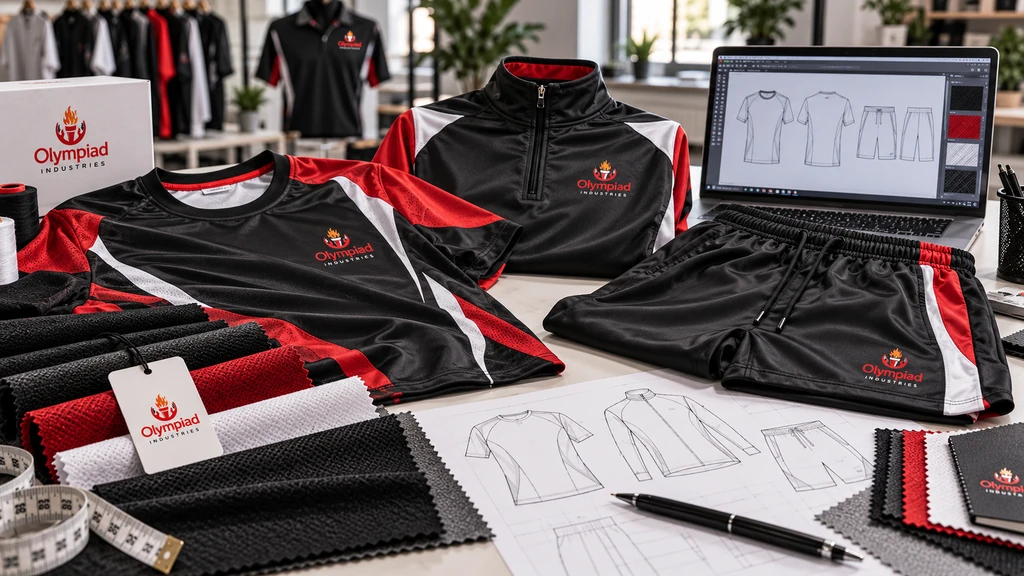
Fabric is the foundation of a sportswear garment.
It influences how the product:
- Feels against the skin
- Moves with the body
- Handles sweat
- Allows airflow
- Holds its shape
- Performs during activity
- Accepts printing or sublimation
- Responds to repeated washing
- Looks after extended use
- Fits within the target price range
Different sports place different demands on apparel.
A football jersey, for example, may need to be lightweight and breathable. A compression shirt needs greater stretch and recovery. A winter tracksuit may require additional warmth, while a training T-shirt may prioritize moisture management and comfort.
For this reason, there is no single fabric that is automatically the “best” for every sportswear product.
The right fabric is the one that matches the garment’s intended purpose.
1. Start With the Intended Use of the Garment
Before comparing fabric names or GSM values, buyers should first identify how the garment will be used.
Important questions include:
- Which sport or activity is the garment for?
- Will it be used for competition or training?
- Will it be worn indoors or outdoors?
- What climate will it be used in?
- Does the wearer need high stretch?
- Is lightweight performance important?
- Will the garment require sublimation?
- Does the product need insulation?
- Is durability more important than minimum weight?
- What price range is the finished product targeting?
A manufacturer can provide better fabric recommendations when these requirements are clearly defined.
For example, a lightweight football kit and a heavyweight casual hoodie should not use the same type of material simply because both are apparel products.
2. Polyester: One of the Most Common Sportswear Fabrics
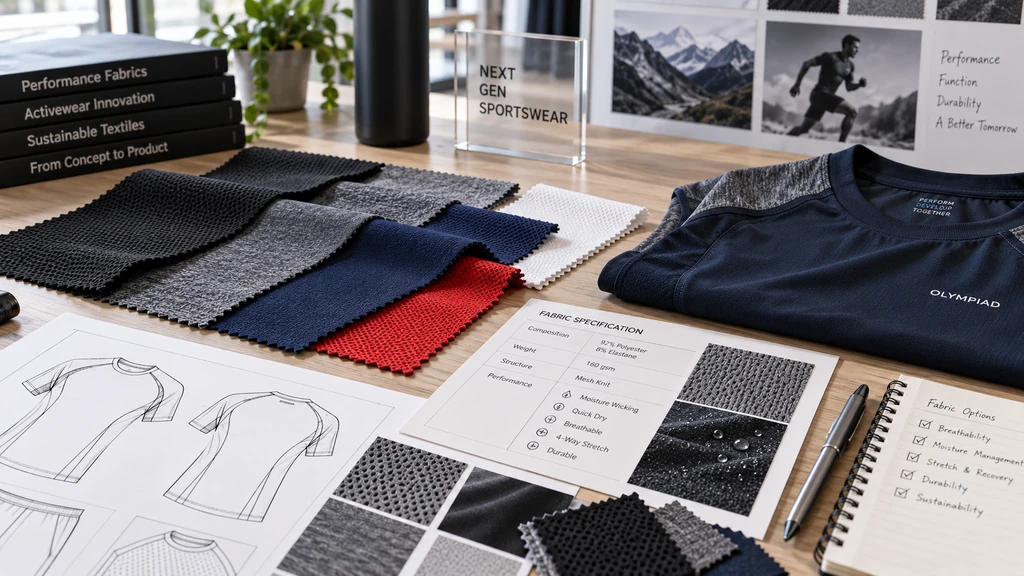
Polyester is widely used in performance sportswear.
It is particularly common in:
- Football jerseys
- Basketball uniforms
- Rugby kits
- Cricket apparel
- Training shirts
- Sports shorts
- Running wear
- Teamwear
- Sublimated uniforms
Polyester is popular because it can be engineered into many different fabric constructions and weights.
Advantages of Polyester for Sportswear
Depending on the construction and finish, polyester can offer:
- Lightweight performance
- Good durability
- Quick drying
- Shape retention
- Compatibility with sublimation printing
- Color consistency
- Easy care
- A wide range of textures and weights
Polyester also absorbs relatively little water compared with some natural fibers, which can help garments dry more quickly.
However, not all polyester fabrics perform the same way.
The knitting structure, GSM, yarn type, finishing, and moisture-management treatment can make two polyester fabrics feel and perform very differently.
3. Polyester Mesh Fabrics
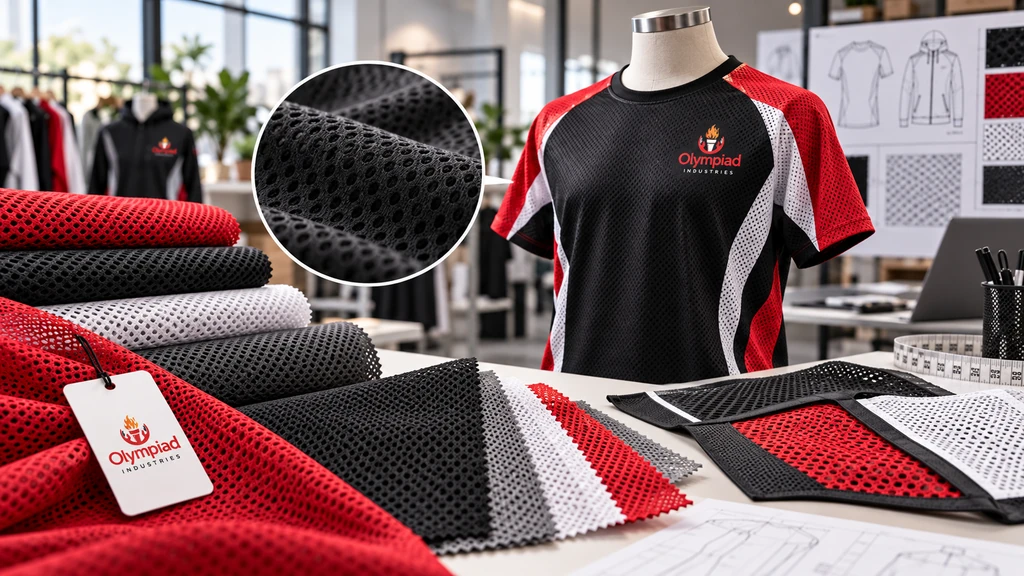
Mesh fabrics contain small openings or structures designed to improve airflow.
They are commonly used in performance sportswear where ventilation is important.
Possible applications include:
- Football jerseys
- Basketball uniforms
- Training tops
- Running shirts
- Side panels
- Underarm panels
- Back ventilation areas
Mesh can be used for an entire garment or only in selected areas.
Why Use Mesh?
Mesh constructions can help improve:
- Air circulation
- Breathability
- Lightweight feel
- Comfort during intense activity
However, mesh density varies.
Some mesh fabrics are extremely open and lightweight, while others have a tighter structure that provides more coverage and durability.
The correct option depends on the intended sport and garment design.
4. Bird-Eye Fabric for Sportswear
Bird-eye is a commonly used polyester knit associated with performance apparel.
Its surface typically has a small patterned texture that can help create a breathable, athletic appearance.
Bird-eye fabrics may be used for:
- Sports jerseys
- Training shirts
- Team uniforms
- Performance T-shirts
- Football kits
Different bird-eye constructions can vary in weight, softness, stretch, and openness.
Buyers should therefore evaluate the actual fabric sample rather than selecting material based only on its name.
5. Interlock Fabric
Interlock is a knitted fabric construction that generally provides a smoother and more stable surface than some lighter mesh structures.
It can be used in:
- Sports jerseys
- Training tops
- Performance shirts
- Teamwear
- Activewear
Depending on the fiber composition, interlock fabrics can provide:
- A smooth surface
- Good structure
- Comfortable hand feel
- Stable appearance
- Printing compatibility
Polyester interlock is often selected where buyers want a cleaner, more substantial appearance than very open mesh.
6. Micro Polyester and Microfiber Fabrics
Microfiber-style polyester fabrics use very fine synthetic fibers.
Depending on construction, they can provide a smooth, lightweight, or soft feel.
Applications may include:
- Tracksuits
- Sports jackets
- Training apparel
- Lightweight outer layers
- Shorts
Micro polyester fabrics can vary significantly, so buyers should evaluate:
- Surface texture
- Weight
- Breathability
- Water resistance
- Durability
- Intended use
Some constructions are designed for active performance, while others are more suitable for warm-up or travel apparel.
7. Polyester-Spandex Blends
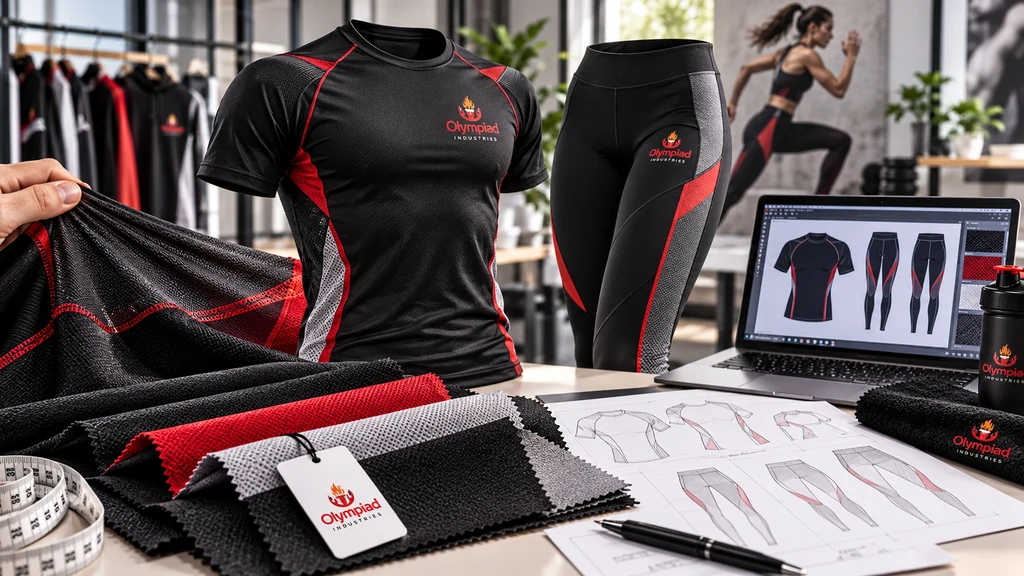
When greater stretch is required, polyester is often blended with elastane or spandex.
These blends are commonly used for:
- Compression wear
- Leggings
- Sports bras
- Fitness wear
- Cycling apparel
- Stretch training tops
- Activewear
- Base layers
The additional stretch allows garments to move more closely with the body.
Benefits of Stretch Blends
Depending on composition and construction, benefits may include:
- Multi-directional stretch
- Better movement
- Close-to-body fit
- Shape recovery
- Comfort during dynamic activity
The percentage of elastane should be selected according to the required fit and function.
A compression garment generally requires different stretch performance from a standard training shirt.
8. Nylon Fabrics in Activewear
Nylon is another synthetic fiber used in some sportswear and activewear products.
It can provide a smooth feel and good durability.
Possible applications include:
- Leggings
- Sports bras
- Performance bottoms
- Stretch tops
- Lightweight outerwear
- Fitness apparel
Nylon is frequently blended with elastane when high stretch and a smooth hand feel are required.
However, polyester may be preferred for some products where sublimation printing is central to the design.
Fabric choice should therefore consider both performance and decoration requirements.
9. Nylon-Spandex Blends
Nylon-spandex combinations are common in fitted activewear.
They may be selected for products such as:
- Leggings
- Yoga wear
- Sports bras
- Compression garments
- Fitness sets
- Fitted tops
These fabrics can provide a smooth surface, significant stretch, and close fit.
When sourcing this type of material, brands should evaluate:
- Stretch percentage
- Recovery
- Thickness
- Opacity
- Hand feel
- Pilling resistance
- Colorfastness
- Performance after washing
Opacity can be particularly important for leggings and fitted bottoms.
10. Cotton in Sportswear
Cotton is comfortable, familiar, and widely used in apparel, but it does not always provide the same performance characteristics as synthetic sports fabrics.
Cotton can absorb moisture rather than moving it away quickly, so it may become heavier during intense exercise.
However, it can still be suitable for:
- Casual training wear
- Lifestyle sportswear
- Gym T-shirts
- Warm-up apparel
- Streetwear-inspired sports collections
- Team leisurewear
The correct choice depends on whether the garment is intended for high-performance activity or general casual use.
11. Cotton-Polyester Blends
Cotton and polyester can be combined to create fabrics that balance characteristics from both fibers.
Possible benefits include:
- Softer feel than some full-polyester constructions
- Better durability than some pure cotton fabrics
- Improved drying compared with pure cotton
- Comfortable everyday wear
- Greater versatility
Cotton-poly blends can work well for:
- Team T-shirts
- Casual sportswear
- Gym apparel
- Travel wear
- Lifestyle collections
- Hoodies
- Sweatshirts
The exact composition should be selected according to the intended product.
12. Fleece for Tracksuits, Hoodies, and Warm Sportswear
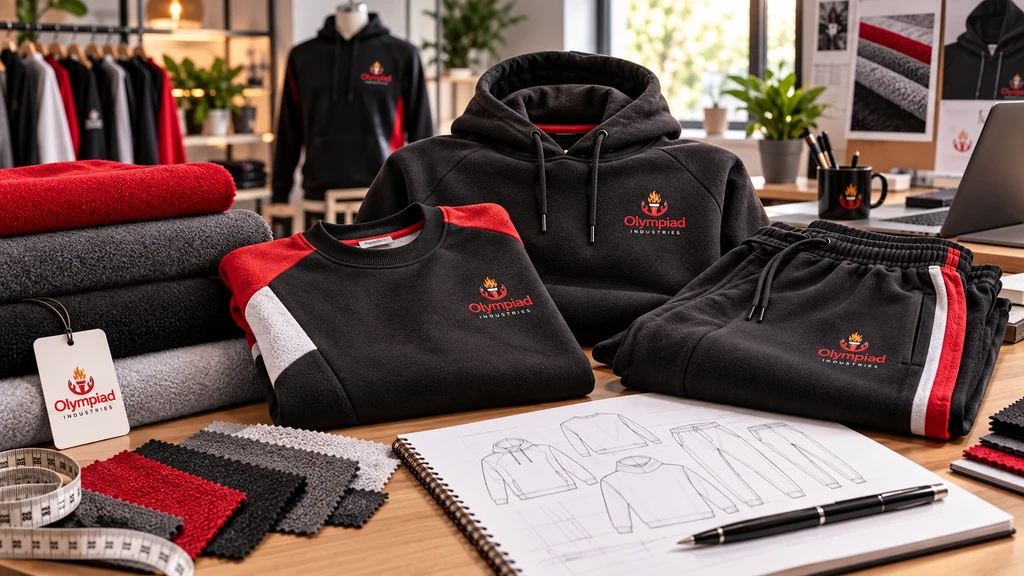
Fleece fabrics are commonly used where warmth and comfort are required.
Potential applications include:
- Hoodies
- Sweatshirts
- Joggers
- Winter tracksuits
- Warm-up apparel
- Team travel wear
Fleece can be produced in different compositions and GSM levels.
A heavier fleece may provide greater warmth but may also increase garment weight.
Brands should select fleece according to:
- Climate
- Season
- Product positioning
- Intended activity
- Desired softness
- Required weight
13. French Terry
French terry is another fabric frequently used in sports-inspired casualwear and training apparel.
Its construction typically has a smoother outer surface and looped interior.
It may be suitable for:
- Sweatshirts
- Joggers
- Lightweight hoodies
- Tracksuits
- Training sets
- Casual sportswear
French terry can be a useful option when a brand wants more structure than a performance jersey but less warmth than heavy brushed fleece.
14. Tricot Fabrics
Tricot is a warp-knit fabric construction used in various sportswear and outerwear applications.
Depending on specification, it may offer:
- Smooth surface
- Durability
- Flexibility
- Lightweight structure
Tricot can be used in:
- Tracksuits
- Sports shorts
- Jacket linings
- Training wear
- Teamwear
As with other fabric names, “tricot” covers different specifications, so buyers should confirm composition, GSM, surface, and intended use.
15. Piqué Fabric for Sports Polo Shirts
Piqué is strongly associated with polo shirts.
Its textured knitted surface gives a structured yet breathable appearance.
Sports and teamwear applications can include:
- Golf polos
- Team polo shirts
- Staff uniforms
- Club apparel
- Corporate sportswear
Piqué can be made from:
- Cotton
- Polyester
- Cotton-polyester blends
- Performance synthetic blends
Performance polo shirts may use polyester-based piqué when quicker drying or sports-oriented functionality is required.
16. What Does GSM Mean in Sportswear?
GSM stands for grams per square meter.
It measures fabric weight rather than garment weight.
In general:
- Lower GSM fabrics are lighter
- Higher GSM fabrics are heavier
However, GSM should not be treated as a quality rating.
A 150 GSM high-performance fabric may be more suitable for a particular sport than a 220 GSM fabric.
The correct GSM depends on the product.
Typical GSM Considerations for Different Products
The following are broad examples rather than fixed manufacturing rules.
Lightweight Performance Jerseys
Often selected in relatively lightweight GSM ranges to support:
- Breathability
- Movement
- Reduced weight
Training T-Shirts
May use light-to-medium fabric weights depending on desired durability and feel.
Polo Shirts
Often use medium-weight fabrics that provide more structure.
Tracksuits
Can use medium-to-heavier fabrics depending on season and construction.
Hoodies and Sweatshirts
Usually require heavier fabrics than match jerseys.
Leggings and Compression Wear
GSM must be considered together with:
- Stretch
- Recovery
- Opacity
- Compression level
Brands should therefore avoid choosing GSM in isolation.
17. Lightweight vs Heavyweight Sportswear Fabrics
Both lightweight and heavyweight fabrics can be appropriate depending on the garment.
Lightweight Fabrics
They may be preferred for:
- Match jerseys
- Running wear
- Training tops
- Hot climates
- Indoor sports
Potential benefits include:
- Reduced garment weight
- Improved ventilation
- Greater comfort during activity
Heavier Fabrics
They may be suitable for:
- Tracksuits
- Jackets
- Hoodies
- Cold-weather apparel
- Travel wear
Potential benefits can include:
- Greater structure
- Warmth
- Coverage
- Durability
Choosing the correct weight should always begin with the product’s intended purpose.
18. Breathability
Breathability describes how effectively heat and moisture vapor can move through a fabric or garment system.
It is especially important for:
- Football
- Basketball
- Running
- Rugby
- Fitness training
- Tennis
- Other high-intensity activities
Breathability can be influenced by:
- Knit structure
- Fabric density
- Yarn
- Finishing
- Ventilation panels
- Garment design
An open mesh may provide more airflow than a dense knit, but the most open fabric is not automatically the best choice because durability, coverage, and appearance also matter.
19. Moisture-Wicking Sportswear Fabrics
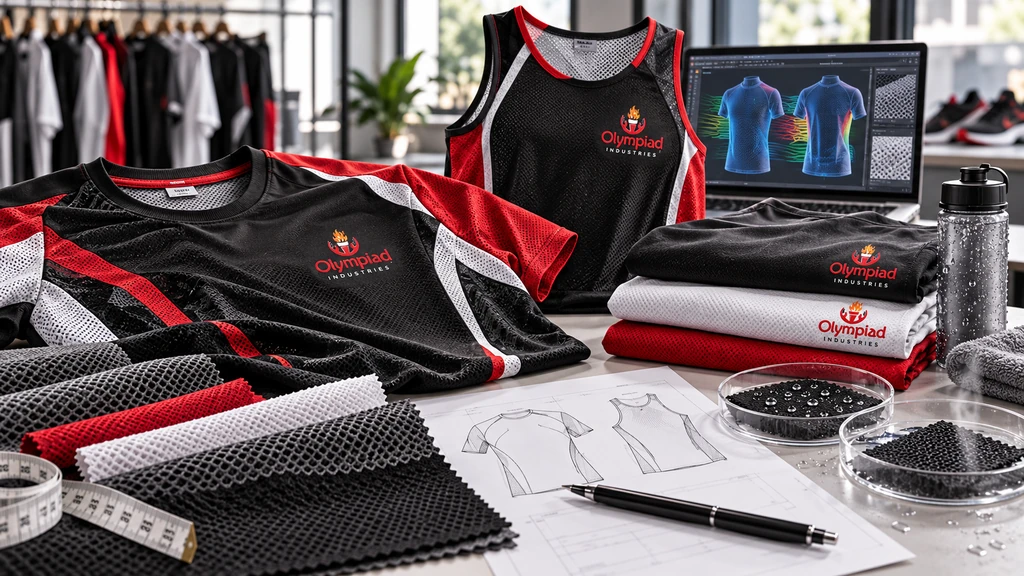
Moisture management is a major consideration in performance apparel.
Moisture-wicking fabrics are designed to help move sweat away from the skin and spread it across the material so it can evaporate more efficiently.
This can help improve comfort during exercise.
Moisture management is useful for products such as:
- Training shirts
- Running tops
- Jerseys
- Compression wear
- Fitness apparel
However, performance depends on more than fiber type.
Fabric construction and finishing can also influence moisture behavior.
20. Quick-Dry Performance
Quick drying can be valuable for sportswear because athletes may sweat heavily during activity.
Synthetic materials such as polyester are commonly used where quick drying is required.
This can benefit:
- Training sessions
- Tournaments
- Travel
- Outdoor activity
- Repeated use
A quick-drying garment can also be easier for teams and athletes to maintain.
21. Stretch and Recovery
Stretch allows fabric to move with the body.
Recovery describes how well the fabric returns to its original shape after being stretched.
Both are important for fitted sportswear.
Products requiring strong stretch performance may include:
- Leggings
- Compression tops
- Sports bras
- Cycling wear
- Base layers
- Fitness wear
Poor recovery can result in garments becoming loose or losing shape after repeated use.
Brands developing fitted apparel should therefore test both stretch and recovery.
22. Four-Way Stretch vs Two-Way Stretch
Stretch fabrics may behave differently depending on their construction.
Two-Way Stretch
Typically provides more stretch in one primary direction.
It may be sufficient for some apparel applications.
Four-Way Stretch
Allows greater flexibility in multiple directions.
It can be especially useful for:
- Leggings
- Compression wear
- Yoga apparel
- High-movement fitness garments
The right choice depends on product design and required mobility.
23. Fabric Durability
Sportswear is often exposed to:
- Stretching
- Sweat
- Friction
- Frequent washing
- Outdoor conditions
- Repeated training
Durability is therefore an important consideration.
Brands should evaluate factors such as:
- Seam compatibility
- Pilling resistance
- Abrasion resistance
- Colorfastness
- Shape retention
- Surface wear
- Washing performance
A lightweight fabric can still be durable if it is properly engineered, while a heavier fabric is not automatically more durable.
24. Colorfastness
Colorfastness refers to how well a fabric maintains its color during use, washing, rubbing, or exposure to other conditions.
It is particularly important for:
- Team colors
- Dark garments
- Contrast panels
- Repeat orders
- Branded collections
Poor colorfastness can affect brand presentation and customer satisfaction.
Material and printing methods should therefore be reviewed according to the intended product.
25. Shrinkage
Fabric shrinkage can affect finished garment dimensions after washing.
This is particularly important for materials containing natural fibers.
Manufacturers may consider fabric behavior during material selection and development.
Brands should review sample garments under realistic washing conditions when sizing consistency is important.
26. Pilling Resistance
Pilling occurs when small fiber balls develop on the fabric surface due to rubbing and wear.
It can reduce the perceived quality of a garment.
Products such as:
- Leggings
- Joggers
- Tracksuits
- Fleece garments
- Training apparel
may experience regular friction during use.
Fabric selection and testing can help reduce the risk of excessive pilling.
27. Fabric Stretch for Team Uniforms
Not every team uniform needs large amounts of elastane.
For many jerseys, the knit construction itself may provide enough movement.
However, stretch can be useful in areas where:
- Players require greater mobility
- Garments have close athletic fits
- The sport involves extensive body movement
Manufacturers should balance stretch with:
- Durability
- Printing
- Fit
- Weight
- Cost
28. Best Fabrics for Sublimation Printing
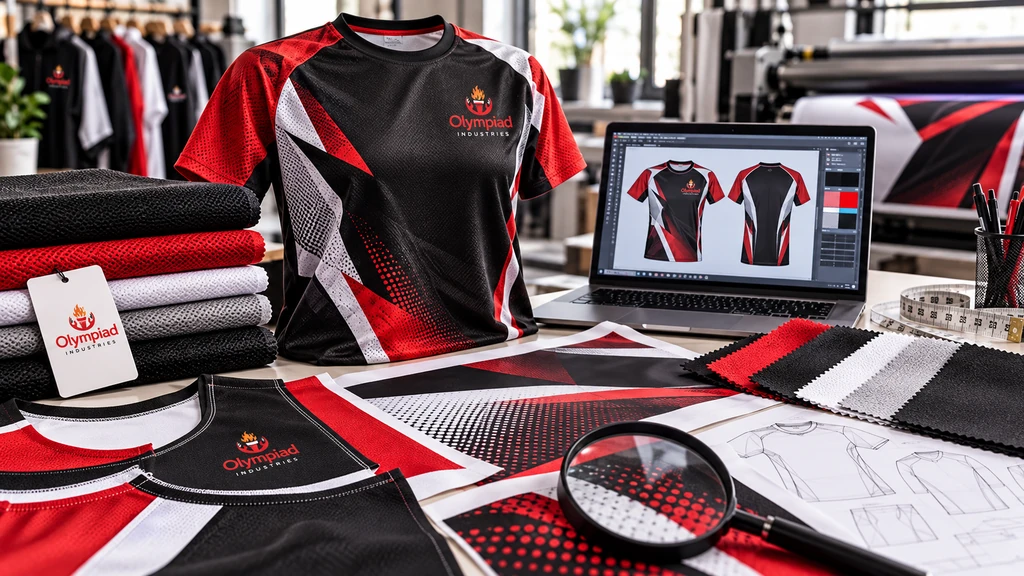
Sublimation printing is especially compatible with polyester-based fabrics.
During sublimation, the dye bonds with polyester fibers.
This makes polyester a common choice for fully sublimated:
- Football kits
- Basketball uniforms
- Rugby jerseys
- Cycling apparel
- Sports jerseys
- Team uniforms
Sublimation can reproduce:
- Complex graphics
- Gradients
- Patterns
- Sponsor logos
- Player names
- Numbers
Fabric selection still matters because different polyester constructions can produce different visual and performance results.
29. Fabric Selection for Embroidery
Embroidery adds stitched branding directly to the garment.
The base fabric should be suitable for the weight and density of the embroidery.
It is commonly used on products such as:
- Polo shirts
- Jackets
- Hoodies
- Tracksuits
- Teamwear
Very lightweight fabrics may require additional care when applying dense embroidery.
Logo size, stitch density, and backing should be considered together with fabric construction.
30. Fabric Selection for Screen Printing and Heat Transfer
Screen printing and heat-transfer decoration methods also require appropriate fabric surfaces.
Buyers should consider:
- Fiber composition
- Surface texture
- Stretch
- Heat sensitivity
- Coatings
- Intended wash conditions
A manufacturer should evaluate compatibility before bulk production rather than assuming one decoration process is suitable for every fabric.
31. Best Fabric for Football and Soccer Kits
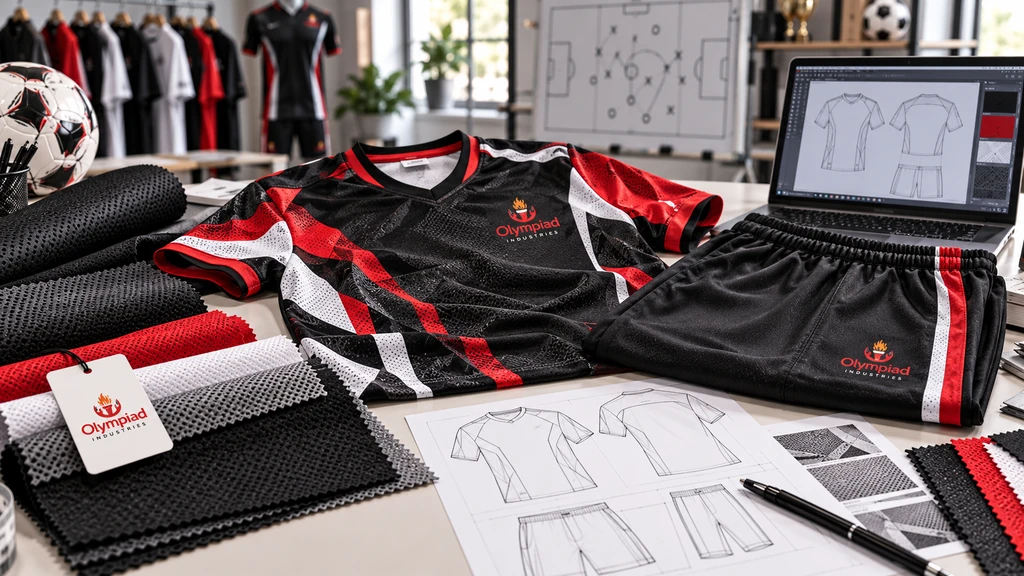
Football kits generally require a balance of:
- Lightweight performance
- Breathability
- Durability
- Comfortable movement
- Printing compatibility
Polyester mesh, bird-eye, interlock, and other performance polyester constructions are commonly considered.
Sublimated kits typically require polyester-compatible material.
Different panels can also use different fabric structures when additional ventilation or durability is needed.
32. Best Fabric for Basketball Uniforms
Basketball uniforms often benefit from lightweight, breathable materials.
Potential choices include:
- Polyester mesh
- Performance knit
- Lightweight interlock
- Other breathable synthetic constructions
The fabric should support:
- Movement
- Ventilation
- Printing
- Team branding
Shorts may use the same material as the jersey or a coordinated construction.
33. Best Fabric for Rugby Kits
Rugby apparel may require additional durability because of physical contact and garment pulling.
Fabric selection may therefore prioritize:
- Strength
- Stretch
- Shape retention
- Comfortable movement
- Durable construction
Polyester-based performance fabrics and stretch blends can be considered depending on the kit design.
34. Best Fabric for Cricket Uniforms
Cricket garments may be worn for long periods, often outdoors.
Important characteristics may include:
- Breathability
- Comfort
- Lightweight construction
- Moisture management
- Durability
The correct fabric depends on whether the garment is a match shirt, trouser, training top, or other item.
35. Best Fabric for Tennis Apparel
Tennis requires significant upper- and lower-body movement.
Fabrics may need:
- Lightweight feel
- Breathability
- Stretch
- Moisture management
- Comfortable fit
Polyester performance knits and polyester-elastane blends can be suitable depending on the garment.
For skirts, skorts, shorts, and fitted tops, greater stretch may be beneficial.
36. Best Fabric for Golf Apparel
Golf apparel often combines performance with a polished appearance.
Polo fabrics may include:
- Polyester piqué
- Cotton piqué
- Cotton-poly blends
- Performance stretch fabrics
Important considerations can include:
- Breathability
- Collar structure
- Moisture management
- Stretch
- Appearance
- Comfort over extended wear
37. Best Fabric for Training Wear
Training wear needs versatility because it may be used for:
- Gym sessions
- Team practice
- Fitness training
- Warm-ups
- Conditioning
Possible materials include:
- Polyester interlock
- Mesh
- Bird-eye
- Stretch polyester
- Polyester-elastane blends
The correct fabric depends on the type of training and climate.
38. Best Fabric for Tracksuits
Tracksuits can be designed for different seasons and uses.
Fabric options may include:
- Polyester tricot
- Micro polyester
- Interlock
- Fleece-backed materials
- Stretch performance fabrics
Lightweight tracksuits may be intended for warm-ups and travel, while heavier versions can provide additional warmth.
39. Best Fabric for Sports Jackets
Sports jackets may require different material characteristics from jerseys.
Depending on design, buyers may consider:
- Micro polyester
- Woven polyester
- Lightweight performance fabrics
- Water-resistant constructions
- Insulated materials
Important factors include:
- Climate
- Wind protection
- Water resistance
- Breathability
- Weight
- Intended use
40. Best Fabric for Gym and Fitness Wear
Gym wear covers a broad range of garments.
Gym T-Shirts
Often prioritize:
- Moisture management
- Breathability
- Lightweight feel
Gym Shorts
May require:
- Durability
- Flexibility
- Quick drying
Leggings
Often require:
- High stretch
- Recovery
- Opacity
- Smooth feel
Sports Bras
May require:
- Stretch
- Support
- Recovery
- Moisture management
No single fabric can meet every gym-wear requirement.
41. Choosing Fabrics for Hot Climates
For warm environments, brands may prioritize:
- Lightweight construction
- Breathability
- Moisture management
- Quick drying
Open knit structures or ventilation panels can also help.
However, fabrics still need sufficient durability and coverage for the intended sport.
42. Choosing Fabrics for Cold Weather
Cold-weather sportswear may require:
- Greater fabric weight
- Thermal insulation
- Layering capability
- Wind protection
Potential materials include:
- Fleece
- Brushed fabrics
- Heavier interlock
- Insulated outerwear materials
The appropriate choice depends on whether the garment is intended for active competition, warm-up, travel, or casual use.
43. Fabric Choice for Kids’ Sportswear
Kids’ sportswear should balance performance with comfort and durability.
Important factors may include:
- Softness
- Breathability
- Easy washing
- Durability
- Appropriate stretch
- Comfortable seams
- Suitable weight
School and academy programs may also need fabrics that perform consistently across repeated orders.
44. Fabric Selection for Private Label Brands
Private label brands often need to consider more than performance alone.
Fabric selection can influence how the brand is positioned in the market.
A premium brand may prioritize:
- Distinctive hand feel
- Specific GSM
- Custom construction
- Superior stretch
- Enhanced finishing
A value-focused teamwear brand may prioritize:
- Durability
- Printing compatibility
- Repeat availability
- Cost efficiency
The fabric should support both the technical product requirements and the commercial positioning of the brand.
45. Always Review Physical Fabric Samples
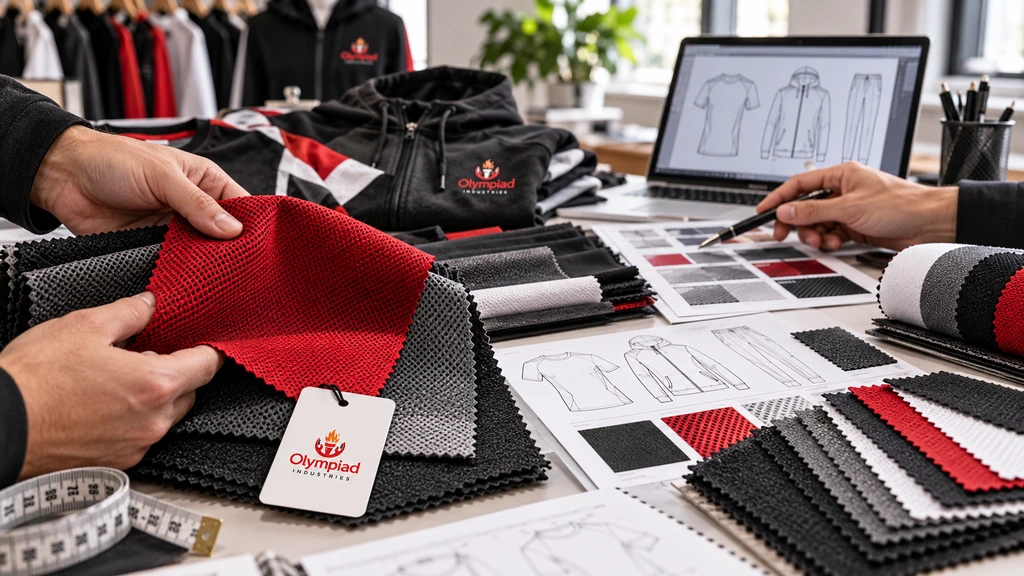
Online descriptions alone are usually not enough to evaluate sportswear fabric.
Whenever possible, buyers should review actual swatches or samples.
Physical inspection allows you to assess:
- Texture
- Weight
- Stretch
- Opacity
- Softness
- Surface appearance
- Color
- Recovery
A fabric that looks similar in a photograph may feel completely different in person.
46. Test Fabric Through Product Sampling
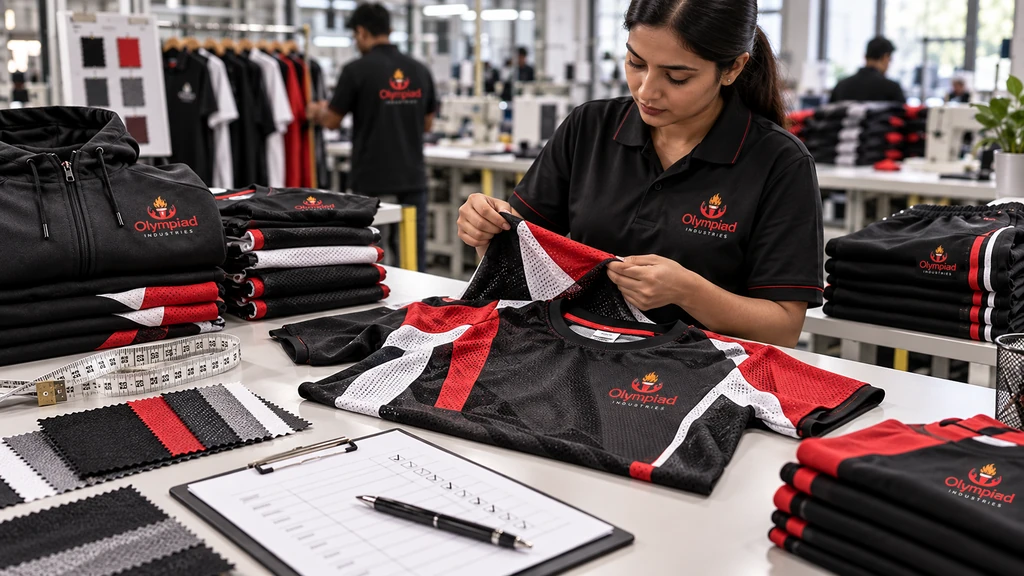
The final decision should not rely only on a loose fabric swatch.
Fabric can behave differently once it is:
- Cut
- Stitched
- Printed
- Stretched
- Washed
- Worn
A finished development sample allows brands to evaluate how the material performs as part of the complete garment.
47. Compare Fabric Specifications, Not Just Prices
When comparing manufacturers, buyers should ensure they are comparing similar materials.
Ask for details such as:
- Composition
- GSM
- Fabric construction
- Stretch
- Finish
- Printing compatibility
Two suppliers may quote very different prices for what appears to be the same jersey because the proposed fabrics are different.
Price comparisons are more useful when specifications are comparable.
Common Fabric Selection Mistakes
Brands and teams should avoid several common mistakes.
These include:
- Choosing fabric only by GSM
- Selecting the cheapest material
- Ignoring intended climate
- Using heavy fabric for high-intensity activity
- Choosing stretch fabric without checking recovery
- Ignoring opacity in leggings
- Selecting fabric before deciding the decoration method
- Approving bulk production without testing a sample
- Assuming all polyester fabrics are identical
- Ignoring wash performance
Careful material selection early in development can prevent many production problems later.
Questions to Ask Your Sportswear Manufacturer About Fabrics for Sportswear
Before approving materials, consider asking:
- What is the fabric composition?
- What is the GSM?
- What type of knit or construction is it?
- Is it breathable?
- Does it provide moisture management?
- How quickly does it dry?
- Does it stretch?
- How well does it recover?
- Is it suitable for sublimation?
- Is it suitable for embroidery?
- Is it appropriate for the intended sport?
- Is it available consistently for repeat orders?
- Can you provide a swatch?
- Can we test it in a sample garment?
- Are alternative fabric options available?
The answers help buyers make decisions based on product requirements rather than appearance alone.
How Olympiad Industries Approaches Fabric Selection
At Olympiad Industries, material selection begins with the requirements of the product rather than applying one standard fabric to every garment.
Our custom apparel development can take into account factors such as:
- Product category
- Intended activity
- Fabric composition
- GSM
- Breathability
- Stretch
- Surface texture
- Printing method
- Embroidery
- Climate
- Buyer specifications
- Target product positioning
Depending on the project, buyers can begin with a reference garment, fabric sample, tech pack, specification, product photograph, or general performance requirement.
The selected material then becomes part of the broader development process.
Raw Materials
Fabric, threads, trims, elastic, zippers, labels, and other required components are reviewed according to the product specification.
Pattern Making & Cutting
Patterns are developed according to the intended fit and measurements before approved material moves into cutting.
Stitching
The fabric and construction method must work together to create a garment suitable for the intended purpose.
Embellishment
Printing, sublimation, embroidery, or other branding methods are selected according to both the artwork and fabric.
Quality Check
Finished products are reviewed against the relevant specifications.
Tagging & Packing
Approved garments are prepared according to the buyer’s labeling and packaging requirements.
The objective is to match material selection with the actual product rather than treating fabric as an isolated decision.
Also read: Custom Sportswear Manufacturing Guide for Teams & Brands
FAQs About Fabrics for Sportswear
What is the best fabric for sportswear?
There is no single best fabric for every sport. Polyester is widely used for performance sportswear, while polyester-elastane and nylon-elastane blends can be suitable for stretch products such as leggings and compression wear. The best material depends on the garment and intended use.
Why is polyester commonly used in sportswear?
Polyester can provide lightweight performance, durability, quick drying, shape retention, and good compatibility with sublimation printing. It can also be produced in many different knit structures and GSM levels.
What GSM is best for sportswear?
There is no universal ideal GSM. Lightweight jerseys, polo shirts, tracksuits, hoodies, and compression garments all require different weights. GSM should be selected according to product type, climate, performance requirements, and fabric construction.
What fabric is best for sublimation jerseys?
Polyester-based fabrics are generally the preferred choice for sublimation because sublimation dyes bond with polyester fibers.
What fabric is good for football jerseys?
Performance polyester fabrics such as mesh, bird-eye, interlock, and other breathable polyester constructions are commonly considered for football jerseys.
What fabric is suitable for leggings?
Stretch blends such as polyester-elastane or nylon-elastane are commonly used for leggings. Buyers should also evaluate recovery, opacity, GSM, softness, and moisture management.
Is cotton good for sportswear?
Cotton can work well for casual sportswear, team T-shirts, and lifestyle apparel. For high-intensity performance use, synthetic fabrics may provide quicker drying and better moisture management.
What does moisture-wicking mean?
Moisture-wicking refers to a fabric’s ability to help move moisture away from the skin and spread it across the fabric so it can evaporate more effectively.
Is heavier GSM always better quality?
No. GSM measures fabric weight, not overall quality. A lighter performance fabric may be more suitable for a jersey than a heavier fabric.
Should I request fabric samples before manufacturing?
Yes. Reviewing fabric swatches and, ideally, a finished product sample can help buyers assess the material before approving bulk production.
Also read: How to Choose a Custom Sportswear Manufacturer for Your Team
Conclusion (Best Fabrics for Sportswear)
Choosing the best fabric for sportswear requires more than selecting a material name or GSM number.
The ideal fabric depends on the sport, garment type, climate, fit, movement requirements, decoration method, durability expectations, and target market.
Polyester remains one of the most versatile options for team uniforms and performance apparel because it can support lightweight constructions, moisture management, and sublimation printing. Stretch blends are particularly useful for fitted activewear, while fleece, French terry, piqué, tricot, and other materials serve different sportswear and lifestyle applications.
Brands and teams should evaluate actual fabric samples, compare specifications carefully, and test materials through garment sampling before bulk production.
A well-selected fabric helps create sportswear that not only looks professional but also performs appropriately for the people wearing it.
Also read: Private Label Sportswear Manufacturing Guide for Brands
Olympiad Industries develops custom sportswear and apparel around buyer-specific requirements, including fabric selection, GSM, colors, measurements, customization, branding, labels, and packaging for teams, brands, retailers, distributors, and other B2B buyers.



Leave a Reply